And why that makes it one of the best tests of legal AI readiness
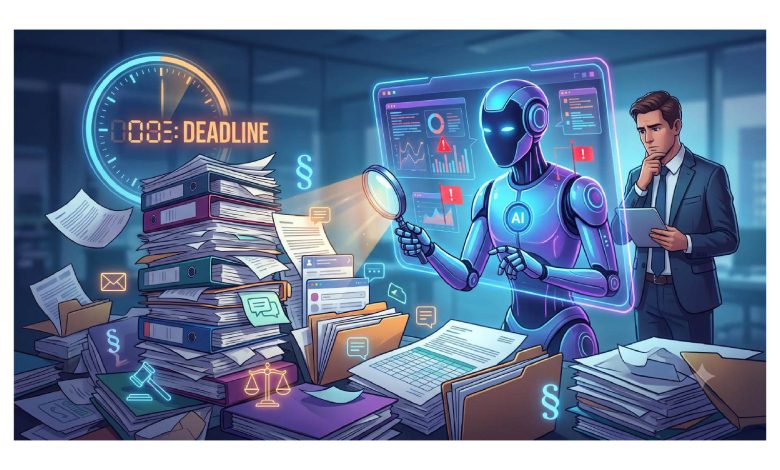
A subpoena rarely arrives as a neat legal technology problem. It arrives as an interruption, usually with a deadline already counting down and a request that looks both specific and annoyingly elastic. Someone has to interpret it. Someone has to find the right people and systems. Someone has to decide what can be produced, what should be withheld, and what could create a new problem if it leaves the organization.
That is why subpoena response looks, at first glance, like an obvious place to use AI. The work involves documents, deadlines, repeatable steps, and a clear output. In a product demo, the fit can seem almost perfect. The system reads the request, extracts the obligations, identifies likely custodians, locates responsive material, drafts a summary, and prepares the team to respond.
Useful? Absolutely. Complete? Not even close.
The deeper lesson is not that AI fails in subpoena response. The lesson is that subpoena response quickly separates impressive AI from dependable legal AI. It forces a system to perform under time pressure, across messy data, with real consequences attached to the result. That makes it a useful test case for legal teams that are trying to understand where AI can safely accelerate work and where it still needs firm legal supervision. The interest in applying AI to legal workflows is no longer theoretical. The pressure to answer that question is increasing quickly. According to Thomson Reuters’ 2026 AI in Professional Services Report, 47% of corporate legal departments now report using generative AI, more than double the 23% recorded in 2025. As AI moves from isolated experimentation into ordinary legal work, difficult workflows such as subpoena response are becoming practical tests of whether adoption is being matched by adequate controls. Against that backdrop, subpoena response naturally becomes an attractive candidate for AI—not because it is easy, but because it combines high volumes of information, repetitive processes, and significant legal risk.
The easy demo disappears fast
In a controlled demo, subpoena response has a clean beginning, middle, and end. The request is well formed. The data sources are known. The custodian list is obvious. The documents are easy to classify. The output is tidy enough to make the value proposition feel self-evident.
Real matters do not usually cooperate that way.
Custodian information may be incomplete or stale. Employees may have changed names, moved business units, used multiple accounts, or left the company years earlier. A request may implicate records in structured business systems, email, archives, shared drives, chat tools, collaboration platforms, and legacy repositories that no one likes to mention until they become relevant. Similar requests may have been handled differently by different teams, especially when the organization has grown through acquisitions or relies on decentralized processes.
This is the point where “find the relevant documents” stops being a simple instruction and becomes a legal, operational, and data governance problem. Relevant to which interpretation of the request? Across which repositories? For which custodians? With which date ranges, exclusions, privilege concerns, and privacy limitations? And how confident is the team that the search did not overlook a system, an alias, or an exception that matters?
AI can help move through that complexity faster. What it cannot do, by itself, is turn a disorderly process into a defensible one. In many organizations, the first serious AI pilot does not hide the mess. It exposes it.
Accuracy is not one thing
One reason subpoena response is such a useful proving ground is that it makes the word accuracy feel too small.
Legal teams are not asking only whether the system produced a plausible answer. They need to know whether it found enough, avoided needless overcollection, preserved sensitive material where appropriate, and created a record that can be explained later. Those are related goals, but they are not the same goal.
Completeness asks whether the team found what needed to be found. Precision asks whether the team avoided pulling in large volumes of irrelevant or risky material. A system that casts too wide a net can create excessive review cost, expose sensitive information, and jeopardize the deadline. A system that narrows too quickly can miss responsive records, which may not become apparent until a court, regulator, or requesting party challenges the production.
That is why “the output looked right” is a dangerous standard. A polished summary does not prove the search was complete. A clean production set does not prove the right sources were considered. A confidence score, standing alone, does not tell a lawyer whether the organization can defend the process.
The better question is more specific: accurate at which task, measured against what baseline, and with what consequence if the system is wrong? Many organisations are not yet equipped to answer even the broader measurement question. Thomson Reuters’ 2026 research found that only 18% of respondents said their organisations collect metrics concerning AI return on investment, while another 40% did not know whether such measurement occurred at all. For subpoena response, the problem is even more demanding: conventional ROI measures such as time saved are inadequate unless they are considered alongside recall, precision, escalation rates, privilege errors and the ability to reconstruct how a production decision was made.
The workflow is where the risk hides
Vendors often want to talk about models. Legal teams should spend at least as much time talking about the workflow around the model.
Subpoena response is not a single document classification exercise. It is a sequence of decisions: intake, scoping, custodian identification, source selection, collection, review, privilege assessment, redaction, approval, production, logging, and reporting. A failure in any one of those steps can compromise the final response, even if the AI performs well on a narrow task inside the workflow.
An AI tool might identify responsive language in a document and still tell the team nothing about whether the right custodian was included. It might summarize the subpoena accurately and still leave open whether the search parameters were adequate. It might recommend that a document be produced, but the legal team still needs to know who approved that decision, when it was approved, what policy or instruction governed the decision, and whether any exception was made.
This is where agentic AI becomes genuinely interesting, and also where legal teams need to be careful. That concern is becoming increasingly practical. Thomson Reuters found that only 15% of surveyed organisations currently use agentic AI, but another 53% are already planning or considering its use. In other words, systems capable of moving multi-step work forward with limited supervision are still at an early stage, but they are approaching mainstream professional workflows quickly. Subpoena response therefore offers legal teams an opportunity to define approval boundaries before those capabilities become routine. Agentic systems can do more than answer a question. They can move work forward: interpret an incoming request, suggest next steps, route tasks, trigger review, prepare draft outputs, and escalate exceptions. In subpoena response, where work is deadline-driven and repeatable, that can be enormously valuable.
The catch is that every move from suggestion toward execution raises the governance standard. Legal teams need to know what the system is allowed to do, what it is only allowed to recommend, where it must pause, and who must approve the next step. Otherwise, the organization may end up with faster movement but weaker control.
Human-in-the-loop has to mean something
No serious legal team should be satisfied with the phrase “human-in-the-loop” unless it is tied to actual controls. The phrase sounds reassuring, but it can hide a lot of ambiguity.
AI can identify patterns, classify documents, compare a new request against prior matters, surface anomalies, and recommend likely responsive records. Those are valuable uses. They give lawyers and legal operations teams a better starting point and can reduce the manual drag that makes subpoena response so painful.
But some decisions remain legal judgment calls. Is the request overbroad? Is the subpoena enforceable? Should the company object? Does a document appear responsive but privileged? Should the team make a partial production? Would producing the material create business, privacy, regulatory, or reputational risk beyond the four corners of the request?
Those are not just workflow choices. They are risk decisions.
A practical test helps cut through the language: if the decision were challenged six months later, who would explain it? If the answer is “the AI decided,” the process is not mature enough. If the answer is “the AI recommended, the attorney reviewed, the basis was recorded, and the decision can be reconstructed,” the team is much closer to defensible AI.
The audit trail is not back-office plumbing
Audit trails are easy to treat as administrative detail. In subpoena response, they are much more than that. They are the evidence that the organization remained in control.
A useful audit record should show what was received, how scope was interpreted, which custodians and sources were considered, what the AI recommended, what humans approved, what changed, what was withheld, and what was produced. Without that record, the team may have speed, but it does not have much to stand on if the process is questioned.
This is where many AI pilots lose their shine. Generating a draft answer is relatively easy. Preserving the reasoning path, the approval path, the exception path, and the production path is harder. Subpoena response makes that painfully clear because the workflow does not really end when documents leave the organization. It ends when the organization can explain how those documents were found, reviewed, withheld, produced, or excluded.
What subpoena response tells us about legal AI
Subpoena response teaches a broader lesson: the best AI use cases are not always the easiest ones. Sometimes the most valuable use cases are the ones that force uncomfortable questions early, before the technology becomes embedded in higher-risk work.
Can the team measure the result? Can it separate speed from quality? Can it distinguish completeness from precision? Can it define which steps require attorney judgment? Can it reconstruct the decision later? Can it show that similar matters were handled consistently? Can the process improve from one matter to the next without turning past mistakes into future automation?
Those are not only subpoena response questions. They are legal AI questions.
Legal teams do not need AI that merely sounds confident. They need AI that can be tested, supervised, challenged, and explained. Subpoena response matters because it shows whether a legal AI system can operate in the space between efficiency and accountability. The future of legal AI will not be decided by the most impressive demo. It will be decided by whether legal teams can move faster without losing control, context, or defensibility.