
Producing a training video has become much easier than figuring out whether anyone learned from it. AI can put a synthetic presenter on-screen without booking a studio, then translate the lesson for colleagues elsewhere. Synthesia helped make that production work cheaper. Now the London-based AI video giant wants a larger role in what happens afterward. Its Sessions platform lets employees practice conversations with AI avatars that respond to them and assess their performance. The expansion takes Synthesia into a more demanding business, where customers need evidence that their employees can apply what they learn.
Victor Riparbelli, Synthesia’s co-founder and CEO, sees an opportunity to give employees the individual attention their managers cannot provide at scale. But does getting better at working with a machine make someone better at working with people?
“Being good at the simulation is not enough. But even if you don’t connect it to real-world data, doing well in simulations is generally a much better signal than watching a video or clicking through a multiple-choice quiz,” Riparbelli tells me in an exclusive interview. “Our customers are connecting the simulation data to their real-world data to understand the level of correlation.”
Founded in 2017, Synthesia built a PowerPoint-style editor that lets employees turn written scripts into videos without filming a presenter or learning professional editing software. Users can choose from more than 240 AI avatars and translate videos into over 160 languages, with the presenter’s lip movements matching the translated speech. Teams can manage and publish those videos within the same platform.
Can AI Roleplay Improve Sales Performance?
According to Synthesia, UBS produced 50,000 research documents a year but only 1,000 videos. The bank now aims to increase its annual video output to 5,000 using AI avatars of participating analysts. Analysts opt in and record their likeness and voice once, allowing the bank to create subsequent videos from scripts. Reviewers check each script before publication, and every video discloses its use of AI.
Likewise, at Mondelez International, a four-person team rebuilt its learning operation to produce content four times faster and triple its output. The company reports seven-digit savings and a 40% increase in employee engagement. Production that previously cost $50,000 and took months now takes a day at negligible production and updating costs, according to the case study.
“We can now begin to help the executive team understand: Are people actually learning what we want them to learn? How well are they performing in these simulations?” he tells me. “Maybe people are really good at understanding how the product works, but they’re not very good at explaining the narrative around it to the market. That’s a very important data point to understand how your sales team is performing.”
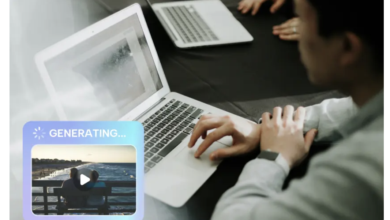
Roleplay Sessions, introduced in July, lets an employee rehearse with an avatar playing a customer or a colleague. The system can push back and score the exchange against a rubric. Managers can then examine where employees struggle, while learners can practice without waiting for a supervisor to make time.
Synthesia says early results from a Fortune 100 beta customer show a 112% improvement in what it describes as sales-pitch soft skills and an 82% improvement in technical demonstrations. The company reports that 68% of sales representatives returned for additional practice, with sessions averaging about 18 minutes.
An avatar gives employees more opportunities to practice. Establishing whether its scoring rewards habits that work with actual customers still remains a separate task, particularly if employers begin using those scores to judge readiness for important assignments.
What Interactive AI Avatars Add to Employee Training
Synthesia describes its avatars as always-available colleagues with full memory and context, capable of communicating on someone’s behalf. It claims that almost all workplace AI interaction remains text-based. The platform also introduced a chat-based Assistant for making video in July.
Riparbelli says a simple question about a customer’s spending may work perfectly well as a text prompt, he says. Video earns its place when someone needs a sustained explanation with visual support. “If you’re trying to teach your salesperson how to conduct a multimillion-dollar sale of your new AI product, you’re not going to do that on a phone call,” he says. “You’re probably not going to do it in chat either. There you want the ability for the agent to have a face.”
He describes an agent pulling up a PowerPoint slide or illustrating a pricing explanation on-screen. Synthesia is also developing guidance that lets an avatar view a user’s screen and explain software.
“Recently, we launched our developer platform, so if you want to build anything yourself, or you want an avatar that people can talk to, you can do that with our development tool,” Riparbelli says. “You tell your avatar what information you want to collect, what questions you want to answer. Then, just like a real person would, it’ll ask follow-up questions. It’ll ask for more detail in a way you won’t really get if I just send you a link to a text form that you have to fill out.”
The underlying technology still has limits. Synthesia’s own description places Interactive Avatars in beta and identifies interruption handling and latency among the areas it continues to improve.
Why Workplace Conversations Should Stay Human
When I asked whether avatars could work alongside employees throughout the day, Riparbelli said businesses would define each avatar’s job. Customers specify what it should ask and can review how it should behave, while Synthesia helps set limits around those instructions.
Riparbelli is particularly wary of managers using avatars to deliver negative feedback. “I don’t think an avatar should have a really important and high value conversation with someone. I think you should have those difficult conversations,” he says. “I think that’s a very bad idea, that’s exactly where we want the human connection. Where it is very helpful is all the conversations you wouldn’t otherwise be able to have. I would love to talk to 100 customers every single week, but I can’t. I just don’t have the time in my calendar.”
For managers, he sees an immediate opportunity in rehearsal. Synthesia already works with a large company to help managers practice difficult conversations. “What is very valuable right now is training you to have those difficult conversations,” Riparbelli says. “You can’t really practice these things without being in this situation.”
The avatar can help a manager prepare for a difficult exchange. The manager remains responsible for handling the actual conversation with the employee. Riparbelli’s claim that AI will make human time more valuable depends partly on employers keeping that responsibility with people as the technology improves.
The Battle for Enterprise AI Avatar Market
Synthesia has a substantial business from which to attempt the expansion. The company raised $200 million in a January round led by GV at a $4 billion valuation and reports more than 65,000 customers, with adoption across over 90% of the Fortune 100. It crossed $100 million in annual recurring revenue in April 2025. Net revenue retention above 140% indicates strong spending growth among existing customers after accounting for losses.
Rivals complicate the case as HeyGen reported surpassing $200 million in annual recurring revenue in June while operating at cash-flow break-even. Its reported cash burn of roughly $25 million from $74 million raised adds pressure to demonstrate what Synthesia’s much larger financing base will produce. The companies serve different customer mixes, however. Likewise, conversational-video platform Tavus competes on real-time interaction. Zoom’s planned photorealistic avatars pose a different challenge, because a workplace platform can put synthetic colleagues inside software customers already use.
Riparbelli points to complete applications that customers can deploy on his platform without piecing together the technology themselves. He expects conventional video to remain part of that offering, with interactive coaching extending what companies can do.
“I think they’ll support each other very much depending on the use case. Our bet is that they’re going to be very closely related and that having one platform, both for your video generation and for interactive videos, is going to be hugely beneficial in the future,” he asserts.
The Control Layer Verdict
Synthesia’s existing video business gives it access to the employees it now wants to coach. If employers use simulation scores to decide who is ready for a difficult assignment, they need to know what the system rewards and whether those scores predict performance at work. Riparbelli insists that people remain responsible for difficult conversations. The test for Synthesia is whether its coaching helps them handle those conversations better, especially when a real customer pushes back or a colleague responds in a way the practice session did not prepare them for.