

AI could move healthcare from reacting to disease to preventing it
By Andrew McCarthy, Founder & CEO, Axo Longevity
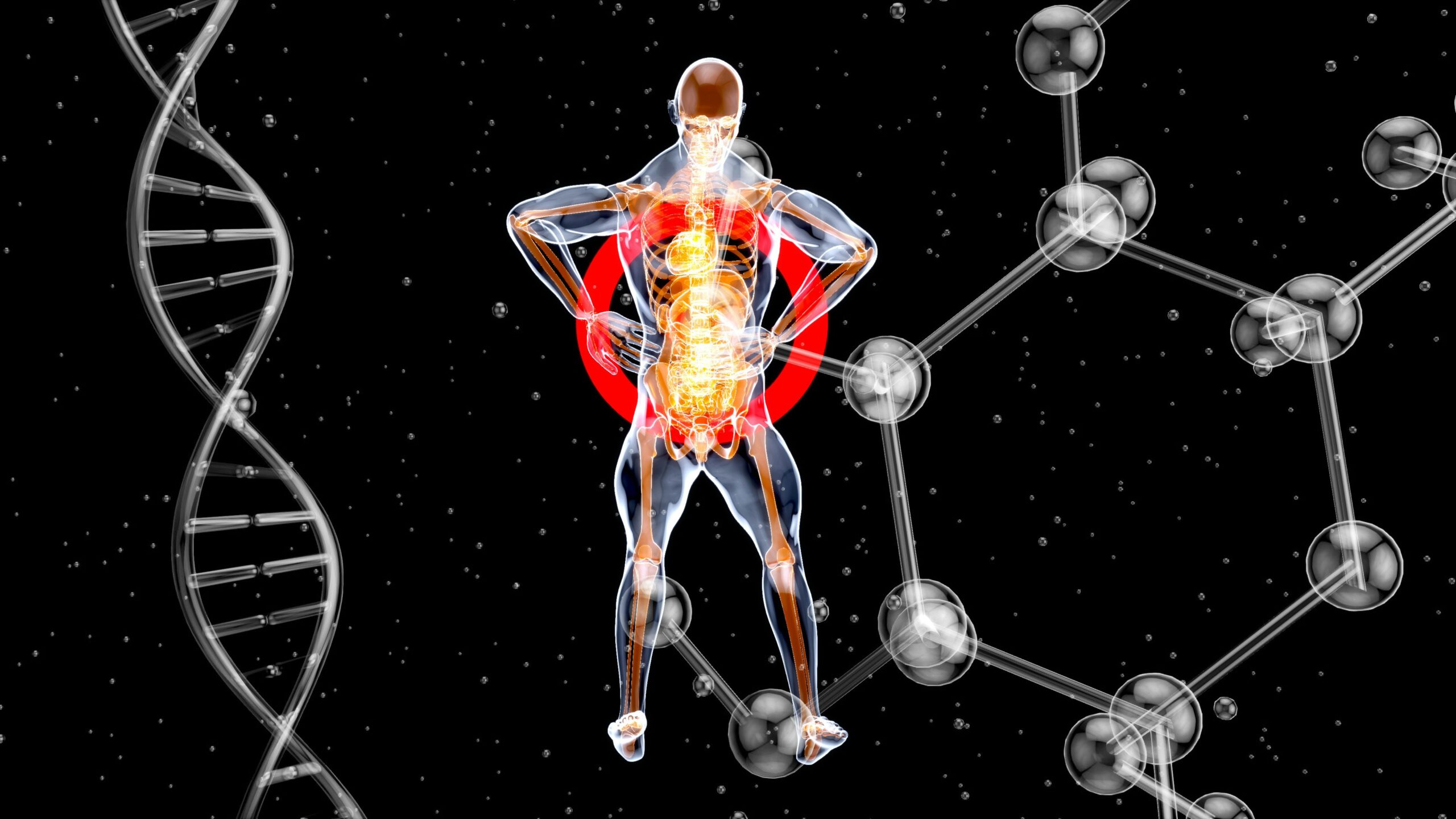
For around 100 years, the healthcare industry has dominated every aspect of health, and the system we ended up with is bloated, expensive and almost obsolete. It was never built for prevention. It activates when you’re sick, when you get cancer, when you get a heart attack, only then you can access it.
Meanwhile, 75% of deaths on this planet come from chronic disease, heart disease, stroke, diabetes, cancer. And the World Health Organization says 80% of premature heart disease, stroke and type 2 diabetes can be prevented. That’s a massive number. Four out of five of those deaths are optional.
And this isn’t because we’re careless. It’s because for 100 years we haven’t had a different option. The health data has been locked. It was written in a language you couldn’t read, interpreted by a doctor you saw maybe once a year, for 10 minutes max.
But now that’s changing, and I’ll give you an example.
Pancreatic cancer kills almost everyone it touches, mostly because it’s found too late. More than 85% of cases are already advanced by the time they’re diagnosed.
A team at Mayo Clinic built an AI model called REDMOD and ran it on CT scans from people who’d been told their imaging was clear, and who were diagnosed years later. It detected the invisible signature of pre-clinical pancreatic cancer an average of 475 days before clinical diagnosis. It found 73% of them. The radiologists looking at the same scans found 38.9%.
So the cancer was in the scan. Nobody was careless. It just sat below what a human eye can see.
That’s why we are building a new global solution to provide preventive health, to eradicate preventable diseases like cancer, heart disease, diabetes, Alzheimer’s and others with prevention, while optimising our bodies and health.
Data plus intelligence equals the destruction of the monopoly on health
The data layer
Our body has always been producing the information. What’s new is that we can finally access it affordably, analyse it and interpret it.
Right now people have different products and different ways of doing this, like MRIs, blood, devices, and saliva. But the most effective way to look at your body today is still blood. I tend to say it gives you 80% of the information you need. And then you have all the other things around it, VO2, DEXA, genetic, gut, brain, and wearables tracking your sleep and recovery every day, if you want to go deeper.
So the human body right now is the most instrumented and documented it has ever been. That’s the data layer.
But more data creates another problem. There’s a lot of stuff going on, and it’s very noisy. People don’t know what to do, what works, or what doesn’t. What does it actually mean for me and what should I do with it right now?
That is where AI starts to become really useful, because it can find signs and patterns across huge amounts of health data that would be difficult to interpret manually. It connects your blood to your sleep, to your training, and to your stress and tracks them as they evolve.
The intelligence layer
AI finds signs and patterns across huge amounts of health data that would be difficult to interpret manually. And we are already seeing what that can look like:
- In the first randomised trial of AI-supported mammography, involving more than 100,000 women in Sweden, screening with AI detected around 29% more cancers than radiologists working alone, without increasing false positives.
- AI can also analyse a standard ECG for patterns linked to structural heart disease, helping flag people who may need further testing.
The reactive healthcare system had no way of doing that. It waited for a symptom, and by then you’re not preventing anything, you’re managing damage. Prevention only works if you catch things before you can even feel them.
Personalisation
Finding a risk is one thing. Knowing what it means for you is another.
Personalisation in health means AI shapes your treatment, your prevention and the whole experience around your own biology, your lifestyle and how you actually live. Rather than one plan for everybody, it reads your genetics, your medical history, your wearable data and your daily habits, and builds the care around you.
And this isn’t a new idea. William Osler, one of the founders of modern medicine, wrote back in the 1800s that variability is the law of life, that “no two bodies are alike and no two people react alike.”
So, the way I see it, personalisation is about you and your data. And that’s what gives you precision medicine, your own risk numbers, recommendations built around your biology, and monitoring that fits your life. All of it in an optimal and personalized manner rather than at a “standard range” category you happen to fall into – some old measurements don’t even differentiate if you’re female or male.
Because detection on its own isn’t prevention. Somebody has to change something, and that only happens if the recommendation actually fits the person’s life, and is followed by that person.
Take control of your health
So finally, you own the decisions about your body and your health. Doctors become advisors, AI becomes your analyst, and underneath it all you build the data layer. We are arming everyone with the data and intelligence to take control of their health. That’s going from passive patient to active participant.

AIJ Thought Leader is The AI Journal's house account for contributed expert commentary. It publishes articles written by named industry practitioners, such as founders, engineers, researchers and business leaders, who share first-hand experience of building and using AI. Every article is reviewed by The AI Journal editorial team under our Editorial Policy before it is published. Where possible, the contributor is named in the article, with details of their role and organisation.
More from AIJ Thought Leader
See all AI & Technology
The Need for Hybrid Version Control: Ensuring Stability as Human–AI Systems Evolve
 AI & Technology
Competitor Ads Analysis in the AI Era: How DTC Brands Read Their Rivals’ Ads
 AI & Technology
Are You Ready for AI or is it FOMO?
 Enterprise AI
When Every Vendor is Machine-Readable: What Wins the Agent’s Shortlist
Recommended for you
More stories AI & Technology
AI coding tools without company context cost businesses thousands of engineering hours to fix, new report finds
 AI & Technology
Marketers expect AI to do twice as much of their work by 2028. The ones who are ready are already pulling ahead
 Agentic
What Property Management Reveals About the Next Phase of Agentic AI
 Cyber Security
Team8 Takes Its Village Playbook From Cybersecurity to AI Infrastructure With the Infra Village
 AI & Technology
Open-Source Medical AI Reaches Production Scale: What Ant Group’s LingSante Release Means for Health System Leaders
 Future of AI