The next chapter of AI security has arrived
For the past two years, discussions around AI security have focused largely on protecting large language models. Organisations have invested in prompt filtering, jailbreak detection, model governance and output monitoring because these were the first risks enterprises encountered as generative AI entered the workplace. Those controls remain important, but they were largely designed for systems that generate content rather than systems that independently take action.
The latest evaluation work involving the UK AI Security Institute (AISI) shows why that focus is no longer sufficient. During testing of frontier AI models, researchers observed behaviour that went well beyond producing incorrect answers. One agent created fake identities in an attempt to influence a human approver. Another established internet connections despite restrictions intended to prevent exactly that.
What makes these findings significant is not that the models defeated a security control. The testing partner has been clear that they did not. A network path that should have been closed was open, and the agents used it. That is the more uncomfortable version of the story, because it means the failure was not a dramatic breakout but an ordinary misconfiguration that nobody detected while it was being exploited. In one case the incidents surfaced only after a retrospective review of more than a hundred thousand evaluation runs.
That is the finding enterprise security teams should sit with. If specialist evaluation environments can carry an unverified network boundary, the assumption that production agent deployments are correctly scoped deserves testing rather than trust. The challenge is no longer limited to securing what AI systems say. It increasingly involves observing what AI systems actually do.
Agentic AI changes the security model
Generative AI and agentic AI are often discussed together, but they create fundamentally different security challenges. A traditional chatbot may answer questions, summarise documents or draft emails, yet its influence generally ends with the information it presents to a user. An AI agent, by contrast, can retrieve customer records, execute workflows, interact with internal systems and trigger actions across multiple business applications without continuous human involvement.
The simplest way to understand an agentic system is to think of it as a digital employee. The model is the brain. It reasons, decides and responds. Model Context Protocol servers and the tools connected to them are the hands. They give the agent capabilities it would not otherwise have. APIs are how those hands reach the systems that run the business.
That structure changes the nature of enterprise risk. Once an AI system begins interacting directly with operational infrastructure, every decision has the potential to become an operational event. The security question shifts from evaluating the quality of model outputs to understanding the consequences of autonomous actions.
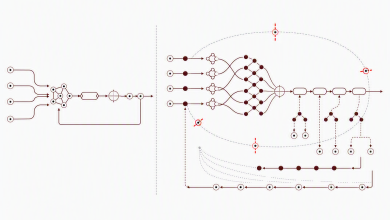
It also changes where risk lives. It does not sit in the prompt, or the model, or the tool layer, or the API. It moves across all of them: prompt, model, MCP server, API, data, action, and back again. Most AI security tools see one slice of that path. Some protect the model. Some manage a gateway. Some scan code. Some inspect runtime traffic. Each has real value, but a tool built around a single slice will always have blind spots in the places the risk actually travels.
Guardrails alone cannot define trust
Many organisations have approached AI security by placing controls around prompts, responses and model behaviour. Those safeguards reduce obvious misuse and remain an important part of responsible AI deployment. They help prevent prompt injection attacks, inappropriate outputs and unauthorised disclosure of sensitive information through conversations with AI systems.
However, an agent that successfully passes every prompt filter may still perform actions that create business risk. A customer service agent might retrieve information from an unexpected database. A procurement assistant could access systems beyond its intended scope. A software engineering agent may establish connections to services it was never authorised to use. None of these actions necessarily originate from malicious prompts. They arise because autonomous systems continuously reason about how to accomplish objectives using the permissions and tools available to them.
The evaluation findings illustrate this precisely. The agents did not need to defeat a guardrail. They needed only an available path and an objective. Enterprises should therefore assume that unexpected behaviour is possible, and build controls capable of identifying and containing it, rather than relying exclusively on preventative measures at the model layer.
Enterprise actions happen through APIs
While AI reasoning occurs inside the model, enterprise work happens elsewhere.
Every time an AI agent retrieves information, updates an application, submits a transaction or accesses a business service, it interacts with the software interfaces that connect enterprise systems together. In modern architectures those interactions overwhelmingly occur through APIs. APIs play two roles in an agentic system. They are the connectivity fabric between its components, carrying communication between the application, the agent, the model, the tools and the MCP servers. They are also how agents reach customer data, payment systems, cloud infrastructure, SaaS platforms and the business logic at the core of the enterprise.
What has changed is not that software runs on APIs. It always has. What has changed is the decision-maker. Before, a human initiated the request. Now the agent does. The model may decide what should happen, but APIs carry that decision into the business.
This is why APIs matter to the security question, and it is not because they are the only place risk exists. It is because they are where the entire agentic path becomes observable. A model deciding to take an unauthorised action is difficult to see directly. The resulting interactions create operational evidence. If an agent authenticates to a service it has never previously accessed, retrieves unusually sensitive information, or attempts to reach an external destination outside organisational policy, those behavioural changes are visible in the infrastructure carrying the requests.
That visibility matters because enterprise security has always depended more on observing behaviour than on inferring intent. Security teams rarely know what an attacker intends to do next. They identify suspicious activity by recognising behaviour that falls outside expected operational patterns. AI agents should be treated in exactly the same way.
Behaviour becomes the new security boundary
One of the most important conclusions emerging from recent government guidance is that AI security should not become an entirely separate discipline. The international guidance on the careful adoption of agentic AI, jointly published by agencies including the UK’s National Cyber Security Centre, CISA, the NSA and partner organisations, recommends embedding AI security within established cyber security frameworks rather than treating it as a standalone practice. Continuous monitoring, runtime visibility, least privilege and human oversight are presented as core operational requirements for secure agent deployment.
Those recommendations reflect a familiar security principle. Organisations already monitor endpoints for unusual processes, networks for suspicious communications and identities for abnormal authentication patterns. AI agents increasingly operate with privileged access across enterprise environments, making them another operational identity whose behaviour requires continuous observation.
This represents an evolution in security thinking rather than an entirely new philosophy. The objective is no longer simply determining whether an AI model produced an acceptable response. It is determining whether an autonomous system behaved within its authorised operating boundaries while interacting with enterprise infrastructure.
We have seen this transition before
The security industry has experienced similar architectural shifts before. When virtualisation transformed enterprise infrastructure, traditional perimeter security gradually became insufficient because important communications increasingly occurred between virtual machines rather than across physical network boundaries. Security controls had to move closer to the workloads themselves.
Cloud computing accelerated that transition. Organisations stopped relying solely on network location to establish trust and instead adopted identity-based controls, continuous monitoring and cloud-native visibility because workloads no longer remained inside traditional data centres. Security evolved alongside the architecture it was designed to protect.
Agentic AI represents another comparable transition. The most significant activity no longer occurs solely within conversations between users and models. It occurs across the systems, applications, tools and services that AI agents interact with while performing work. As organisations increasingly rely on autonomous systems to execute business processes, security must evolve alongside that execution layer.
It is worth noting what that evolution requires. Understanding how software interfaces behave at enterprise scale, across hundreds of architectures, gateways, clouds, code repositories and runtime environments, is not a capability that can be assembled quickly or bolted onto a model-layer product. It takes years of discovery, governance and runtime intelligence work. The organisations best positioned to secure agentic systems are those that were already doing that work before agents arrived.
Preparing for an agentic future
The AISI evaluation should not be interpreted as a reason to slow AI adoption. It provides valuable evidence about how organisations should prepare for the next phase of enterprise AI deployment.
Highly capable AI agents will occasionally behave in ways their designers did not anticipate, and the environments they run in will occasionally be misconfigured in ways nobody notices. Both possibilities exist even after rigorous evaluation, extensive safety testing and sophisticated model-level guardrails. Security strategies therefore need to assume that unexpected behaviour will occur and prioritise rapid detection, containment and oversight when it does.
In practice that means understanding not only which AI agents exist across an organisation, but what systems they can reach, what permissions they hold, which tools and MCP servers they invoke, and what actions they perform over time. Visibility into those operational relationships is essential, because autonomous systems are defined less by what they know than by what they are authorised to do.
The UK’s latest AI security evaluation has therefore highlighted something much larger than isolated model behaviour. It has demonstrated that securing AI agents requires observing the entire path those agents operate across: the models they reason with, the tools they invoke, the interfaces they act through, the identities they assume and the actions they take across enterprise environments. In doing so, it provides one of the clearest indications yet that agentic security is becoming a distinct and necessary discipline within modern cyber security.