AI is making organisations faster at producing answers, but not better at deciding which answers deserve authority. That is the paradox now confronting leaders. Models can summarise, reason, generate, search, code and increasingly act across enterprise systems. Copilots are becoming agents, and agents are beginning to participate in workflows that once depended on human coordination alone. Yet many organisations remain slow, siloed, politically cautious and unclear about who owns the consequences of decisions.
Why ‘more intelligence’ doesn’t produce better decisions
The central problem of AI integration is therefore not only technical but also organisational. Most AI programmes still start with adoption mechanics: licences, use cases, usage metrics, training. These are useful measures, but they can create an illusion of progress. That is, a company can become excellent at generating analysis while remaining poor at deciding. AI can accelerate output without improving the judgement behind it.
Synthetic Symbiosis is a more demanding ambition than “human-AI collaboration.” It is an organisational model that deliberately combines human, collective and synthetic intelligence to improve judgement, coordination, learning and performance. The question is not how to add AI to the organisation, but how to design an organisation capable of thinking and acting well with AI inside it.
Intelligence and wisdom are not the same. Information is what is available to know; intelligence surfaces patterns and options. Judgement decides what matters, what risk is acceptable and who owns the consequences. Wisdom is judgement disciplined by experience, values, context and outcomes.
As synthetic intelligence becomes abundant, the scarce capability will be the organisational capacity to turn intelligence into wise action.
Why agentic AI changes the problem
Generative AI was initially absorbed into many organisations as a new interface for knowledge work. It drafted, summarised, translated, searched and supported human users. Agentic AI changes the premise because the system is no longer merely producing material for a person to consider; it is compressing cycle times by taking bounded action inside workflows. Agents may be coordinating tasks, triggering workflows, routing exceptions, updating records or taking bounded action across connected systems.
That shift turns AI from a tool into an actor inside organisational action. Once a synthetic agent can act, questions of authority become unavoidable. What may it decide? What may it recommend? What information may it access? When must it escalate? Who is accountable if an apparently minor automated action produces a material consequence? These are not questions that can be settled by model selection or prompt quality. They are questions of organisational architecture.
Consider a customer operations agent that drafts a response, checks contract terms, opens a service ticket, and proposes a credit. Taken together, that sequence can create a commercial commitment, even if each step looks like ‘mere assistance’. Unless decision rights, approval thresholds, access permissions and escalation rules are explicit, the organisation has delegated authority without admitting it has done so.
Agentic AI therefore exposes a weakness that already existed. Many organisations operate through tacit permissions, informal workarounds and ambiguous accountability. Humans can soften those ambiguities through judgement, relationships and political reading. Synthetic systems turn ambiguity into execution at machine speed: the more capable the agent, the less safe it becomes to rely on culture as an unwritten control system. Agentic AI therefore increases the need for explicit governance over autonomy, access and accountability because it shifts systems from ‘advising’ to ‘acting’.
What Synthetic Symbiosis requires in practice
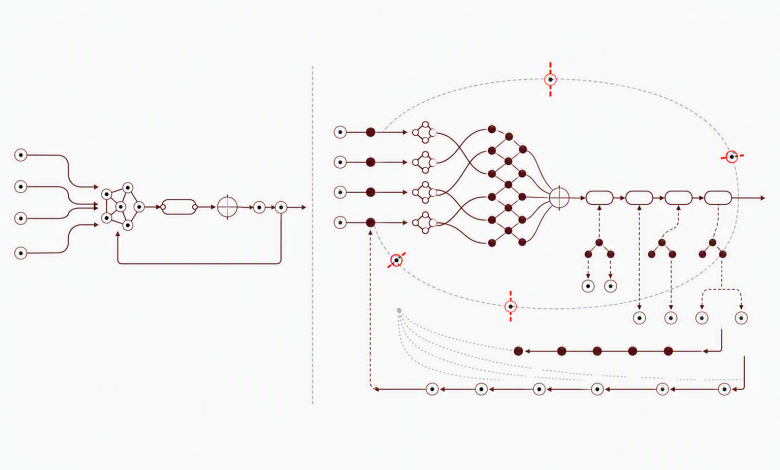
Synthetic Symbiosis begins with a simple design principle: intelligence must be connected to judgement, and judgement must remain connected to accountability. A few design considerations are especially important:
- Define risk envelopes before AI enters workflows.
What the system may do, must never do, what triggers escalation, what data it may access and which actions require approval. Consider boundaries by context: low-risk internal summary drafting compared to changing a customer commitment, releasing payment or influencing a regulated decision.
- Make decision rights visible.
Who can frame, challenge, override, pause, and approve, and how disagreement is resolved. Synthetic Symbiosis requires these rights to be designed into the work itself. The practical test is whether a team can explain, before an incident, who owns the decision and how disagreement is handled.
- Create learning loops from significant AI-supported decisions.
What the system recommended, what humans accepted or challenged, where overrides occurred, what outcomes followed and what the organisation learned.
This is where the model becomes operational rather than rhetorical, helping to link autonomy with accountability and reduce avoidable risk while preserving speed.
In a finance process, that might mean an agent can match invoices and flag anomalies, but it cannot release payment above a defined threshold without a named human approver. In a professional services context, it might mean an agent can assemble evidence and produce options, but the responsible partner must record the rationale for the recommendation. In a customer environment, it might mean autonomous resolution for routine cases, forced escalation for vulnerable customers, and clear logging of every decision path.
The danger of synthetic dependency
The most obvious risks of AI are familiar: bias, hallucination, cyber exposure, privacy leakage and opaque decision-making. We have likely each seen why these matter. But there is a more subtle organisational risk: synthetic dependency.
Synthetic dependency occurs when an organisation becomes more fluent in consuming machine-generated intelligence than in developing human judgement. Early indicators can look positive:
- Work moves faster.
- Documents look sharper.
- Analysis looks more comprehensive.
- Decisions appear more evidence-based.
Beneath the surface, however, people may be getting fewer opportunities to wrestle with ambiguity, test assumptions, disagree productively and learn from consequence.
A junior analyst who always receives a polished first draft may never learn how to structure the problem. A manager who uses AI to soften difficult feedback may avoid the tough conversation in which leadership skill is formed. A leadership team that asks agents for options but rarely examines its own assumptions may become faster at choosing without becoming better at deciding.
Early research highlights this performance-metacognition gap: AI can improve task output while weakening users’ ability to accurately assess their own work and spot errors (e.g., Fernandes et al., 2025). The strategic danger is not that people use AI too much. It is that organisations remove the friction through which expertise is formed.
Synthetic Symbiosis should therefore preserve developmental moments. Leaders need to ask what the AI missed, where uncertainty remains, what alternative explanation has been ignored and who would bear the consequence if the recommendation were wrong. The aim is not to slow everything down. It is to retain the forms of human friction that build discernment while removing the bureaucracy that merely wastes time.
Why the old organisation struggles
AI also reveals why many longstanding organisational problems have been so persistent.
Hierarchy often exists to manage risk, but it concentrates judgement at the top and delays weak signals from the edge, where incidents and customer churn begin. Silos protect expertise, but they fragment context and make coordinated decisions harder. Risk aversion can look responsible while training people to escalate every uncomfortable choice. Diffused accountability allows everyone to touch a decision while no one truly owns it.
These weaknesses become more consequential when synthetic systems are added. AI can spread information across boundaries, but only if the organisation has decided what should be shared. It can support distributed decision-making, but only if decision rights are clear. It can surface patterns, but only if leaders are willing to hear inconvenient signals.
In this sense, Synthetic Symbiosis is not a soft philosophy about people and machines getting along. It is a hard redesign challenge. The organisation must hold together autonomy and control, speed and deliberation, synthetic scale and human responsibility. The better the technology becomes, the less forgiving weak organisational design will be.
The leadership implication is profound. Leaders can no longer treat AI adoption as something delegated to technology teams and governed through compliance language. They must become designers of the conditions under which intelligence becomes action: clear purpose, explicit authority, visible accountability, transparent information and continuous learning. That work is organisational, cultural and technical at once.
More importantly, this work is also commercial. When comparable tools are available to competitors, advantage will not come from access to AI alone but from the quality of the human system into which AI is embedded.
From adoption to organisational wisdom
The next phase of AI strategy should therefore be judged by a different set of questions:
- Can the organisation distinguish between an output that is plausible and a decision that is wise?
- Can it make clear who has authority, who may challenge, who must approve and who owns the outcome?
- Can it distribute agency without dissolving accountability?
- Can people learn with AI, rather than merely lean on it?
These questions move the conversation beyond adoption theatre (high activity with low decision impact). They recognise that the central unit of AI value is not the model, the prompt or the agent. It is the decision system in which the technology participates.
One useful practical discipline is to map AI-supported work as a chain of judgement rather than a chain of tasks. At each point, leaders should ask: what judgement is being exercised, by whom or by what system, with what evidence, under what constraints and with what route for escalation? This reveals whether AI is strengthening the organisation’s capacity to decide or simply accelerating a fragile workflow.
Another discipline is to measure learning, not just usage. Adoption metrics may show activity. Better measures ask whether error rates changed, whether cycle times improved without reducing decision quality, whether overrides exposed useful patterns, whether teams can still perform without the system and whether people feel able to challenge an AI-supported conclusion.
The organisations that learn fastest will be those that treat every significant AI interaction as both an operational event and a developmental event. The machine helps the organisation act, but the human system must learn from the action. The approach should not be humans protected from AI, or AI constrained by human nostalgia. It should be a system that applies synthetic capability to increase human agency, collective intelligence and organisational responsibility.
The competitive edge moves to judgement
For much of the information age, organisations competed through access to knowledge, proprietary expertise and superior analysis. AI is eroding that basis of advantage. When intelligence becomes cheaper, faster and more widely available, the premium shifts to interpretation, prioritisation and responsibility.
The organisations that flourish will not necessarily be those with the most sophisticated models or the largest number of agents. They will be the organisations that can generate superior judgement and translate it into effective action. That requires a different kind of AI ambition: less fascination with synthetic intelligence as a standalone capability, and more discipline in designing the human and organisational systems that give it purpose.
Synthetic Symbiosis is a name for that discipline. It asks organisations to make intelligence relational rather than merely computational, to connect autonomy with accountability, and to ensure that human judgement develops as synthetic capability expands. It is ambitious because it refuses the easy story that better tools will automatically create better organisations.
The future of AI will be shaped less by what machines can do than by what organisations can do with them, safely, coherently, and at speed.
About the Authors
Andrew Lopianowski and Mike Pino are the authors of HumanCorps: Redesigning Organisations for the Wisdom Age (Routledge, July 2026). Combining decades of expertise across human-centred transformation and organisational redesign with deep knowledge in AI, decision intelligence, enterprise learning, and synthetic enablement, they aim to educate on how organisations can evolve for the Wisdom Age.
REFERENCES
Fernandes, D, Villa, S, Nicholls, S, Haavisto, O, Buschek, D, Schmidt, A, Kosch, T, Shen, C & Welsch, R. 2024. Performance and metacognition disconnect when reasoning in human-ai interaction. arXiv preprint arXiv:2409.16708. Available at: https://arxiv.org/abs/2409.16708
Karim, H, Sitharaman, S, Gupta, D & Rawat, DB. 2026. From agent failure paths to quantified residual risk: A compositional framework for resilient agentic ai. In 2026 56th Annual IEEE International Conference on Dependable Systems and Networks Workshops (DSN-W) (pp. 9-16). IEEE. Available at: https://ieeexplore.ieee.org/abstract/document/11594618/
Khan, MT, Ee, J & Tripathi, S. 2026. Beyond Efficiency: A Qualitative Exploration of Human Agency, Epistemic Vigilance, and Cognitive Boundaries in Human-AI Interaction. Open Journal of Social Sciences 14.3.251-67. Available at: https://www.scirp.net/pdf/jss_6501326.pdf
Mitchell, RJ. 2026. When the Agent Is the Adversary: Architectural Requirements for Agentic AI Containment After the April 2026 Frontier Model Escape. arXiv preprint arXiv:2604.23425. Available at: https://arxiv.org/abs/2604.23425
Sidra, S & Mason, C. 2026. Generative AI in human-AI collaboration: validation of the collaborative AI literacy and collaborative AI metacognition scales for effective use. International Journal of Human–Computer Interaction 42.7.5084-5108. Available at: https://www.tandfonline.com/doi/abs/10.1080/10447318.2025.2543997
Varghese, MA & Sharma, P. 2025. Tracing 40 years of research on Artificial Intelligence and human metacognition from 1985 to 2024. Discover Psychology 5.1.187. Available at: https://link.springer.com/article/10.1007/s44202-025-00463-z
Westover, JH. 2026. Human–AI Handovers: A Dynamic Authority Reversal Framework for Trust Calibration and Transitional Accountability. Available at: https://www.preprints.org/manuscript/202603.0390