A handful of years ago, the best AI agents could barely operate a computer. Stanford’s 2026 AI Index, released in April, tracked accuracy on the OSWorld benchmark, which tests whether an agent can complete real tasks inside desktop software. Scores rose from about 5% in 2024 to 66.3% this past year.
That jump changes the commercial conversation. Agents that can reliably navigate software can also place orders, book services and negotiate terms on someone’s behalf. McKinsey’s agentic commerce research estimates that AI agents could orchestrate up to $1 trillion in US retail revenue by 2030.
Gartner, for its part, expects 40% of enterprise applications to include task-specific agents by the end of this year, up from less than 5% in 2025.
The legal plumbing underneath those transactions has moved more slowly. In a February briefing, lawyers at Clifford Chance warned that many agents now operate under “legacy technology contracts written for passive, predictable software firmly under human control,” and that “a liability gap is emerging” as businesses hand agents authority over payments, orders and supply chains. McKinsey’s own analysis flags the same pressure point, noting that companies will need ways to establish accountability when autonomous systems make mistakes.
Most of that accountability still runs through human institutions. When an agent misreads an instruction or a counterparty disputes whether a service was delivered as promised, the fallback is a support queue, an arbitrator or a court. Those processes were built for disagreements between people and companies, and they move at human speed. As the volume of machine-to-machine agreements grows, a growing group of builders is asking whether some of that judgment can be handled by the network the transaction runs on.
GenLayer is one of the projects betting that it can. The protocol describes itself as an adjudication layer for the agentic economy: validators running a range of different AI models reach consensus on questions that a conventional smart contract cannot answer on its own, such as whether a deliverable met the terms of an agreement. GenLayer calls these “intelligent contracts.”

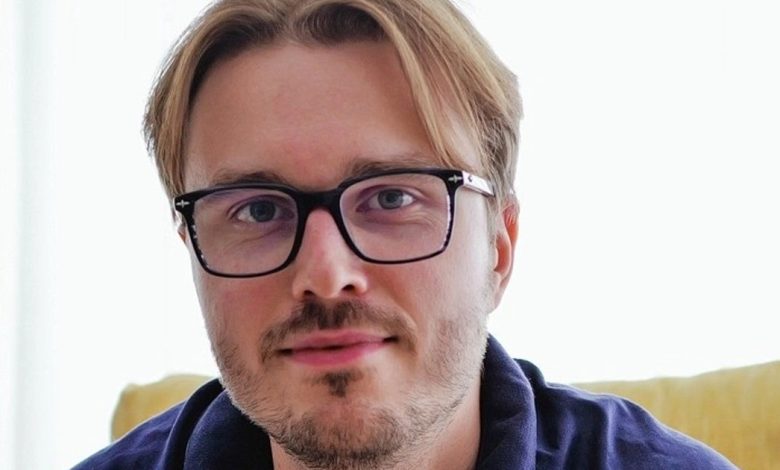
The GenLayer Foundation, which stewards the network, announced this week that it has appointed co-founder Edgars Nemše as its CEO as the project prepares for its token launch and mainnet. Nemše, who co-authored the GenLayer whitepaper and has served as chief product officer, is leaving GenLayer Labs, the protocol and product company, to join the Foundation full-time.
“The modern economy could not exist without contracts, yet the traditional methods of resolving them remain slow and expensive,” Nemše said. “Digital systems settle in seconds, while a contract dispute can take years.”
His background leans technical and quantitative. Before GenLayer, Nemše was chief technology officer at StakeHound and developed trading strategies at Millburn Ridgefield, a quantitative investment fund with $8 billion in assets. He led GenLayer’s product from its first prototype through its current testnets.
The Foundation says the choice of a technical operator reflects a change in its job. Since its founding in 2025, its work has centered on setup: legal structure, the framework, early institutional relationships and launch capital. Its next phase is operational. The Foundation will manage the treasury, onboard projects and give them engineering support, expand the validator set and set up the network’s governance.
David Riudor, who founded the Foundation and led it until now, will become Chief Institutional officer, Overseeing capital and partnerships. Iván Raskovsky continues as chief ecosystem officer and Xavi Cabezas as chief marketing officer. Albert Castellana remains at the head of GenLayer Labs, which is responsible for delivering mainnet.
Nemše’s stated priorities start with getting the launch and early network operations right and running the treasury transparently. The second is adoption, which he frames as the main challenge now that the core technology has reached testnet. The Foundation plans to find, fund and work alongside teams building intelligent contracts into real products.
According to a statement from the company, rhe Foundation intends to transfer its own responsibilities, including grants, treasury decisions and governance, to an on-chain organization called DeepThought, which will eventually take over the Foundation’s role entirely. It has set a four-year timeline for the handover, with work starting immediately.
“To put our money where our mouth is, the Foundation has set itself a clear mission: to move all of its work onto GenLayer, run it autonomously on the network and, eventually, disappear entirely,” Nemše said.
Whether agent-driven commerce reaches McKinsey’s trillion-dollar estimates will depend partly on questions far from the model labs, such as who decides when an agent got it wrong, how quickly, and at what cost. GenLayer’s leadership change is a bet that the answer can be written into the network itself.