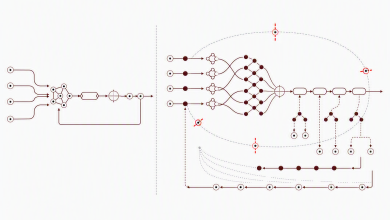
A practical Decision Gate for keeping human judgment where it matters most
The riskiest AI decision in an enterprise may be the one that feels too small to notice. An assistant closes a security alert, recommends a customer action, or decides that evidence is sufficient for a control check. Each action can look sensible in isolation, yet each can become a business decision before anyone has consciously agreed that the system may make it alone.
That is the uncomfortable point: accuracy is not permission. A model can be fluent, well-sourced, and even technically correct at the surface level, but still be wrong for the customer, contract, policy, or moment. AI governance is the discipline of deciding where the system may move fast, where it must ask, and who owns the consequence when it gets the decision wrong.
NIST’s Generative AI Profile identifies risks including confabulation, harmful bias, data privacy, information security, and intellectual-property concerns. But many real governance failures begin earlier than a dramatic model error: a useful workflow crosses a decision boundary without a named owner, a clear stop condition, or a visible record of why it was allowed to act.
Start with consequence, not confidence
Confidence scores can be useful signals, but they are not decision rights. A model may sound certain while missing a contractual clause, a customer exception, a policy nuance, or a weak signal that only matters in combination with other facts. The right boundary is determined by the consequence of the action, not by how convincing the answer appears.
A low-consequence task—summarising a meeting or preparing a first draft—can usually be automated with light controls. A task that changes access, closes a security case, creates financial exposure, or makes a promise to a customer needs a different rule. The practical fix is simple: classify every AI action as prepare, recommend, execute with approval, or prohibited.
That classification prevents automation by default, where a harmless pilot quietly becomes an ungoverned decision-maker. It also makes the organisation faster: teams do not need to debate every use case from scratch because the safe lanes and hard stops are already visible.
Give the reviewer a real stop button
‘Human in the loop’ sounds reassuring, but it means very little if the reviewer lacks time, context, or authority to say no. A rushed click on an unfamiliar recommendation is not accountability; it is merely a record that someone saw the screen. Review becomes meaningful only when the person can pause the workflow, request better evidence, or override the output without needing permission from the system they are reviewing.
For consequential uses, assign one decision owner—not a generic team mailbox. That owner should understand the business purpose, the accepted level of risk, and the escalation path. They do not need to inspect every routine action; they need to own the exceptions and the moments where the system moves from assistance to impact.
Turn evidence into a decision, not a pile of proof
AI is very good at gathering material: policies, tickets, attestations, logs, and summaries. It is less able to decide whether that material is current, contradictory, relevant to the specific use case, or sufficient for the decision being made. Speed can collect proof faster, but it does not turn proof into assurance.
A useful operating pattern is a three-part source ladder: let the system collect the evidence, require a human to validate material gaps or conflicts, and record the decision with the reason the evidence cleared the threshold. This makes the division of labour visible instead of leaving it implicit. It is especially valuable in security and compliance work, where ‘a policy exists’ is not the same as ‘the policy answers this risk’.
Reopen the gate when the context changes
An AI system can change its risk profile even when nobody edits its source code. A new model version, a prompt revision, a data connector, a broader user group, or a new downstream action can all change what the system can see and do. Treating governance as a launch checklist misses the exact moments when a sensible control can become insufficient.
The UK’s National Cyber Security Centre frames secure AI across design, development, deployment, and operation. That lifecycle view is valuable because monitoring is not a post-launch report; it is an operating responsibility. Reopen the decision whenever the model, data, users, or consequences change—and make the reassessment visible enough that a later reviewer can understand why the system was allowed to continue.
The five-question Decision Gate
Before an AI workflow takes an action beyond drafting or sorting, ask five short questions. The answers can live in a ticket, an architecture record, or a change request; the important thing is that they exist before the workflow acts.
Action scope. What exactly is the system allowed to do, and what is it only allowed to recommend?
Decision owner. Who has the authority to pause, override, or accept the consequence of the action?
Hard stops. Which outcomes are prohibited regardless of a model’s confidence or apparent usefulness?
Evidence threshold. What must be true before the action is considered supported rather than merely plausible?
Reset trigger. Which changes—model, data, audience, use case, or downstream action—force the team to reassess the decision boundary?
The goal is faster trust, not slower AI
Good governance is not a campaign against automation. It is how an organisation makes automation dependable: machines handle repeatable preparation and low-consequence execution; people set the purpose, interpret exceptions, accept trade-offs, and change the rules when context shifts. That division lets teams move quickly in the safe lanes without pretending that every decision carries the same risk.
The strongest programmes will not be the ones with the longest policy documents. They will be the ones where a frontline user can answer a simple question at the point of action: ‘Is this system helping me decide, or is it deciding for us?’ If the answer is the latter, human judgment needs a defined place to step in.
Sources: NIST AI RMF | NIST Generative AI Profile | UK NCSC secure AI guidance