Enterprise businesses are granting agentic AI more and more authority, yet they are pulling back human oversight at nearly the same pace.
In the first half of 2026, the share of organizations that required a person to review and approve actions before an agent took them fell from 40% to 25%, according to JumpCloud’s Q3 2026 IT Trends Report. Over the same period, full agent autonomy more than doubled, climbing from 11% to 26%.
This trade-off can appear to make sense in places where oversight feels like friction. After all, friction is exactly what agentic AI is supposed to eliminate. But high-risk decisions are the wrong place to optimize for speed.
As a result, organizations risk dialing down oversight and automating the decisions they can’t afford to get wrong.
The Critical Part Enterprises Mistakenly Automate
One way of looking at an enterprise business’s AI stack is in the context of body parts: First, employees are the brain, applying judgment and context to decisions with the proper expertise; second, traditional AI serves as the eyes and ears, identifying patterns and signals across the business faster than any team could alone; third, agentic AI becomes the hands and feet, executing the work across systems once a direction is set.
The hands and feet are the most visible payoff, so naturally, that’s where much of the attention goes for agentic AI projects. It’s also the easiest way to show a board that AI adoption is underway.
But the risk is that, in the rush to enable the hands and feet to move faster, organizations minimize the brain’s role in the process. Proper oversight shouldn’t mean sacrificing autonomy or speed. When done well, it should enable a company to extend autonomy while maintaining the judgement and controls needed to catch a bad decision before it snowballs.
Build Human Oversight Into Agentic Workflows
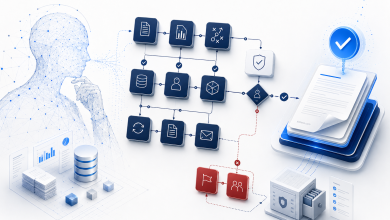
Oversight should be built directly into workflows rather than bolted on afterward. Say an agent identifies an opportunity or problem and recommends a course of action in response. A person should review the recommendation and, once it’s approved, let the agent execute. The human stays where judgment matters the most, while agents handle the execution and coordination of the task.
Not every decision warrants the same level of scrutiny, and treating them alike is a mistake. The most common oversight model today is after-the-fact automated review, implemented by 44% of the organizations in the JumpCloud study. While this may work for low-stakes work, it’s a poor fit for financial decisions or actions that touch customer relationships. The right employee should always sign off before the action, not after.
Consider a global manufacturer that faces a sudden component shortage from a key supplier. An agentic system detects the disruption early, models the effect on production and recommends rerouting orders to an alternate supplier. Because this action affects where money is spent and reshapes production, a procurement lead reviews the recommendation, confirms the alternative supplier meets all requirements and approves it before the agent executes the changes across purchasing and planning systems.
Left fully autonomous with no review, the agent may commit a large order to the wrong supplier or one that has failed a compliance check, turning a fast decision into a costly one to correct after the fact.
Oversight Is Only As Good as the Data Beneath It
Human expertise, often built on decades of industry experience, should absolutely be relied upon, and in this model, human review only works when the reviewer can trust the information in front of them. Therefore, agent-driven recommendations can’t rest on inconsistent, incomplete or unverified data. Governed data is the foundation that ensures the reviewer has an accurate, complete picture of the situation before providing their expertise to the decision.
When an organization’s data foundation is incomplete, human oversight has nothing solid to stand on. Yet this is still a real problem for many enterprises. Only 52% of organizations track or audit the data their AI agents can access, according to the same JumpCloud report, meaning nearly half cannot fully see what data their agents work from. It’s worth remembering that an MIT study last year found roughly 95% of enterprise AI pilots failed to deliver measurable returns.
The AI models are rarely the culprit for this missing value. More often, the fragmented, ungoverned data beneath them is.
Where to Start
Closing the gap between autonomy and oversight doesn’t require a complete governance overhaul. A few deliberate steps can set an organization on the right path:
- Map decisions by consequence, not convenience. Identify the actions that agents already take, or soon will, and sort them by what happens if one goes wrong. The high-consequence decisions are where human review must occur before execution.
- Match the oversight model to the risk. Reserve after-the-fact review only for low-stakes, easily reversible work. For anything with significant financial exposure or customer impact, require sign-off before an agent is allowed to move the task forward.
- Strengthen the data foundation before widening authority. Give agents a governed, single source of truth to work from, so the human experts reviewing the recommendations judge the decision properly instead of second-guessing the data.
- Name an owner for every automated decision. As routine coordination shifts to agents, someone still has to own outcomes and maintain the authority to step in when needed.
Agentic AI delivers its value by taking action, and enterprises are right to give the technology more room to run. But removing humans entirely from important business decisions for the sake of AI transformation is a gamble that won’t pay off in the long run. Companies must keep judgment in the loop where it counts, making decisions with data they can trust, so that agents move quickly and in the right direction.