A footstep registers on an accelerometer. A door opening writes a timestamped line to a log. A card tap fixes a purchase to a place and a second. Each of these was, until recently, a fleeting physical moment that left little behind. Now each one authors a durable entry in a database, without anyone deciding to write it down.
This is a pipeline, not a single event: the physical world is sensed, captured, encoded, stored, fused, reconstructed, and eventually acted upon. Understanding how a real event becomes a machine-readable record and where that translation loses or distorts the original is fast becoming basic technical literacy. This article walks the pipeline stage by stage.
| Stage | What happens to the event |
| Sense | A physical quantity (motion, light, sound, position) is detected by a sensor |
| Capture & encode | The signal is sampled and converted into structured, timestamped data |
| Store | The data is written somewhere durable, indexed, and made searchable |
| Fuse & reconstruct | Multiple partial records are aligned into one account of what occurred |
| Interpret & act | Systems read the record and trigger consequences |
The Sensor Layer: The World Grows Nerve Endings
The pipeline begins with sensors that convert a physical phenomenon into an electrical signal. Their proliferation is the precondition for everything that follows: IoT Analytics counted roughly 21.1 billion connected devices by the end of 2025, and most carry several sensors each. The physical environment is now densely instrumented by default.
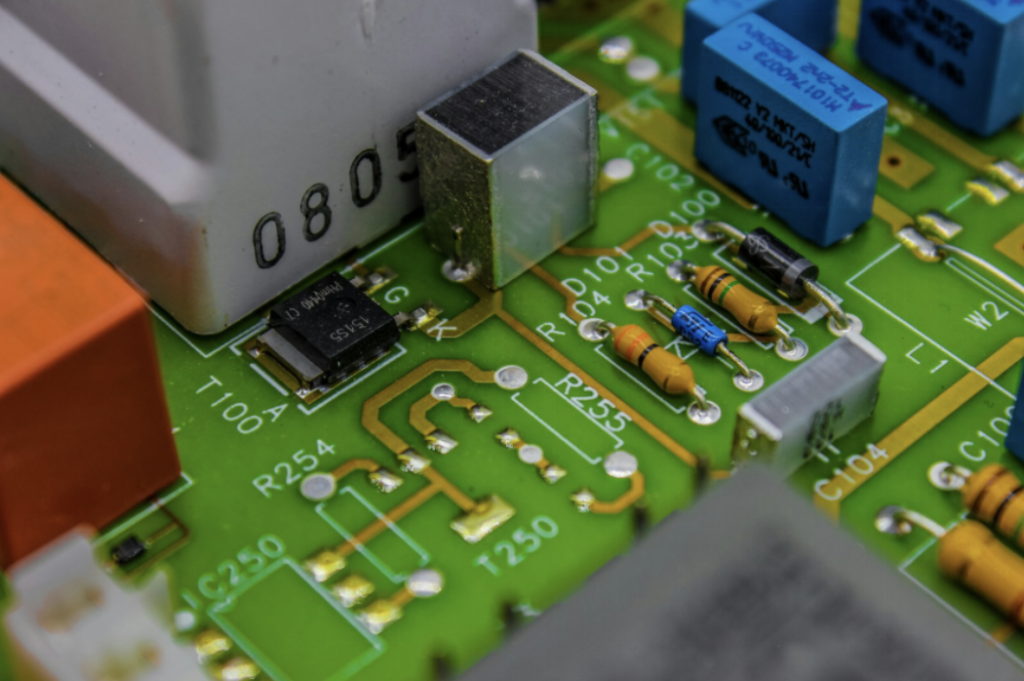
Different sensors answer different questions about an event, and a modern device typically runs many at once:
- Accelerometers and gyroscopes measure motion and orientation, which is how a phone infers steps, a fall, or the jolt of a collision without any camera involved.
- GPS and radio positioning fix location and, sampled over time, produce a track a route reconstructed from a sequence of coordinates rather than a single point.
- Optical sensors and LiDAR turn light and distance into images and point clouds, letting a system record not just that something was present but its exact shape and position in space.
Each sensor emits a raw stream that means nothing on its own. Before it can become a record, that stream has to be captured, sliced from continuous reality into discrete numbers.
Capture: From Continuous Reality to Discrete Samples
Reality is continuous; digital records are not. Capture is the act of sampling, taking measurements at intervals and discarding everything between them. A camera records thirty or sixty frames a second; an accelerometer might sample a few hundred times a second. Whatever happens between two samples is simply never recorded.
This sampling rate is a design decision with real consequences. Too coarse, and a fast event slips through the gaps between measurements; too fine, and the data volume becomes impractical to move and store. The record is therefore never the event itself but a series of snapshots from which the event is later inferred.
The point is easy to miss but important: from the very first step, the digital record is a reconstruction, built from samples. Once those samples exist, the next stage gives them structure and meaning.
Encoding: Turning Signals Into Structure
A captured sample is just a number until it is encoded and assigned a format, a unit, and a place in a schema. This is the analog-to-digital conversion at the heart of the pipeline: a continuous voltage from a microphone or an accelerometer becomes a stream of integers a computer can process. Encoding is where an event becomes rows and fields: a timestamp, a set of coordinates, a speed, a device identifier. It is also where compression happens, trading exact fidelity for size so that the record can be stored and transmitted at scale.
Metadata is the quiet workhorse of this stage. A photograph is not only pixels; it carries the time, the location, the device, and often the settings under which it was taken. That surrounding data frequently proves more consequential than the content itself, because it establishes the when and where that turn an image into evidence of an event.
Structure without a reliable clock, however, is nearly useless. The single most load-bearing field in almost any record is the one that says when it happened.
The Timestamp Is the Backbone
Sequence is meaning. Whether a brake was applied before or after an impact, whether a message was sent before or after a door was unlocked, these questions are answered entirely by timestamps, which makes accurate, synchronized time the backbone of the entire pipeline.
The difficulty is that independent systems keep independent clocks. In vehicle forensics, for example, the event data recorder, the infotainment unit, the telematics service, and a paired phone can each run on a slightly different clock, and analysts note that reconciling those offsets is a necessary step toward a defensible timeline. A few seconds of drift between sources can reverse the apparent order of events.
This is why time synchronization protocols and signed timestamps matter far more than their obscurity suggests. Once events across many devices share a common, trustworthy clock, their records can be stored together and, later, reassembled.
Storage and the Rise of the Permanent Record
Historically, most events faded: unobserved, unrecorded, gone. Storage has reversed that default. The volume involved is hard to overstate: IDC has projected the global datasphere, the total data created and replicated worldwide, at roughly 180 zettabytes for 2025, with connected devices alone generating a large share of it.
Cheap, durable, searchable storage changes the nature of a record. An event captured today is not just kept; it is indexed, queryable, and often replicated across data centers, which means it can be retrieved and cross-referenced years later. IDC has projected that roughly half of the world’s stored data would reside in public cloud environments by 2025, concentrating these records in a small number of large providers. The record has shifted from something transient to something persistent by default.
Persistence, though, only makes single streams durable. The harder and more valuable step is combining many of them into one coherent account the work of fusion.
Sensor Fusion: Assembling One Event From Many Streams
Almost no significant event is captured by a single sensor. A moment on a road is witnessed in fragments by the vehicle’s own modules, by a phone in a pocket, by a camera on a nearby building, by a wearable on a wrist. Sensor fusion is the discipline of merging these partial, differently-formatted streams into one internally consistent picture.
The scale of raw material is considerable. IDC has estimated that a highly automated vehicle can generate more than three terabytes of data per hour across its cameras and sensors, and fusion is what turns that flood into a single usable account rather than a pile of disconnected logs. The value lies not in any one stream but in their agreement.
Fusion is also the bridge to the pipeline’s most consequential output. Once independent streams are aligned on a shared timeline, an event that no single device fully saw can be rebuilt in detail the task of reconstruction.
Reconstruction: Rebuilding What Happened From Data
Reconstruction is the point where the pipeline pays off: an event no one recorded in full is rebuilt from the digital traces it left behind. A decade ago this depended heavily on physical evidence and human recollection. Increasingly it is a data-engineering exercise aligning independent logs into one defensible sequence of what happened, and when.
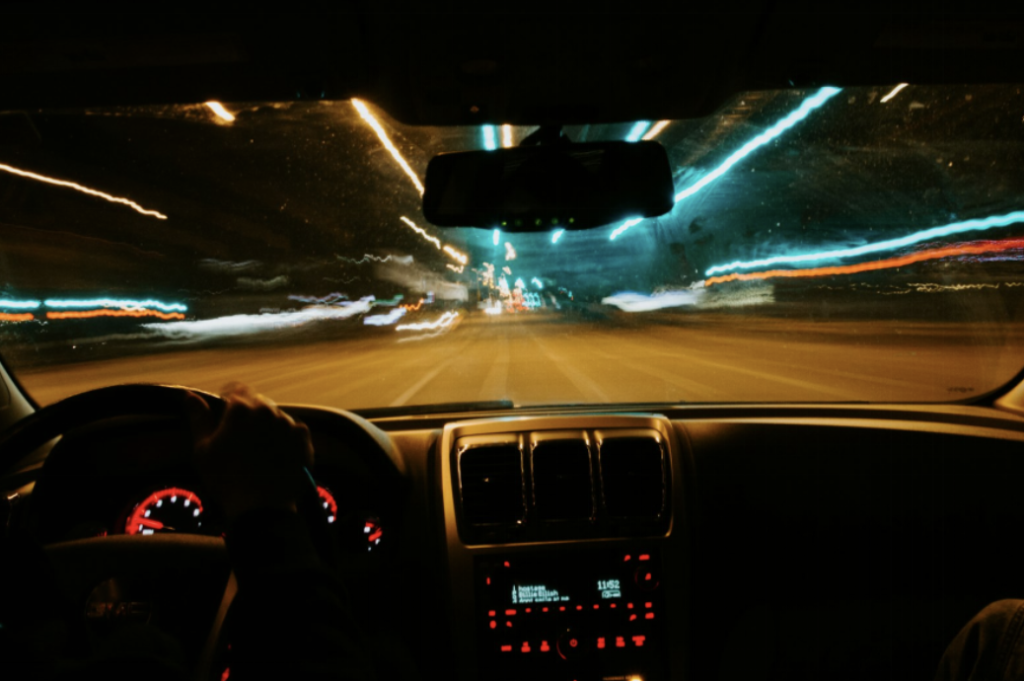
Vehicle collisions are the clearest example, because the reconstruction is almost entirely a matter of merging data streams. Since 2014, event data recorders have been standard in most new U.S. passenger vehicles, capturing speed, braking, throttle, steering, and seatbelt state in roughly the five seconds around an impact; investigators then combine that with telematics, dashcam footage, and traffic-camera timestamps. The case a Fort Myers Car Accident Attorney builds now rests less on eyewitness memory than on reconciling those independent records into a single, consistent timeline the physical event rebuilt from its digital shadow.
The same method generalizes well beyond the road. Workplace incidents, warehouse accidents, and logistics disputes are increasingly reconstructed from access logs, machine telemetry, and camera metadata. One technical caveat runs through all of it: this evidence is perishable: an event recorder’s buffer can be overwritten if a vehicle is restarted, and camera footage is often purged within days so the record is only as good as the speed with which it is preserved.
Fidelity, Gaps, and What the Data Doesn’t Capture
A reconstruction is only as trustworthy as the record beneath it, and that record is a model of the event, not the event itself. Every stage of the pipeline introduces small distortions that can accumulate into a misleading picture, which is why fidelity deserves as much attention as capability.
The distortions are specific and well documented. A 2026 study of vehicle forensic tools found that extracted data showed quantization, timestamp offsets, and missing fields, and that GPS tracks in particular suffered from spatial downsampling, coordinate rounding, and timezone misinterpretation each capable of undermining the alignment of one source against another.
| Distortion | What it means for the record |
| Sampling gaps | Fast events between measurements are never captured and must be inferred |
| Quantization | Continuous values are rounded to fixed steps, blurring fine detail |
| Timestamp offset | Clocks that disagree can reverse the apparent order of events |
| Compression loss | Detail is discarded to save space, sometimes the detail that mattered |
None of this makes the record worthless; it makes it a representation that must be read with its limits in mind. And it raises a prior question: how can a record be trusted to be genuine in the first place?
Provenance and Tamper-Evidence: Trusting the Record
If a record is to stand in for reality, its integrity has to be demonstrable. This is the domain of provenance: proof of where a record came from, that it has not been altered, and that its chain of custody is intact. As synthetic media created with AI tools grows harder to detect, this verification layer becomes more important than the content it protects.
The technical tools here are maturing quickly. Cryptographic hashing can show that a file has not changed by a single bit; digital signatures bind a record to its source; and some forensic systems are beginning to write event data to append-only or blockchain-based ledgers, timestamping and signing entries to create a verifiable chain of custody suitable for court. In parallel, cross-industry content-provenance standards now let cameras and editing tools attach a signed history to an image or video, so a later system can check how it was produced rather than trusting it on sight.
Provenance turns raw data into a record that can be relied upon. Once a record can be trusted, systems stop merely storing it and begin acting on it automatically.
From Record to Decision: When Data Acts Back
The pipeline closes its loop when a record triggers a consequence with no human in between. The digital account of an event is not only archived; it is read by other systems that decide, price, flag, or dispatch based on what it says. Reality becomes a record, and the record becomes an action.
This automated response now spans ordinary systems:
- Insurance and claims. Telematics records of speed and braking feed pricing and automated claim assessment, so how a vehicle was driven can adjust a premium or settle a claim with limited human review.
- Safety and dispatch. A sharp deceleration detected by a phone or car can automatically place an emergency call, turning a sensor reading directly into a real-world response.
- Operations and compliance. Warehouse and fleet telemetry triggers maintenance, routing, and enforcement actions the moment thresholds in the data are crossed.
When records drive decisions this directly, the quality of the earlier stages stops being academic. A rounding error or a missing sample can become a wrong price, a false alert, or a mistaken denial which is why the costs of total recording deserve a clear look.
The Cost of Total Recall
A world that records itself continuously carries real costs, and they are not only about privacy. The most obvious is exposure: when ordinary movement, speech, and activity are logged by default, the sheer completeness of the record changes the balance between individuals and the institutions that hold it.
There are physical costs too. Storing and processing a datasphere measured in the hundreds of zettabytes consumes energy and hardware at industrial scale, and much of the captured data is retained long after any use for it has passed. Recording everything is not free, financially or environmentally.
There is also a subtler effect on behavior. People act differently when they know the record is always running, and a system that never forgets removes the ordinary latitude that unrecorded life once allowed. These are not reasons to abandon the technology, but reasons to design it deliberately.
Designing Records We Can Live With
If physical events are going to be captured as a matter of course, the records they produce should be engineered with the same care given to any critical system. Several principles are already visible in the better implementations:
- Data minimization. Capturing only what a purpose requires, and for no longer than needed, limits both exposure and cost without discarding the record’s usefulness.
- Provenance by default. Signing and timestamping records at the moment of capture makes their integrity checkable later, rather than assumed.
- Contestability. A record that drives decisions needs a clear, accessible way to challenge and correct it, since no capture pipeline is free of error.
These are engineering choices as much as policy ones, and they are cheaper to build in at the start than to retrofit. The aim is not less recording for its own sake, but records that are accurate, verifiable, and accountable to the people they describe.
The Takeaway
The translation of physical events into digital records has become continuous, automatic, and detailed enough that the record now functions as a first-class version of reality consulted, trusted, and acted upon in place of direct observation. It travels a real pipeline, from sensor to stored data to reconstruction to decision, and every stage shapes how faithfully the original survives.
That is precisely why the pipeline deserves scrutiny rather than awe. A record is a model of an event, built from samples, clocks, and compression, and it carries the limits of each. Treating it as such powerful, useful, and fallible is the difference between using these systems well and mistaking the record for the reality it only represents.