

Stop hunting an AI unicorn: SaaS is still the real goldmine
By Rami Cassis is an international growth investor and principal of Parabellum Investments, his family office that invests in lower- and middle-market businesses worldwide.

AI’s momentum is indisputable, and investors are flocking to it. But as swathes of them hunt for the next Anthropic, many are overlooking an already proven goldmine: lower middle-market SaaS firms. AI might have the hype, but SaaS firms have a core tech offering, bolstered by loyal clients, reliable revenue, and a layer of wraparound services that make a business particularly sticky – and all the more difficult to replace in the age of AI.
Right now, investors are pouring hundreds of billions of dollars into AI firms, models, and companies related to the buildout. Investment in the US market alone is projected to account for $581 billion of the $1 trillion global figure in 2026 (Goldman Sachs), and amid a surge in agentic AI launches, the technology doesn’t look like it’s going anywhere.
But it is not just investment that is growing. As AI continues to dominate, fears that it will replace SaaS firms’ entire offerings are also rising, and investors have pulled back from the sector. So much so that reports of a looming ‘SaaSpocalypse’ hit new levels this summer. While these concerns appear to have mellowed for larger enterprises like Salesforce – whose blowout Q2 earnings led to a 22% stock surge (CNBC) – SaaS firms in the lower middle market are slowly being forgotten. And it is at investors’ own expense.
It is no secret that the technology sector is becoming crowded. In the UK, a record 56,615 new tech businesses were incorporated in 2025 (RSM), while in the US, over 60,000 “High Tech” startups exist, including 2,801 created in 2026 alone (Tracxn).
That is thousands of businesses, all fighting for attention and customers, typically in similar verticals and with overlapping product offerings. Finding a business in this pile that can regularly outperform competition is increasingly difficult, and for investors hoping to tap the next SpaceX, it can take years, if it ever happens at all.
That’s exactly why I focus on lower middle-market SaaS firms with strong product-market fit and a speciality focus. Don’t get me wrong, plenty of SaaS companies offer similar products, like CRMs or project management tools, but I tend to ignore those and dig deeper. Because that is where niche business-to-business SaaS firms, which have no interest in becoming another unicorn, operate.
The key is finding the businesses that lead a narrow vertical, because there are plenty of “boring” or “unglamorous” industries where SaaS firms thrive. Businesses like Funeral Manager are a prime example, with hyper-specialist software that solves industry-specific issues for funeral directors, such as a digital mortuary built for compliance, resource-planning tools to allocate staff, vehicles, and facilities, and memorial planning software (Funeral Manager).
Not only is the offering business-critical – no one wants to mismanage a funeral – but because of the specificity, competition in the sector is far lower than in typical SaaS sectors, like CRM systems.
This is just one example, but the principle can be applied across verticals. Fundamentally, a niche but core software offering provides a layer of safety to the business model. And clients are unlikely to hop between competitors if the service works well for them, especially when compliance, regulatory, and operational factors are involved.
In a market where anyone can generate software, though, the particularly important layer for SaaS businesses is the extra services around the offering. Top-tier customer support, custom onboarding, bespoke system integration, and product training, for example, all deepen the client relationship and lead to a loyal and well-embedded customer base – as well as reliable annual recurring revenue.
These businesses do, of course, face their own challenges. Time and time again, I have seen SaaS firms that in concept are solid businesses, but in practice have struggled to execute long-term growth. Perhaps because they haven’t invested properly in the sales and marketing pipeline, or they have mishired, leading to a lack of robust management across the business; either way, it leaves a business treading water, with a core offering that keeps it alive but with limited growth prospects.
This is where an investor who is ready and willing to get their hands dirty can step in and secure impressive returns. A niche SaaS business with reliable ARR, a loyal client base, a hard-to-replace product, and a wraparound layer of services is invaluable. And despite fears that AI will wipe them out, the technology can be used to bolster these firms’ operations – not replace them.
It is not easy work, but it is rewarding. For an investor minded towards growth, lower middle-market SaaS firms can deliver impressive returns – despite what the ‘SaaSpocalypse’ fearmongers might tell you.

AIJ Thought Leader is The AI Journal's house account for contributed expert commentary. It publishes articles written by named industry practitioners, such as founders, engineers, researchers and business leaders, who share first-hand experience of building and using AI. Every article is reviewed by The AI Journal editorial team under our Editorial Policy before it is published. Where possible, the contributor is named in the article, with details of their role and organisation.
More from AIJ Thought Leader
See all AI & Technology
The next test for interview AI is whether its answers are yours
 Enterprise AI
Beyond the pilot: Why platform-first architecture determines whether enterprise AI scales
 AI & Technology
Critical Wisdom for the AI Age
 Enterprise AI
Beyond the Hype: Why Enterprise AI Investments Fail Without Deterministic Economics
Recommended for you
More stories Cyber Security
How AI Models Reduce False Positives in Network Security Alerts
 AI & Technology
Why Modern Machines Are Becoming More Dependent on Software Updates
 AI & Technology
How AI-Powered Simulations Are Changing the Way Future Technologies Are Tested
 AI & Technology
The Economics of Doing Less: How Aleksandr Nesterov Makes Mobile Apps Pay
 AI & Technology
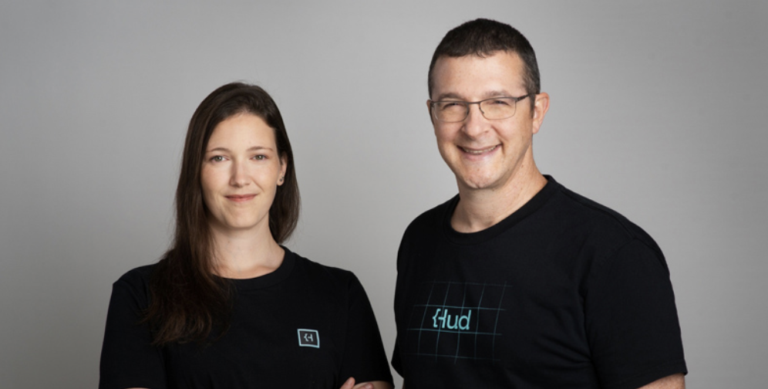
AI Can Write Software in Minutes. Hud Wants to Make Sure It Doesn’t Break Production
 AI & Technology