

Why Modern Machines Are Becoming More Dependent on Software Updates
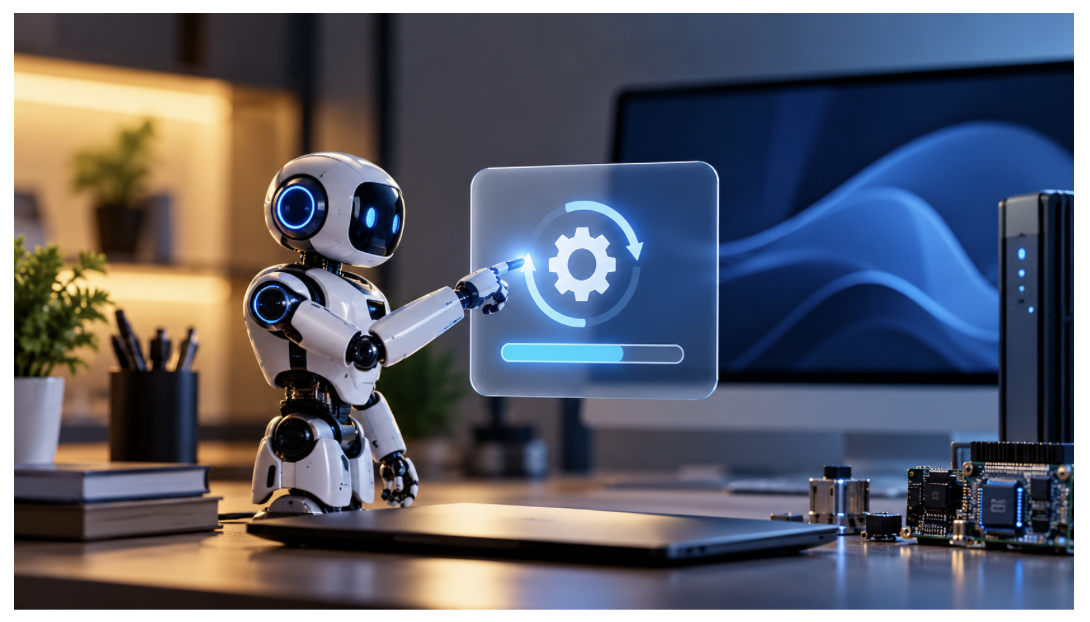
A machine can be mechanically sound and still malfunction because its software is outdated. From industrial robots and electric vehicles to medical equipment, modern machines increasingly depend on code to control functions, interpret sensor data, and maintain reliability.
Software updates are no longer limited to fixing bugs or adding features. They have become essential to keeping physical equipment secure, accurate, and functional throughout its lifespan.
Hardware No Longer Defines Everything
Traditional machines relied on mechanical components, electrical circuits, and fixed control systems. Their capabilities were largely determined during manufacturing, and significant improvements often required physical modifications. Modern equipment uses programmable controllers to determine how motors respond, sensors communicate, and components coordinate their actions.
An electric vehicle illustrates this shift. Its battery management system uses software to monitor cell temperatures, estimate charge levels, and manage operating conditions. Manufacturers can sometimes improve these functions through updates without replacing hardware.
This has introduced the concept of software-defined machines, where programmable functions increasingly determine a product’s capabilities.
However, software cannot overcome physical limitations. An update cannot repair a damaged sensor or increase a motor’s strength beyond its design specifications. Mechanical maintenance remains essential.
The Software Inside Modern Machines
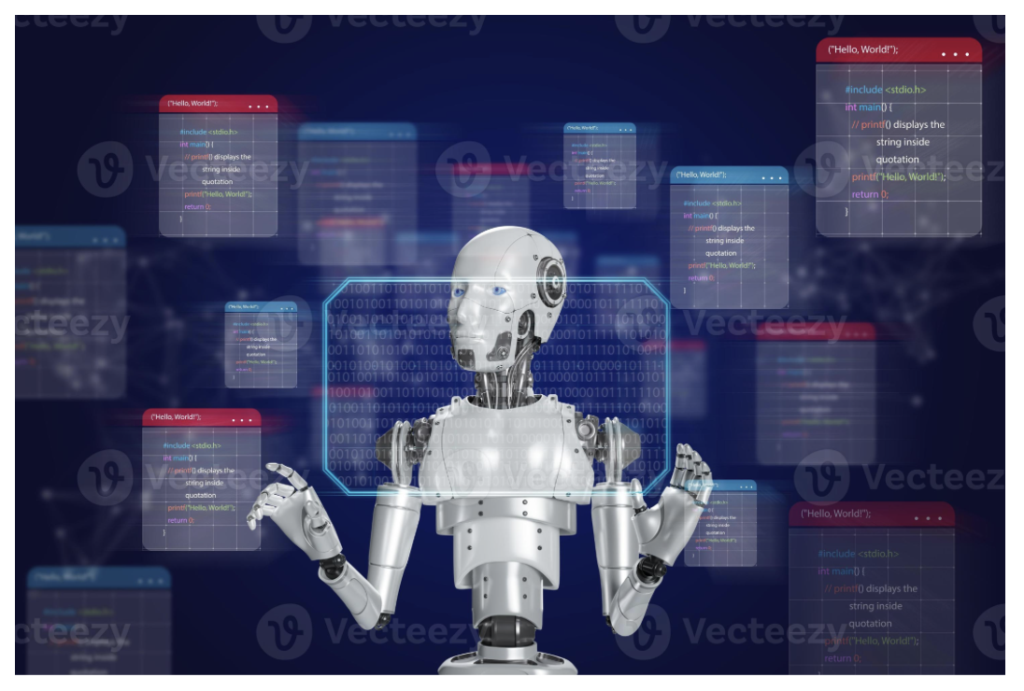
Connected machines contain multiple software layers responsible for different operations, from basic hardware instructions to automation and remote communication.
Three components are particularly important:
- Firmware controls essential hardware operations. Stored in non-volatile memory, it provides instructions for motor controllers, sensors, and communication modules. Updates can correct low-level faults or improve compatibility.
- Embedded software manages machine behavior. It processes sensor readings, executes control algorithms, and coordinates actions. Industrial equipment often requires real-time systems that complete critical tasks within strict timing limits.
- Connectivity software enables external communication. Network services allow machines to exchange diagnostic information, communicate with management platforms, and receive authorized remote updates.
These layers are interconnected. Updating a robotic arm’s motion-control software may improve positioning accuracy, but engineers must verify its compatibility with sensors, safety controls, and mechanical limits. This makes machine updates considerably more complicated than installing ordinary desktop applications.
Five Industries Experiencing the Shift
Software dependency is particularly visible in industries where machines perform complex tasks or interact with physical environments.
| Industry | Software-controlled functions | Importance of updates |
| Automotive | Battery management, driver assistance, diagnostics | Correcting faults and maintaining compatibility |
| Manufacturing | Robotic movement, machine vision, production control | Improving precision and reliability |
| Healthcare | Patient monitoring, imaging, device communication | Addressing defects and security issues |
| Agriculture | GPS guidance, automated steering, equipment monitoring | Improving positioning and connectivity |
| Energy | Grid communication, inverter controls, monitoring | Maintaining secure infrastructure |
According to the International Federation of Robotics’ World Robotics 2026 report, approximately 5 million industrial robots were operating worldwide in 2025, with more than 600,000 new installations during that year. These figures demonstrate the growing scale of programmable industrial equipment, although they do not indicate individual update frequency.
The International Energy Agency also reported that global electric car sales exceeded 20 million in 2025, accounting for approximately one-quarter of new car sales.
Electric vehicles depend heavily on electronic controls, making software maintenance important for battery management, charging compatibility, diagnostics, and selected vehicle functions.
However, update requirements differ across industries. A factory robot may require scheduled downtime, while some connected consumer products support remote installation.
Why Updates Have Become Essential
Modern machines receive updates for several reasons, and not every update introduces a visible feature. Security is a major driver. Connected equipment uses communication protocols, network interfaces, and remote management functions that can contain vulnerabilities.
Verizon’s 2025 Data Breach Investigations Report found that exploitation of vulnerabilities as an initial access method increased by 34% compared with the previous report. Although this finding covers organizational breaches broadly, it highlights the importance of addressing known software weaknesses.
Beyond cybersecurity, updates support several operational requirements:
- Correcting operational defects: Manufacturers can revise faulty calculations, communication routines, and control logic discovered after deployment.
- Maintaining compatibility: Updates help machines communicate with revised sensors, network protocols, connected services, and external equipment.
- Improving performance: Software adjustments may reduce processing delays, improve energy management, or refine hardware responses.
- Meeting technical requirements: Certain regulated products need documented modifications to address security, safety, or compliance concerns.
The urgency depends on the problem. An interface improvement can often wait, while a verified vulnerability affecting remote industrial access may require immediate mitigation.
The Hidden Cost of Software Errors
Software-controlled machines can develop operational problems without any physical component changing.
A firmware defect might interrupt sensor communication, produce incorrect diagnostic information, or cause unexpected shutdowns. In systems with strict timing requirements, even minor processing delays can disrupt coordination between controllers.
These problems are particularly significant in operational technology, where software controls physical processes. The National Institute of Standards and Technology (NIST), in its Guide to Operational Technology Security, emphasizes that cybersecurity measures must account for performance, reliability, and safety.
This creates a distinction between identifying a software problem and correcting it safely. A patch may resolve a vulnerability while unintentionally changing how an application communicates with connected hardware.
Engineers must therefore test updates against operating conditions, component compatibility, and safe failure behavior rather than checking installation success alone.
When Digital Errors Reach Physical Systems
Software failures become more consequential when digital instructions influence physical movement. Connected vehicles use electronic controls for braking assistance, steering support, stability functions, and driver warnings. Investigating unexpected behavior may therefore involve diagnostic records, software versions, sensor conditions, and mechanical components.
These technical details can also become relevant during investigations following road accidents. Depending on the circumstances, someone consulting a Louisville car accident attorney may encounter questions involving vehicle records, driver actions, maintenance history, and evidence used to reconstruct an incident. Software records can contribute to an investigation, although they cannot independently establish its cause.
Similar considerations apply to industrial machinery and automated equipment. Digital records can help engineers identify malfunctions, trace software changes, and determine whether systems operated within their intended parameters.
AI Is Changing the Update Cycle
Artificial intelligence adds another layer of dependency because machine-learning systems behave differently from conventional programmed controls.
Traditional software follows defined instructions, while AI models identify patterns learned from training data. Their accuracy can decline when real operating conditions differ from those encountered during development.
Consider a machine-vision system that detects defective products. Changes in lighting, camera positioning, or product appearance may reduce accuracy even when the hardware functions normally.
Manufacturers may address these problems through updated models, improved image processing, or adjusted decision thresholds.
However, AI updates introduce additional challenges:
- Changing data patterns: Models trained on earlier conditions may become less accurate as equipment, materials, or environments change. This can involve data drift or concept drift.
- Hardware compatibility: Newer models may require additional memory or processing power, potentially exceeding existing hardware capabilities.
- Safety validation: Better average accuracy does not automatically mean fewer dangerous errors. Engineers must evaluate false positives, false negatives, and performance under critical conditions.
Not every AI-equipped machine continuously learns. Many operate with fixed, validated models until a manufacturer approves a replacement. This controlled approach matters when automated decisions influence safety or expensive physical equipment.
The Risk of Updating Too Often
Frequent updates can improve security, but industrial environments cannot always accommodate continuous software changes. A production line may operate around the clock, and stopping equipment for installation can disrupt interconnected systems. More importantly, insufficiently tested updates may introduce new faults.
NIST’s operational technology guidance highlights regression testing because software patches can affect other applications or control functions.
Manufacturers must balance the risks of operating with known vulnerabilities against the potential disruption caused by new software.
| Update approach | Advantage | Main limitation |
| Immediate installation | Addresses urgent vulnerabilities | May introduce compatibility problems |
| Scheduled maintenance | Allows coordinated testing | Delays some corrections |
| Staged rollout | Identifies problems before wider deployment | Requires additional monitoring |
| Delayed installation | Maintains short-term stability | Extends exposure to known issues |
Recovery mechanisms are equally important. A failed installation should not permanently disable expensive machinery when a safe recovery process is possible.
However, restoring an earlier version may also recreate vulnerabilities, making rollback procedures subject to security and compatibility checks.
Ownership Beyond the Purchase
Software dependency changes the economics of machine ownership. Mechanical equipment may remain serviceable for decades when replacement parts and qualified technicians are available. Connected machines introduce additional requirements, including firmware support, compatible diagnostic tools, security maintenance, and sometimes cloud services.
A physically functional device may become difficult to maintain once its manufacturer discontinues software support.
Businesses purchasing connected equipment should consider several factors:
- Software support duration: Industrial equipment may remain operational longer than ordinary consumer electronics, making short support periods a potential maintenance concern.
- Connectivity requirements: Buyers should know which functions depend on external servers and which remain operational during network interruptions.
- Repair accessibility: Restricted diagnostic tools, proprietary software, or unavailable firmware can increase maintenance costs.
- Update policies: Manufacturers should explain how essential patches are distributed, whether installation requires downtime, and what recovery options exist.
Software support is therefore an important purchasing consideration, not merely a technical issue after installation.
Building Safer Update Systems
Reliable updates require engineering controls throughout development, distribution, installation, and recovery. Manufacturers must verify that new software comes from an authorized source, operates with the intended hardware, and preserves essential functions.
- Verification before installation : Cryptographic signatures help devices verify that update packages are authorized and unaltered. Compatibility checks can prevent installation on unsupported hardware.
- Testing under realistic conditions : Engineers should evaluate updates using representative workloads, sensor inputs, and operating conditions. Industrial systems may require simulations or dedicated testing equipment.
- Controlled deployment : Releasing updates to a limited number of machines allows engineers to monitor installation results and operational behavior before wider distribution.
- Recovery and traceability : Appropriate recovery mechanisms help restore functionality after failed installations. Version histories, deployment records, and fault logs also make troubleshooting easier.
The automotive industry provides a regulatory example. UN Regulation No. 156 establishes requirements for vehicle software updates and software update management systems within its applicable framework.
The broader principle is that updating machine software should be treated as a controlled maintenance activity, particularly when digital instructions influence physical behavior.
Machines That Keep Evolving
Future machinery will increasingly support software changes throughout its operating life.
AI inspection systems may receive improved recognition models, industrial controllers may gain compatibility with new equipment, and energy systems may adopt revised communication requirements without extensive hardware replacement.
However, greater flexibility also increases maintenance responsibilities. Manufacturers must consider how updates will be tested years after a product’s original release, particularly when replacement components, development tools, or earlier software dependencies become unavailable.
Long-term reliability will depend on clear compatibility policies, dependable recovery procedures, continued security support, and safe operation when connectivity is interrupted.
Final Verdict
Modern machines depend increasingly on software updates because essential functions now rely on programmable controls, connected services, and intelligent processing.
Updates allow manufacturers to correct defects, address vulnerabilities, and improve supported functions without replacing physical hardware. However, they also introduce compatibility risks, operational challenges, and long-term support concerns.
The most dependable machines will not necessarily receive the most updates. They will be designed to accept necessary changes safely, maintain predictable performance, and remain supportable throughout their intended working lives.

More from AIJ Writing Staff
See all AI & Technology
How AI-Powered Simulations Are Changing the Way Future Technologies Are Tested
 AI & Technology
Cycode Expands UK Presence as New ARR Grows 2.4x Year Over Year

Office Perpetual License vs. Microsoft 365: A Cost Comparison for Small Businesses
 AI Business Strategy
How Recognition Patterns Can Warn You About Flight Risks Early and Encourage Managers to Use New AI HR Tools
Recommended for you
More stories AI & Technology
AI Can Write Software in Minutes. Hud Wants to Make Sure It Doesn’t Break Production
 AI & Technology
Critical Wisdom for the AI Age
 AI & Technology
AI adoption has plateaued, but it’s not a technology problem
 AI & Technology
Best AI Customer Service Software for Ecommerce: Top 12 in 2026
 AI & Technology
Your Underwriting Agent is Ready to Act, Your Risk Architecture Isn’t
 AI & Technology