

AI Can Write Software in Minutes. Hud Wants to Make Sure It Doesn’t Break Production
The software industry has spent years trying to make developers more productive. AI coding agents are finally delivering on much of that promise, generating code, building features, and handling development tasks that once required substantial engineering time. But as companies move toward increasingly autonomous software development, a different challenge is emerging: ensuring that the software being produced actually works when it reaches production.
The distinction matters. Writing a function and understanding its impact on an interconnected production environment are fundamentally different tasks. An AI agent might successfully complete a programming assignment, but that does not necessarily mean it understands the systems depending on its changes, the behavior of real users, or the consequences of introducing a regression.
This gap is becoming an increasingly important infrastructure problem for engineering teams. Hud, a Runtime Intelligence platform, is building technology designed to give AI agents access to the production knowledge they currently lack.
The Productivity Gains Are Exposing Infrastructure Gaps
The scale of AI adoption is changing how software organizations operate. GitHub’s 2026 Octoverse report found that more than 40% of pull requests on its platform started with an AI agent’s first draft by September 2026, compared with 17% in March. That represented approximately 110 million agent-started pull requests in September alone.
The growing volume of AI-generated contributions creates new demands on the infrastructure responsible for validating and delivering software. Engineering teams must evaluate increasingly complex changes while maintaining the reliability of applications already serving customers.
GitLab’s 2025 Global DevSecOps research, based on 3,266 professionals, illustrates the challenge. Although 82% of surveyed organizations deploy to production at least weekly, 60% use more than five software development tools, contributing to fragmented workflows and operational inefficiencies.
For engineering leaders, this creates a difficult balancing act. Increasing development output is valuable only when organizations can maintain the same confidence in the software they release.
The Missing Information Between Code and Production
One of the limitations of today’s coding agents is that their understanding of an application is largely based on the information available in development environments. They can examine repositories, understand dependencies represented in code, and execute tests. However, they do not automatically possess a complete picture of how those systems behave under actual production conditions.
That distinction becomes especially important in large backend environments, where a seemingly isolated change can affect multiple services, functions, and downstream processes.
Hud approaches this problem by collecting runtime intelligence directly from backend services. Its lightweight sensor tracks function-level activity, establishes behavioral baselines, and maps relationships between functions and their callers.
The technology creates an additional source of information that conventional development tools may not provide. Rather than relying exclusively on code changes or sampled observability data, engineering teams gain visibility into how their applications actually operate.
Hud also integrates with coding agents through the Model Context Protocol, making production information accessible from environments including Claude Code, Cursor, and Codex.
Making Production Verification Part of the Release Process
The broader industry is beginning to recognize that accelerating code generation without improving downstream processes can undermine the productivity gains AI promises.
Harness’s 2025 State of AI in Software Engineering research, based on 900 engineers, platform leaders, and technical managers, found that only 6% of respondents described their continuous delivery processes as fully automated. Meanwhile, 45% reported that deployments involving AI-generated code introduced problems.
These findings highlight why software verification and deployment automation are becoming increasingly important as AI-generated contributions grow.
Hud’s platform brings runtime information into the pull request process, examining the production impact of affected functions and assigning risk assessments to proposed changes. Engineering organizations can use these assessments to distinguish between changes that can proceed and those that deserve additional scrutiny.
The company is extending this approach into deployment with Agentic Rollouts, introduced on October 29, 2026. The technology monitors new releases against established production behavior, identifying regressions as updated code begins receiving traffic.
When problems emerge, Hud can initiate a rollback through existing continuous delivery infrastructure or request engineering approval. It also captures the technical evidence surrounding the incident, including call graphs, request information, exceptions, and stack traces.
That information can subsequently reach coding agents through MCP, giving them concrete evidence to investigate failures and generate corrective changes.
An Early Example of Runtime Intelligence in Practice
Hud’s work with Riverside, a content creation platform, provides an example of how this approach can operate in a production environment.
Riverside runs its deployments through Hud, using the platform to identify problematic releases and initiate rollbacks. According to Hud, the system detects and rolls back regressions in approximately eight minutes on average, typically before customers notice.
For a platform supporting real-time media infrastructure, that capability has practical implications. A deployment problem can affect the experience of users immediately, making the ability to identify and contain issues particularly valuable.
Hud’s approach also aims to reduce the amount of manual instrumentation required from engineering teams. Its sensor automatically develops behavioral baselines, while built-in privacy protections scrub sensitive information from captured data.
The Next Layer of the AI Software Stack
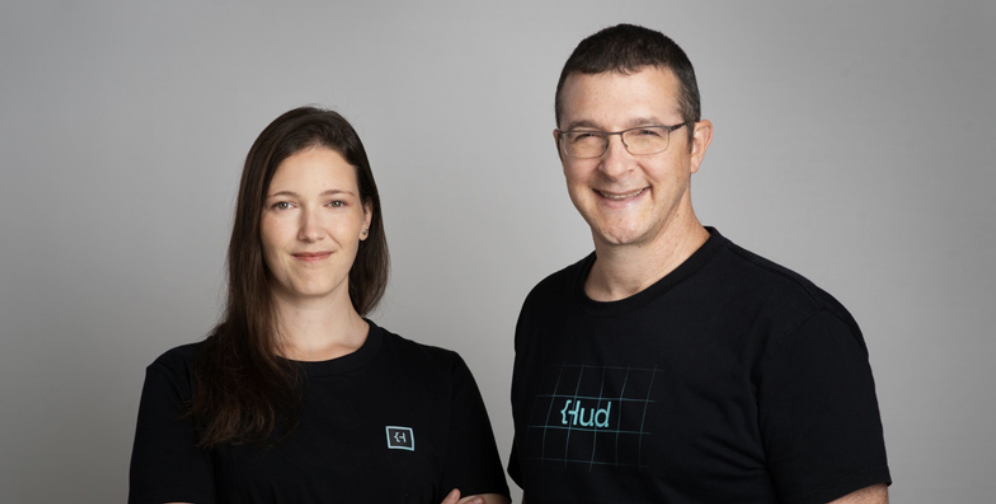
“AI has already transformed the way we write code. The challenge now is deploying that code safely, at the same speed agents can generate it,” said Roee Adler, co-founder and CEO of Hud. “We already have agents that write code, but deciding what actually goes into production still depends on humans, because organizations aren’t ready to entrust agents with responsibility for system stability. This is the missing link in the AI-driven software development process, and it’s exactly why we built Hud.”
The next phase of AI-driven software development will likely involve more than increasingly capable models. It will require infrastructure that allows autonomous systems to interact safely with the environments they are changing.
Hud is positioning Runtime Intelligence as part of that emerging infrastructure, connecting development decisions with production behavior and creating a mechanism for detecting, investigating, and correcting problems.
As coding agents take on more responsibility, the ability to understand what happens after code is written could become just as important as the ability to write it in the first place.
Agentic Rollouts is available now to all Hud customers.
 More from Tom Allen
See all Interview
Smita Verma on AI Reliability, Autonomous Cybersecurity, and the Risks of Removing Human Oversight
 Interview
Inside AI-Driven Advertising: Industry vet Monica Shukla on What’s Really Changing for Brands on Meta and Google
 Cyber Security
Team8 Takes Its Village Playbook From Cybersecurity to AI Infrastructure With the Infra Village
 Interview
Why AI Platforms Built for One Regulated Industry Fail in Another
Recommended for you
More stories AI & Technology
Critical Wisdom for the AI Age
 AI & Technology
AI adoption has plateaued, but it’s not a technology problem
 AI & Technology
Best AI Customer Service Software for Ecommerce: Top 12 in 2026
 AI & Technology
Your Underwriting Agent is Ready to Act, Your Risk Architecture Isn’t
 AI & Technology
The next AI frontier in insurance is not automation – it is orchestration
 Data