

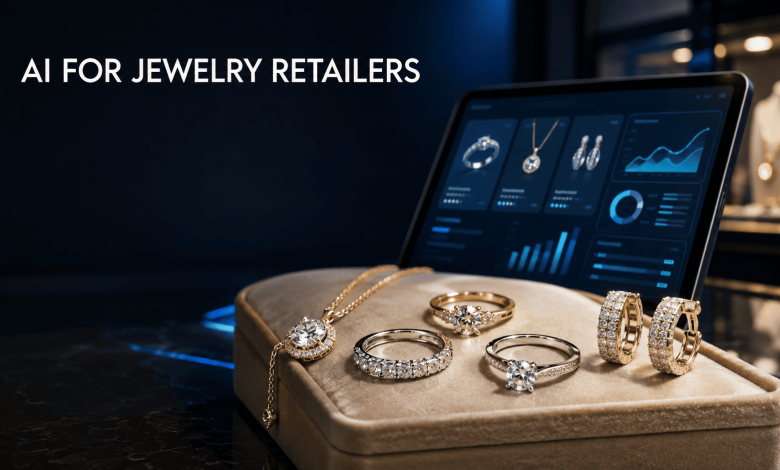
Selling jewelry has always depended on emotion, trust, presentation, and product knowledge. A shopper may be attracted by the sparkle of a gemstone, but the final decision often comes from a combination of clear information, beautiful visuals, helpful service, and confidence in the retailer.
Artificial intelligence can help jewelry retailers strengthen every part of that journey. It can speed up repetitive work, identify useful patterns in sales data, improve product discovery, and help brands communicate with shoppers more personally. It does not replace the taste of an experienced jeweler or the value of genuine human service. Used thoughtfully, AI gives retail teams more time to focus on those strengths.
The opportunity is equally valuable for independent stores buying wholesale jewelry and for wholesale jewelry vendors that need to present large catalogs consistently across multiple sales channels.
Here are practical ways retailers can use AI to sell more jewelry while protecting product accuracy and customer trust.
1. Create Better Jewelry Product Listings
A strong product page answers the shopper’s questions before they need to ask. AI can help turn basic specifications into clear, persuasive product content for websites, marketplaces, catalogs, and wholesale portals.
Retailers sourcing wholesale jewelry can use AI to standardize supplier information and create unique, shopper-friendly copy instead of repeating a vendor’s basic catalog text. For wholesale jewelry vendors, the same workflow can generate consistent product data, dealer descriptions, and channel-specific content at scale.
For example, a retailer can provide the metal type, gemstone, dimensions, finish, closure, size, style, and care instructions. An AI writing tool can then produce:
- Search-friendly product titles
- Easy-to-scan bullet points
- Natural product descriptions
- Image alt text
- Meta titles and descriptions
- Backend search terms for marketplaces
- Short versions for ads, emails, and social media
The best results come from giving AI verified product data instead of asking it to guess from an image. Every output should be checked before publication, especially details such as sterling silver purity, natural or lab-created stones, plating, dimensions, country of origin, and care claims.
AI should make product information clearer—not more exaggerated. Accurate descriptions build confidence, reduce misunderstandings, and can lower avoidable returns.
2. Improve Product Photography and Visual Merchandising
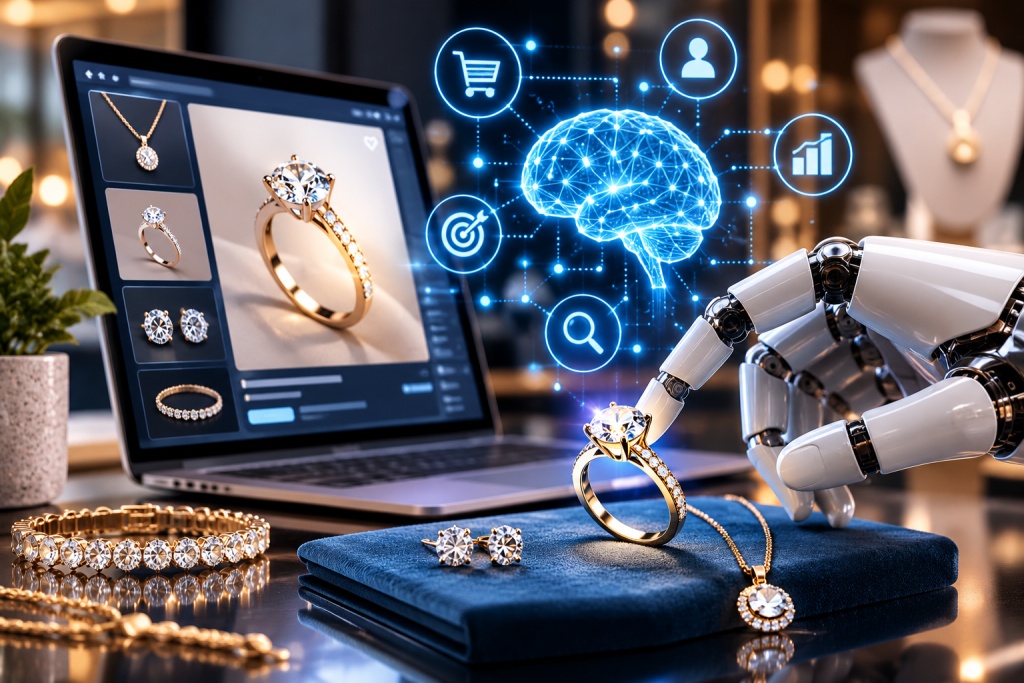
Jewelry shoppers rely heavily on images because they cannot touch, try on, or inspect the item online. AI-assisted image tools can help retailers create a more complete visual story around each product.
Retailers can use AI to develop concepts for:
- Clean main images for product pages
- Lifestyle scenes showing scale and styling
- Close-up views of stones, textures, and settings
- Coordinated backgrounds for seasonal collections
- Social media graphics and promotional banners
- Infographics showing measurements and key features
- Visual variations for different audiences or campaigns
Consistency matters. A ring, pendant, or pair of earrings should not change shape between images. The band, stone setting, engraving, proportions, color, and finish must remain true to the actual piece. AI-generated lifestyle images should be reviewed carefully for distorted hands, incorrect scale, added stones, missing details, or unrealistic reflections.
When the product remains accurate, stronger visuals can help shoppers understand the design, imagine wearing it, and feel more confident about purchasing.
3. Personalize the Shopping Experience
Not every jewelry shopper is looking for the same thing. One visitor may want a minimal sterling silver ring for everyday wear, while another may be comparing bold gemstone pendants. Showing identical recommendations to both shoppers wastes an opportunity.
AI-powered recommendation systems can use browsing behavior, purchase history, saved items, price range, metal preference, and style interest to suggest more relevant products. Examples include:
- Matching earrings for a selected pendant
- Chains suited to a pendant’s size and style
- Similar rings in another finish or gemstone
- Products within the shopper’s preferred budget
- Recently viewed items that are still available
- Complementary pieces for a coordinated look
Good personalization feels helpful rather than intrusive. Retailers should use only appropriate customer data, explain privacy practices clearly, and make it easy for shoppers to control marketing preferences.
4. Make Jewelry Easier to Find
Customers do not always search using catalog language. A retailer may describe an item as an “oxidized sterling silver openwork band,” while a shopper types “wide vintage-style silver ring.” AI can connect these different ways of describing the same product.
AI-enhanced search tools can understand natural phrases, spelling variations, related styles, colors, and shopping intent. Visual search can also allow a shopper to upload a picture and find similar products in the retailer’s catalog.
To improve discovery, retailers can use AI to organize products by attributes such as:
- Metal and finish
- Stone type and color
- Jewelry category
- Design style
- Size and dimensions
- Price range
- Occasion or intended use
- Availability
Cleaner product data improves website search, filtering, recommendations, advertising feeds, and marketplace visibility at the same time.
5. Build More Effective Marketing Campaigns
Jewelry retailers often need content for email, social media, paid ads, website banners, and seasonal promotions. Creating each variation manually can take hours. AI can quickly adapt one campaign idea into multiple formats while keeping the brand message consistent.
A retailer launching a new silver collection could use AI to draft:
- An email announcement
- Instagram and Facebook captions
- Short ad headlines
- Product-focused video scripts
- Website banner copy
- SMS campaign text
- Follow-up messages for shoppers who viewed but did not purchase
AI can also help segment audiences. A first-time visitor, repeat buyer, wholesale account, and inactive subscriber should not receive the same message. More relevant communication can improve engagement and reduce the fatigue caused by constant generic promotions.
Retailers should still add a human edit. Jewelry is emotional, and brand voice matters. The final message should sound like the business—not like a template produced for every store.
6. Respond to Shoppers Faster
Many jewelry questions are simple but important: Is this ring available in another size? Is the stone natural or lab-created? What chain length is shown? How should the item be stored? When will the order ship?
An AI-assisted chat system can answer common questions using approved store information, guide shoppers to relevant products, and collect details when a team member needs to take over. This can be especially useful outside business hours.
However, automation should have clear limits. Questions about custom work, expensive purchases, repairs, returns, sensitive complaints, or uncertain product details should move smoothly to a knowledgeable person. A fast wrong answer can damage trust more than a slightly slower accurate one.
7. Forecast Demand and Manage Inventory
The right product cannot sell if it is out of stock. At the same time, buying too deeply into slow-moving designs ties up cash and increases discounting pressure.
AI can analyze sales history, seasonality, product views, conversion rates, returns, lead times, and promotional activity to help retailers identify:
- Best-selling categories and sizes
- Products at risk of going out of stock
- Slow-moving inventory
- Seasonal changes in demand
- Frequently purchased combinations
- Items with high views but low conversion
- Reorder priorities
When retailers purchase wholesale jewelry, AI can compare sell-through rates by supplier, category, price point, metal, and stone. Wholesale jewelry vendors can use similar analysis to anticipate retailer demand, plan replenishment, and highlight fast-moving designs.
These insights support better buying decisions, but they should be combined with human judgment. A new trend, local event, supplier delay, viral post, or unusual promotion may not be fully represented in past data.
8. Understand Why Shoppers Do—or Do Not—Buy
AI can summarize patterns across product reviews, customer-service conversations, return notes, surveys, and website behavior. This helps retailers move beyond basic sales totals and understand what shoppers are experiencing.
For example, AI may reveal that customers repeatedly praise a pendant’s detail but find the chain length unclear. It may show that a popular ring receives many views but loses shoppers because the size guide is difficult to find. It may also identify repeated questions that should be answered directly on the product page.
These insights can guide improvements to photography, descriptions, sizing information, packaging, navigation, and service. The goal is not simply to collect more data. It is to remove the small points of uncertainty that stop a shopper from completing a purchase.
9. Support Sales Associates Without Losing the Human Touch
In-store and online sales teams can use AI as a fast product-information assistant. It can summarize collection details, compare items, prepare client follow-ups, translate routine messages, or suggest questions that help uncover a shopper’s preferences.
This gives associates more time for the parts of jewelry retail that require empathy and experience: listening, understanding personal style, explaining craftsmanship, and helping someone feel confident in a meaningful purchase.
The strongest approach is “AI plus human expertise.” Technology handles speed and scale; people provide taste, reassurance, judgment, and relationships.
How to Start Using AI in a Jewelry Business
Retailers do not need to transform every system at once. Begin with one task that is repetitive, measurable, and easy to review.
- Choose one clear goal. Improve product descriptions, reduce response time, increase email clicks, or lower stockouts.
- Organize accurate product data. Create a reliable source for materials, stones, dimensions, finishes, sizes, care details, and inventory.
- Test on a small product group. Compare results before expanding across the catalog.
- Keep human approval in the workflow. Review product claims, images, prices, and customer-facing answers.
- Measure business results. Track conversion rate, average order value, returns, response time, stock availability, and repeat purchases.
- Protect customer information. Use reputable tools and follow applicable privacy, advertising, and marketplace rules.
Common AI Mistakes Jewelry Retailers Should Avoid
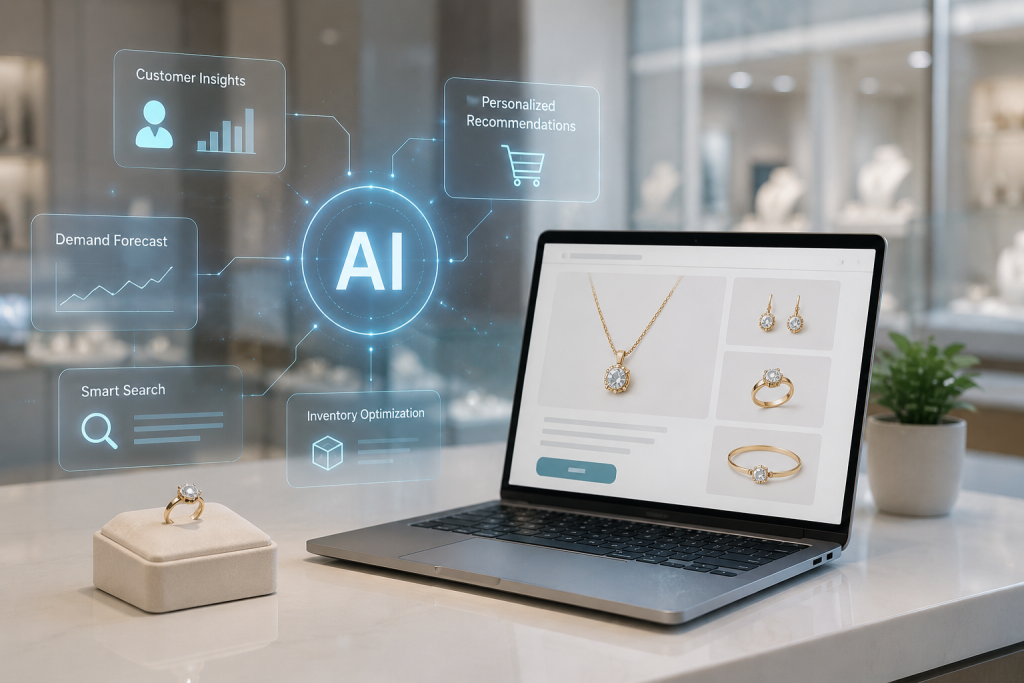
AI becomes risky when speed is valued more than accuracy. Avoid publishing unverified metal, gemstone, purity, origin, durability, or care claims. Do not allow image tools to redesign the product or show features the real item does not have. Avoid copying generic descriptions across hundreds of pages, because repetitive content weakens the shopping experience and may reduce search value.
Retailers should also avoid over-automating customer relationships. A person making a considered jewelry purchase may need genuine guidance. Make human support visible and easy to reach.
The Future of AI in Jewelry Retail
AI will continue to improve product discovery, virtual styling, personalization, content creation, demand planning, and customer support. Yet the core reasons people buy jewelry will remain deeply human. They buy to express identity, mark a moment, remember someone, complete a look, or enjoy a beautiful object.
That is why the most successful jewelry retailers will not use AI simply to produce more content. They will use it to create a clearer, faster, and more personal shopping experience. When accurate technology supports strong products and genuine service, retailers can earn more attention, build greater trust, and convert more interest into sales.
Frequently Asked Questions
How can AI help a jewelry store increase sales?
AI can improve product listings, personalize recommendations, strengthen website search, create marketing variations, answer common questions, and identify inventory or conversion problems. Each use can remove friction from the customer journey and help more shoppers find the right piece.
Can small jewelry retailers use AI?
Yes. Small retailers can begin with affordable tools for product copy, email campaigns, image concepts, customer-service drafts, and sales analysis. Starting with one repetitive task is usually more effective than adopting several tools at once.
Is AI-generated jewelry content good for SEO?
It can support SEO when the content is accurate, original, useful, and written for real shoppers. Retailers should add product-specific expertise, remove generic language, and review every claim before publishing.
Can AI replace jewelry sales associates?
AI can automate routine tasks and provide quick information, but it cannot fully replace human judgment, product expertise, emotional understanding, or relationship building. The best results come from using AI to support sales associates.
What should retailers check before publishing AI-generated jewelry images?
Confirm that the product’s shape, proportions, setting, stone count, color, finish, engraving, scale, and wearing position match the real item. Also inspect hands, reflections, shadows, and text for visual errors.