

Best Predictive Maintenance Platforms for Rail Operators
Keeping a railway running smoothly isn’t easy. Tracks, overhead lines, signalling equipment, and trains all need regular inspections, and finding problems early can save a lot of time, money, and disruption later on.
That’s why more rail operators are investing in predictive maintenance. Instead of waiting for something to fail, these platforms use cameras, sensors, and AI to spot potential issues early, helping maintenance teams decide what needs attention first.
Every railway has its own way of managing maintenance, so there’s no single platform that’s right for everyone. Some are built around inspection data, while others focus on monitoring the condition of assets over time or helping teams plan maintenance more effectively.
In this guide, we’re looking at three predictive maintenance platforms that are worth considering in 2026: One Big Circle, Hitachi Rail, and Siemens Mobility.
How We Compared These Platforms
Predictive maintenance can mean different things depending on the railway. Some operators want to reduce manual inspections, while others are looking for better ways to plan maintenance or monitor the condition of their assets over time.
To compare these platforms fairly, we looked at:
- How they support predictive maintenance
- AI and automation
- Maintenance planning
- Ease of use
- How well they fit into everyday rail operations
So, now that you know what matters the most, let’s explore the top three predictive maintenance platforms in more detail.
1. One Big Circle
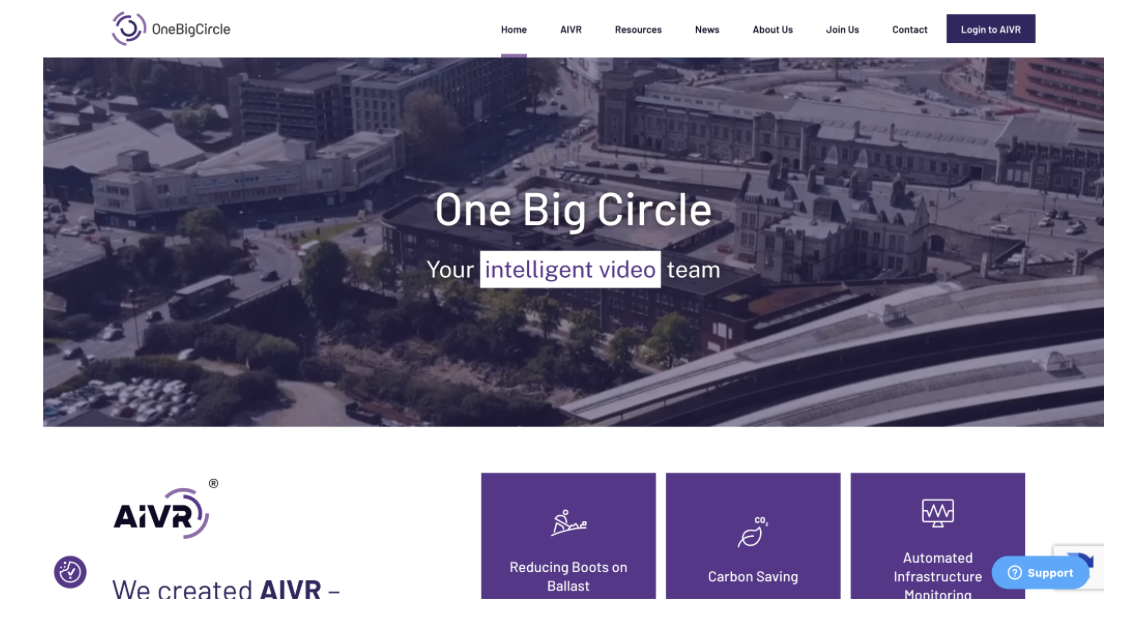
If one of your biggest challenges is deciding what needs fixing first, One Big Circle’s automated rail monitoring technology is well worth considering.
Collecting inspection data is one thing. Knowing what to do with it is another.
That’s where AIVR comes in. Instead of simply storing inspection footage, it helps maintenance teams review what they’ve collected, compare older inspections, and use AI to highlight changes that may need attention.
What makes AIVR different is that it doesn’t just help you inspect the railway – it helps you decide what to do next. Video, thermal imagery, track geometry, and other inspection data can all be reviewed together, making it easier to understand the condition of an asset before deciding whether work is actually needed.
Another useful feature is the ability to compare historical inspections. Being able to look back at the same section of track over time helps engineers spot gradual changes that could eventually lead to bigger problems, making maintenance planning much more proactive.
Because everything is available through a browser, different teams can review the same information without having to travel to the site. According to One Big Circle, reviewing one hour of AIVR data can replace an estimated eight-hour cab ride or site visit, helping save time while reducing the need for trackside work.
It can be used for:
- Remote inspections using forward-facing video
- Thermal monitoring
- Track geometry and overhead line monitoring
- Vegetation and conductor rail inspections
- Signal sighting and virtual site surveys
- AI-assisted fault detection
Worth knowing: AIVR is browser-based, so there’s nothing to install before you start using it.
2. Hitachi Rail
If you’re looking for a platform that fits into a wider digital railway strategy, Hitachi Rail is definitely worth considering.
While One Big Circle focuses heavily on inspection data, Hitachi Rail takes a broader approach. Its predictive maintenance solutions are designed to help operators monitor the condition of assets across the network, identify potential issues earlier, and plan maintenance based on real data rather than fixed schedules.
One thing we like is that predictive maintenance isn’t treated as a standalone tool. It’s part of Hitachi Rail’s wider digital rail offering, which includes condition monitoring, asset management, and analytics. That makes it a good fit for operators looking to modernize more than just their maintenance process.
Another advantage is the ability to bring together information from different systems. Instead of looking at each asset separately, maintenance teams can build a clearer picture of what’s happening across the network and prioritise work where it’s needed most.
It can help with:
- Condition monitoring across rail assets
- Predictive maintenance planning
- Asset performance management
- Data-driven maintenance decisions
- Integration with wider digital rail systems
Worth knowing: Hitachi Rail’s solutions are generally aimed at larger rail operators and infrastructure managers running complex networks.
3. Siemens Mobility
Siemens Mobility approaches predictive maintenance a little differently.
Rather than focusing on inspections alone, its solutions are designed to help operators improve the reliability of both infrastructure and rolling stock by using operational data collected across the railway.
The goal is to understand how assets are performing day after day, making it easier to spot patterns that could point to future failures. That allows maintenance teams to plan work before problems affect services or lead to unexpected downtime.
Another thing we like is how closely predictive maintenance fits into Siemens Mobility’s wider digital rail portfolio. For operators already using Siemens signalling, infrastructure, or fleet technologies, maintenance data can be connected with other operational information to give a more complete picture of the network.
It can help with:
- Monitoring the condition of rail assets
- Predictive maintenance planning
- Rolling stock and infrastructure management
- Data-driven reliability improvements
- Integration with digital rail technologies
Worth knowing: Siemens Mobility’s predictive maintenance solutions are often part of larger digital railway projects rather than standalone inspection systems.
Conclusion
Predictive maintenance is becoming an important part of modern rail operations, helping operators find problems earlier, reduce unexpected failures, and make better use of maintenance resources.
The three platforms in this guide all support those goals, but they each take a different approach.
If your focus is making better use of inspection data, One Big Circle stands out. If you’re investing in a larger digital railway programme, Hitachi Rail is a strong option. And if you want maintenance to work alongside the rest of your railway technology, Siemens Mobility is well worth considering.
The right choice depends on your network, your existing systems, and how you plan to manage maintenance over the years ahead.

More from AIJ Writing Staff
See all Enterprise AI
Enterprise IT isn’t fighting AI regulation. It can’t staff it.
 Data
An AI Agent May Need Company Data Without Needing All of It
 AI Business Strategy
How MYbank Is Rebuilding Itself Around AI Agents to Serve 42 Million Small-Business Owners
 AI & Technology
How to Review an AI Subscription Before It Renews
Recommended for you
More stories Future of AI
The future of AI in financial crime is here: how can banks fight back to regain trust and use AI for good
 Future of AI
Cysic CEO Says Paying for an AI Model Doesn’t Prove Your Host Ran It
 AI & Technology
From self-driving excavators to AI leasing agents, proptech’s AI moment has arrived
 AI & Technology
AI literacy shouldn’t begin in the workplace. It should begin in primary school.
 Data
The Data Centre Is Becoming a Product
 AI & Technology