
Type a quick prompt, and an AI tool will hand you an ad in under a minute. The catch? Your competitor may have gotten almost the same one last Tuesday.
These days, plenty of marketing teams lean on AI to start a rough draft or to brainstorm when they’re stuck. It saves real time. But buyers are noticing. A Gartner survey found that half of U.S. consumers would rather buy from brands that don’t use GenAI in their ads and content.
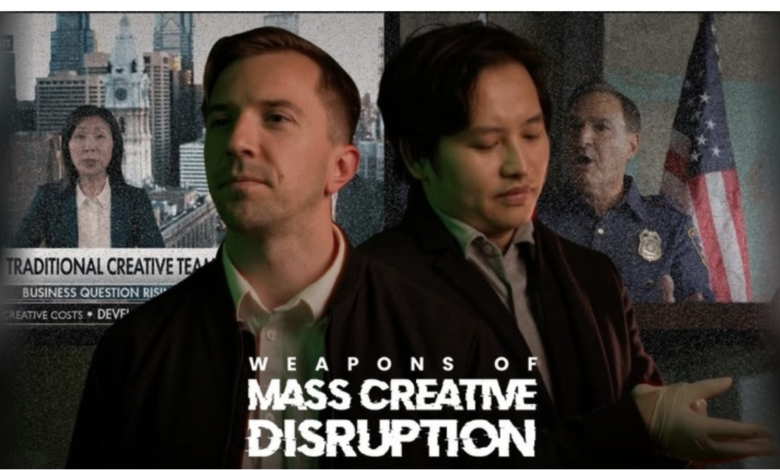
Creative platform Penji took a different route with its latest campaign. Instead of a demo video or a list of features, it made a three-part crime-comedy series that casts its founders as wanted fugitives.
The series, Weapons of Mass Creative Disruption, is a timely example of the power of human creativity in marketing. Real actors performed every scene, real crews filmed it, and AI played only a supporting role.
“We could have told you how creative our team is. Instead, we decided to show you,” said Khai Tran, Penji’s CEO and the director of the series.
What AI Does Well, and Where It Stops
There’s no question AI is quick. Need a draft email? Done. Twenty names for a weekend sale? Also done. It can even dig through a thousand reviews and tell you what customers grumble about most. Automation tools pick up the dull stuff too, like tagging leads and sending follow-ups on time.
But AI only knows what you feed it. Imagine a shoe store whose customers keep saying the same thing: the shoes run small. Should the owner change the size chart or offer free returns? AI can list the options, but it can’t make that call. That takes someone who knows the customers and the business.
Why So Many AI Ads Sound the Same
Many brands use the same tools and ask for nearly the same things. The result is a lot of content that feels oddly familiar. Part of the reason is that these tools learn from what’s already out there. The other part is the deadline. When time runs short, the first draft goes live with no edits.
Researchers have spotted this too. A 2024 study in Science Advances found that short stories written with AI help were more alike than stories written without it. NielsenIQ also found that AI-generated ads, even high-quality ones, triggered weaker memory responses than traditional ads.
Trust takes a hit too. In a Klaviyo and Datalily survey, shoppers who spotted AI content in a brand’s marketing were far more likely to lose faith in that brand than to gain it. Some 31% said they trusted it less, and just 7% said they trusted it more.
Here’s an easy way to see it. Three coffee shops on the same street ask AI for a fall post, and all three get a cozy caption about pumpkin spice. If your ad could carry any company’s logo, it won’t help anyone remember yours.
What Human Creativity Adds
Creativity in marketing means finding a new and useful way to solve a customer’s problem. That usually starts with listening.
Take a tax app that wants more sign-ups. It could run an ad that says, “Fast and easy tax software.” Any tax app could say that. Now picture a marketer who learns that many customers keep their tax papers in a shoebox. That marketer writes, “Bring your shoebox. We won’t judge.”
The second ad works because a person noticed something real about the customer. People also bring feeling, true stories, and judgment. They can check every fact before launch and ask, “Would we say this to a customer’s face?”
B2B Advertising Doesn’t Have to Be Boring
You’ve seen the usual B2B ad: a stock photo, a big promise, and a “book a demo” button. Most people scroll right past it. Penji’s series takes the opposite approach.
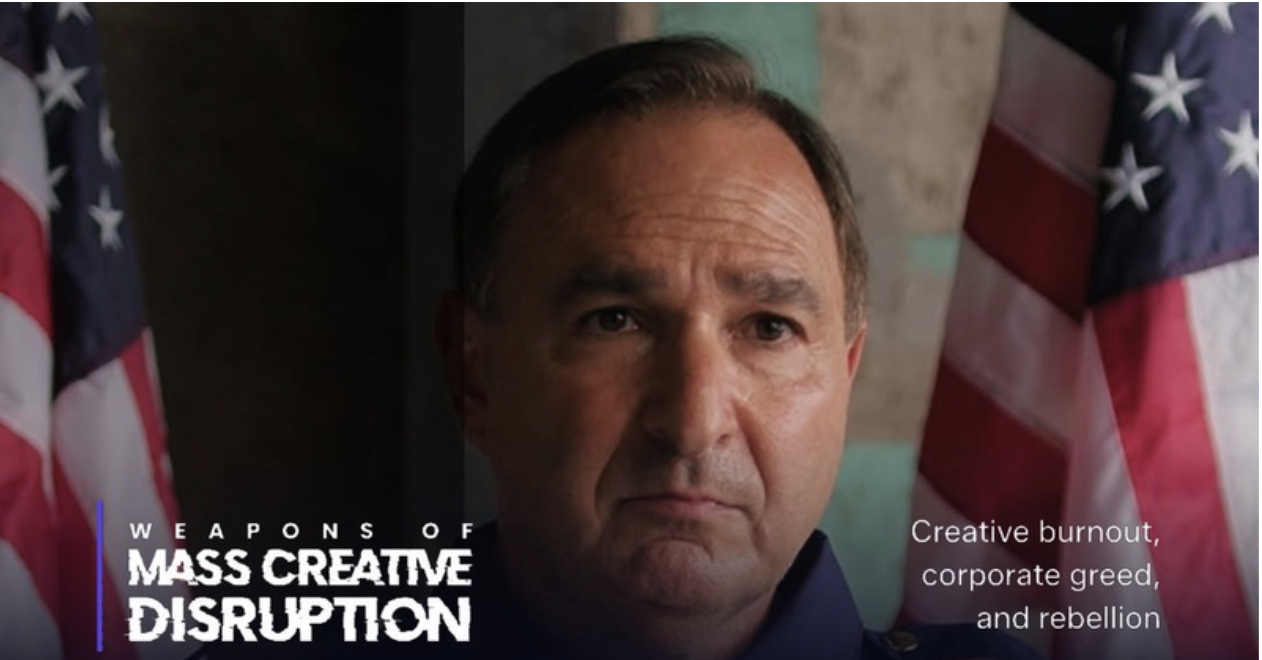
In the first episode, The Manhunt, a police chief holds a press conference about two men on the run: Tran and co-founder Johnathan Grzybowski. The chief wants to stop Penji “before it destroys the old creative establishment.” Reporters, agency owners, and a small business owner keep asking questions he can’t seem to answer.
The jokes work because nobody expects them from a B2B brand. There’s no sales pitch, but viewers still get the point. Agencies charge a lot, creative work drags on, and designers burn out. Anyone who has managed a marketing budget has felt at least one of those.
The production matters just as much as the plot. “Every shot was filmed for real. We used AI to enhance select shots, never to generate entire scenes,” Tran said.
You don’t need a film crew to try this. Turn a common customer problem into a short, funny story. Put real people from your team on camera. Then post something lighthearted next to your regular content and see which one people actually respond to.
How to Keep the Human Touch When You Use AI
Using AI doesn’t mean your content has to sound like a robot wrote it. A few small habits can keep your work feeling like your own.
Start with your own idea before you open any tool. Write down the angle, the joke, or the customer story you want to tell. AI can help you shape it later, but the thinking should come from you.
Talk to real customers whenever you can. A five-minute call often turns up a phrase or a complaint no tool would ever guess. Save their exact words, because those often make the best headlines.
When the draft is ready, read it out loud. Cut anything that sounds stiff or could fit any brand. Swap in a real number, a customer’s name (with permission), or a detail only your team would know.
Last, make one person responsible for the final call. That person checks the facts, prices, and tone before anything goes live. AI can help you move faster, but a person should decide what your brand says.
Final Thoughts: Give AI the Busywork, Keep the Ideas Human
Let AI handle the tedious jobs, like first drafts, sorting data, ad variations, and that Monday report. Keep your people on the work that shapes the brand: the strategy, the big ideas, the voice, and the last read before anything goes live. The more a mistake could cost your brand, the closer a person should watch it.
Penji’s campaign makes a simple point. B2B advertising doesn’t have to be boring. Creativity, humor, and storytelling can help any brand stand out, and that’s why human creativity in marketing still matters.