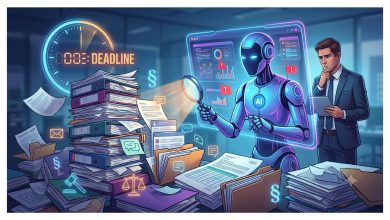
The way insurance claims are handled is being tested. This is not just manifesting through the direct and secondary impact of geopolitical tensions. The process is being challenged by emerging technologies and their associated risks, and by ever-diverging legal and regulatory frameworks.
This fragmentation is playing out across regions and lines of business. For insurers, navigating it will be critical to building resilience and sustaining long-term client retention.
In global commercial insurance, the Claims function sits at the intersection of customer experience, financial performance and risk intelligence. As portfolios scale and operating models become more complex, a persistent challenge intensifies: the fragmentation of the claims function itself.
Disconnected workflows, inconsistent data capture, siloed systems and uneven standards do more than slow execution; they weaken transparency, resilience and quality of decisions made under pressure.
At the same time, advances in artificial intelligence (AI) offer insurers a way to turn fragmentation from an operational liability into a strategic advantage. Agentic AI – systems that can understand context, reason through next steps and coordinate actions across a claim – can help Claims teams become more proactive in managing claims, rather than simply reacting to them.
When combined with human expertise, enabled by innovative platforms and guided by dedicated use cases, a new operating model emerges: Agentic Claims Intelligence.
Claims journeys routinely span underwriting, claims operations, legal, brokers, vendors – often across multiple jurisdictions. Each handoff between these parties introduces variability, latency and the risk of inconsistent interpretation.
In practice, this means that early warning signals, complex liability wording, emerging litigation patterns, or deteriorating severity indicators, can be recognised in one part of the process but not acted upon consistently elsewhere.
Capacity constraints further amplify the issue. Across insurance, claims teams manage high volumes of low severity claims alongside a smaller number of technically complex and large losses.
Under sustained workload pressure, prioritisation becomes reactive rather than deliberate. High impact cases are sometimes identified late: after reserves have moved; client expectations have hardened; or recovery opportunities have narrowed.
Data fragmentation compounds the problem. Critical insight is embedded in adjuster notes, expert reports, emails and attachments, often unstructured and inconsistently reviewed. Traditional dashboards and rule engines improve visibility but remain backward looking. They report what has already happened, rather than what is likely to happen next.
From Tools to Agentic Claims Intelligence
Leading insurers are now moving beyond isolated point solutions toward more integrated, intelligence driven claims models. Agentic AI represents the next step in this evolution.
Rather than supporting isolated tasks, agentic systems continuously interpret claim context, monitor evolving signals and initiate or recommend actions within defined governance frameworks – with appropriate humanoversight and interaction built into the key decisions and processes throughout.
In practice, this means:
- Identifying early indicators of claim escalation based on patterns seen across similar losses;
- Highlighting documentation or investigation gaps before they create downstream friction;
- Prompting timely engagement of specialists; and
- Recovery actions, or client communication.
Operational Context: The Foundation for Agentic AI
The transition to agentic claims intelligence requires more than just advanced models; it necessitates a deep understanding of operational reality. Skan AI provides this by creating a “Context Graph of Work,” which captures how claims processes actually unfold across the enterprise. By distilling billions of signals into a clear execution logic, Skan gives AI agents the necessary context to reason through complex claim journeys with accuracy. This allows insurers—including 3 in 5 top US carriers—to overcome the challenges of fragmented data and move from reactive reporting to proactive, context-aware intelligence that enhances decision-making and operational resilience.
Solutions such as Claims GenAI already demonstrate this shift by providing intelligent summarisation, early insight extraction and unified visibility across claims data. Claims GenAI creates the foundation for agentic orchestration by ensuring that key information – exposure-drivers, next actions and emerging risks – is surfaced consistently and early in the claim’s life.
Across the industry, adoption is progressing pragmatically. Most insurers are not pursuing full automation, but targeted enablement.
This includes deploying AI to improve early triage, large loss identification, document analysis and handler decision support. Throughout, the focus is on augmenting human judgment, not replacing it.
Human-AI Synergy: Claims GenAI and Expertise
The future of claims is symbiotic. AI provides consistency, scale and signal detection at volume. Humans bring judgment, hard-won experience and relationship management.
Within this model, Claims GenAI use cases play a pivotal role. Trained on years of claims data, GenAI powered frameworks flag, at a very early stage, claims with the potential to develop into large losses.
By surfacing these signals at an early stage, handlers can anticipate exposure, prioritise effort and take preventive action while there is still room to influence the outcome.
Together, Claims GenAI and human expertise create three layers of anticipatory strength:
- Enhanced foresight through connected signals;
- Elevated judgment focused on high value decisions; and
- Strengthened control through automated guardrails with human validation.
From Fragmentation to Strategic Advantage
Agentic Claims Intelligence represents a strategic evolution already taking shape across the insurance industry.
When human expertise operates alongside Claims GenAI, insurers can turn fragmented data into real time intelligence; direct effort toward complex value generating work; improve outcomes and cycle times; and achieve consistent execution across global portfolios.
Fragmentation is inevitable in modern claims handling, but it does not have to remain unmanaged. By combining Agentic AI with human expertise, supported by the intelligence of Claims GenAI and the structure of dedicated use cases, claims functions become anticipatory, resilient and insight driven.