

Our New Professional Identities in a Generative AI Age
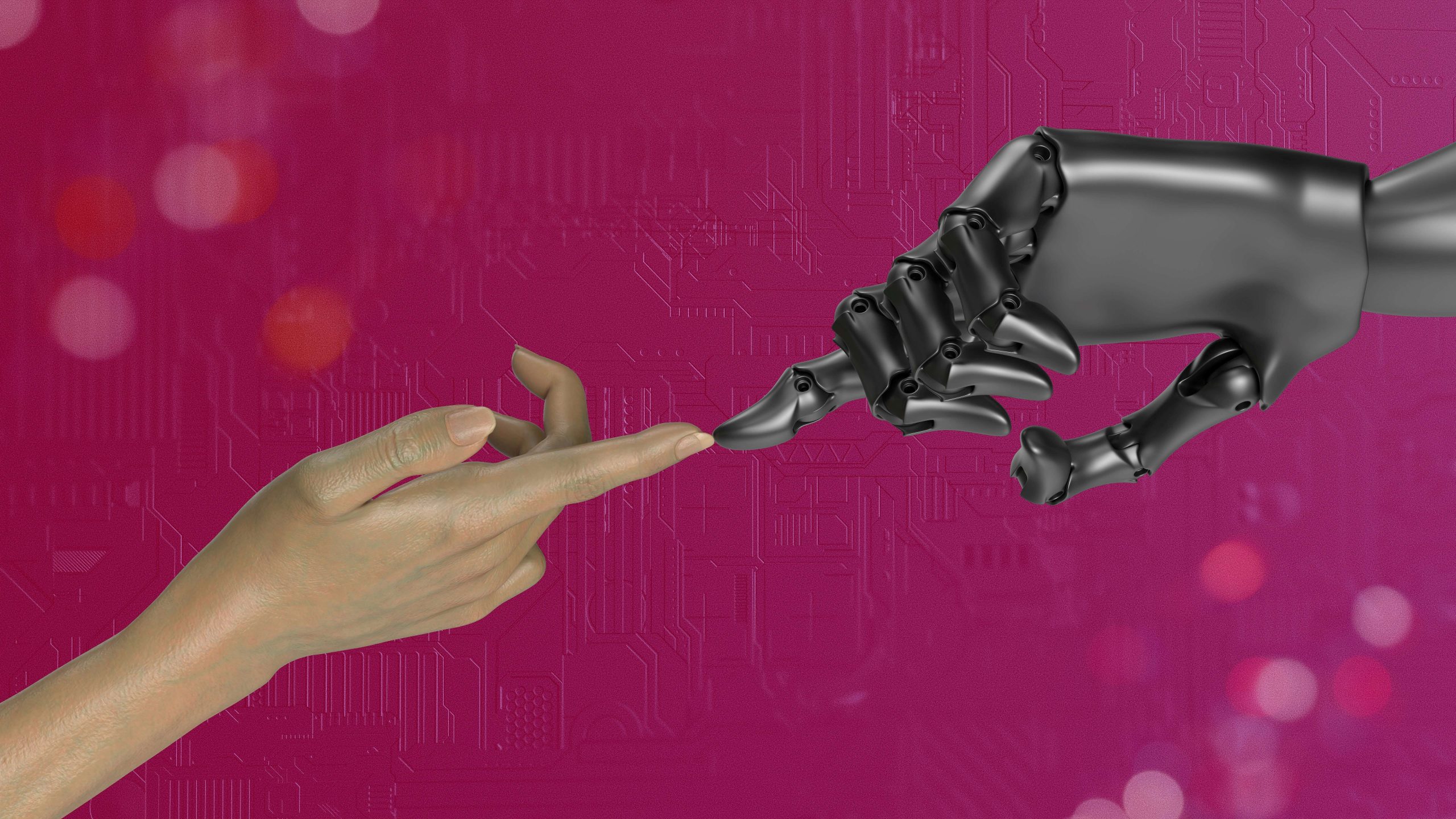
While AI has been around for over half a century, the true revolution came when it became publicly accessible – shifting from research labs and data centres into our everyday workflows. The release of generative-AI tools marked a tipping point: for the first time, anyone with an internet connection could harness AI to generate new content instantly.
Yet, as wonderful and transformative as these tools are, be aware that they come with limitations. Generative AI models are not neutral – they mirror the biases found in their training data. They can also “hallucinate” by very confidently presenting false or misleading information as fact.
Because of this, the essential skill is the ability to question, verify, and interpret AI outputs with discernment. AI should be treated as an extraordinarily capable assistant, but never a replacement for human judgment, creativity, or curiosity.
What makes AI remarkable is its speed and scale. It can synthesise data from dozens of sources in seconds, producing summaries and insights that would take humans hours. However, this efficiency heightens the need for verification. When AI condenses the web’s knowledge into neat summaries, it also removes much of the context and nuance. To use AI responsibly, we must demand transparency by always asking for sources and checking their reliability.
Our roles are different from even five years ago – they are multifaceted. We have seen a new set of professional identities emerge that will define how we work, learn, and lead in the years ahead:
The Onboarding Specialist
When you bring a new employee into your team, they start without a deep understanding of your company’s mission, culture, or tone of voice. The same is true for AI. These models know nothing about your internal data, your brand identity, or your processes. To work effectively, AI models need to be “onboarded” much like a new colleague.
That means providing context: What does your organization do? How do you approach tasks? What does quality look like in your world? With a new starter, the clearer and more detailed the information you provide, the better the results. AI’s output quality similarly depends on the clarity of its inputs.
Every brand has its own communication style and personality – something AI doesn’t intuitively understand. Just as you would train a new employee to match your tone and standards, you must “train” AI to reflect your unique voice.
This process is not a one-time setup but an ongoing collaboration. The downside is that unlike a new hire, most AI models lack lasting memory, unable to recall previous conversations or build understanding across sessions. That makes human guidance essential. Effective AI use is not about pushing a button and expecting perfection; it’s about iteration, refinement, and feedback.
The Strategic Director
The rise of AI has freed us from the daunting prospect of a blank page. Instead of starting from scratch, we can now shape and refine AI-generated material to achieve our goals faster and more effectively.
In this new role as Strategic Director, using communications as an example, we’re not just producing content, we’re orchestrating ideas, creating strategies and leading AI towards desired results. The focus moves from execution to deep thinking about purpose, goals, and results, then guiding AI toward that vision. Doing this well requires two essential skill sets:
- Strategic thinking: defining the goal, scope, and direction of your content or project.
- Communicating with clarity: providing rich context, iterating on outputs, and using communication and leadership skills to guide AI effectively.
AI now extends many of our core human abilities – to see, hear, speak, and reason – but it operates in fundamentally different ways. This is not human intelligence; it’s machine intelligence. It doesn’t understand emotion, context, or intent. To use it effectively, we must adapt our creative processes around it.
The Personal Trainer
I ran a recent AI seminar at the University of St. Gallen, during which students built their own AI assistants in just four hours. Many of them raised the same worry: Are we outsourcing our thinking?
This question captures one of the most concerning challenges of the AI era – cognitive offloading. When AI can instantly produce an answer, it’s tempting to skip the hard work of problem-solving. Humans are naturally lazy and AI caters perfectly to that instinct!
However if we repeatedly hand over our thinking to machines, we risk damaging our most valuable human skill: deep, analytical thought.
Critical thinking is like a muscle. It weakens without exercise. Solving complex problems, exploring new ideas, and analysing challenges all require mental effort. Before turning to AI, take time to think independently: define the problem, explore options, consider context, then bring AI into the process to enhance your reasoning, not replace it.
Building good habits is key. Schedule periods of focused, independent thinking before engaging with AI. Treat it like a training routine: brain first, AI second. By alternating between human reflection and AI collaboration, we maintain cognitive fitness.
The Tech Explorer
You don’t need to be a computer scientist to use AI effectively but you do need curiosity, adaptability, and a solid understanding of how it works. Knowing how models are trained, what data they rely on, and what their limitations are gives you a major advantage by demystifying the technology and helps you collaborate with it intelligently.
This foundational knowledge empowers you to build on top of AI – whether that means automating workflows, designing smarter processes, or creating custom AI tools to complete repetitive tasks. The key is smart design: understanding what AI can do, what it can’t, and how human judgement can bridge the gap between the two.
Technology evolves rapidly, and so must we. It’s about experimenting, asking questions, and staying open to new ideas. By embracing the mindset of a tech explorer, we stop fearing AI and start harnessing it.
A defining moment in work
We stand at a defining moment in the evolution of work. Generative AI has redefined what it means to be a professional in the digital age. These emerging identities capture the balance we must strike between human intelligence and machine capability. Our success now depends on how well we adapt to these roles, to learn, and lead alongside this technology.
If we approach AI with the right mindset – imaginative yet responsible – it will not replace us. Instead, it will amplify our ability to learn, to create, and to lead.

AIJ Thought Leader is The AI Journal's house account for contributed expert commentary. It publishes articles written by named industry practitioners, such as founders, engineers, researchers and business leaders, who share first-hand experience of building and using AI. Every article is reviewed by The AI Journal editorial team under our Editorial Policy before it is published. Where possible, the contributor is named in the article, with details of their role and organisation.
More from AIJ Thought Leader
See all Future of AI
The future of AI in financial crime is here: how can banks fight back to regain trust and use AI for good
 AI & Technology
AI literacy shouldn’t begin in the workplace. It should begin in primary school.
 Data
The Data Centre Is Becoming a Product
 AI & Technology
Too often, AI narrows rather than widens access. Here’s how the tech industry can fix it
Recommended for you
More stories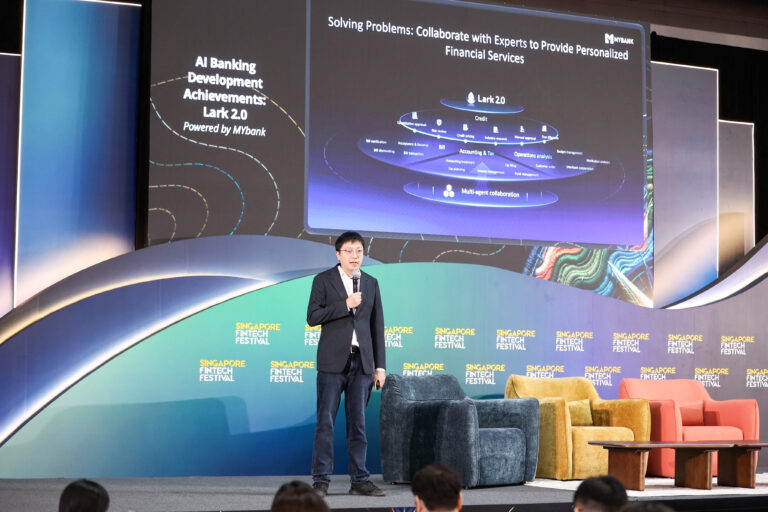 AI Business Strategy
How MYbank Is Rebuilding Itself Around AI Agents to Serve 42 Million Small-Business Owners
 AI Business Strategy
Helping the Next Generation of Investors Understand Market Information
 AI Business Strategy
How Industrial Companies Should Choose a Revenue Operations Consultant: A 2026 Comparison of Six Firms
 AI Business Strategy
Why Payers Are Funding the Same AI Problem Three Times
 AI Business Strategy
Taking control: why AI needs managing to deliver ROI
 AI Business Strategy