CodeRabbit is great for speeding up pull request reviews, but for a lot of teams, that’s only part of the job.
If security is just as important as code quality, you’ll probably want a tool that can do more than review code. Things like vulnerable dependencies, exposed secrets, and security risks can easily slip through if you’re only looking at the pull request itself.
The good news is there are plenty of alternatives that take a broader approach. Some combine AI code reviews with security scanning, while others offer complete application security platforms that fit right into your development workflow.
In this guide, we’re looking at eight of the best CodeRabbit alternatives, starting with the one that offers the most complete mix of code review and security.
Our Top Picks
| If you’re looking for… | Tool |
| The best overall alternative | Aikido |
| AI reviews inside GitHub | GitHub Copilot |
| Security-focused code scanning | Snyk Code |
| Long-term code quality | SonarQube |
| Flexible security rules | Semgrep |
| Simple automated reviews | Codacy |
| Continuous code analysis | DeepSource |
| Faster AI pull request reviews | Qodo Merge |
1. Aikido
Best for: Teams that want AI pull request reviews with built-in security and fixes they can apply right away.
What makes it different?
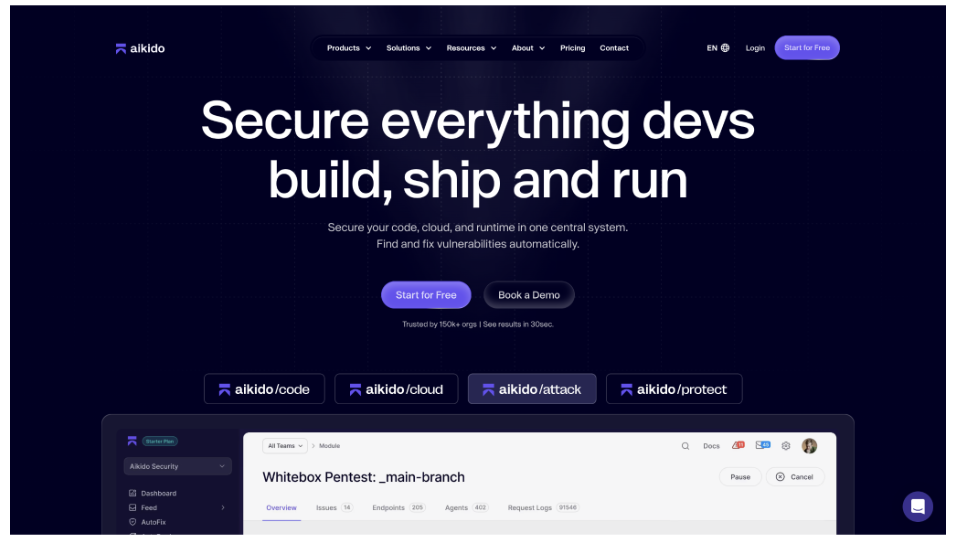
If you’re looking for something that does more than review pull requests, Aikido is a great place to start.
Unlike CodeRabbit, which mainly focuses on code quality, Aikido also looks for security issues while reviewing your pull requests. That includes things like vulnerable dependencies, exposed secrets, malware, and other security risks that could end up in production.
What we like most is that it doesn’t just point out problems – it helps you fix them. When Aikido finds an issue, it explains what’s wrong and can generate a merge-ready fix that fits straight into your pull request. That means developers can review the fix and keep moving without jumping between different tools.
Another nice touch is that Aikido looks at your whole codebase, not just the changes in the pull request. That gives it more context and helps it spot issues that are easy to miss when you’re only reviewing the diff.
Pull request reviews are just one part of the platform, though. Aikido also includes tools for SAST, dependency scanning, secrets detection, cloud security, container scanning, runtime protection, and AI-powered pentesting. So if you’re already using several security tools, there’s a good chance you can replace some of them with Aikido.
What you’ll get
- AI pull request reviews
- Finds security vulnerabilities and code quality issues
- Merge-ready fixes that fit directly into your PR workflow
- Reviews your whole codebase, not just the pull request
- Built-in SAST, dependency scanning, secrets detection, and cloud security
Worth knowing
If you only want AI code review, Aikido might be more than you need. But if you want to improve both code quality and security without adding more tools, it’s one of the strongest options available.
2. GitHub Copilot
Best for: Teams already using GitHub and GitHub Copilot.
What makes it different?
If your team already uses GitHub every day, GitHub Copilot is probably the easiest tool to start with.
Instead of adding another platform to your workflow, it reviews pull requests directly inside GitHub. It can point out bugs, suggest improvements, and even recommend code changes that you can apply with just a few clicks.
One thing we like is how little setup it needs. If you’re already using Copilot, adding AI code reviews feels like a natural extension rather than learning a completely new tool.
That said, Copilot is still mainly focused on reviewing code. While it can flag some security-related issues, it isn’t designed to replace a dedicated application security platform. If your goal is improving security across your entire development process, you’ll probably want something more comprehensive.
What you’ll get
- AI-powered pull request reviews
- Suggested code fixes
- Full repository context for reviews
- Built directly into GitHub
Worth knowing
Copilot is a great choice if you already work in GitHub, but if security is your main concern, tools like Aikido offer much broader protection beyond pull request reviews.
3. Snyk Code
Best for: Teams that want to catch security issues as early as possible.
What makes it different?
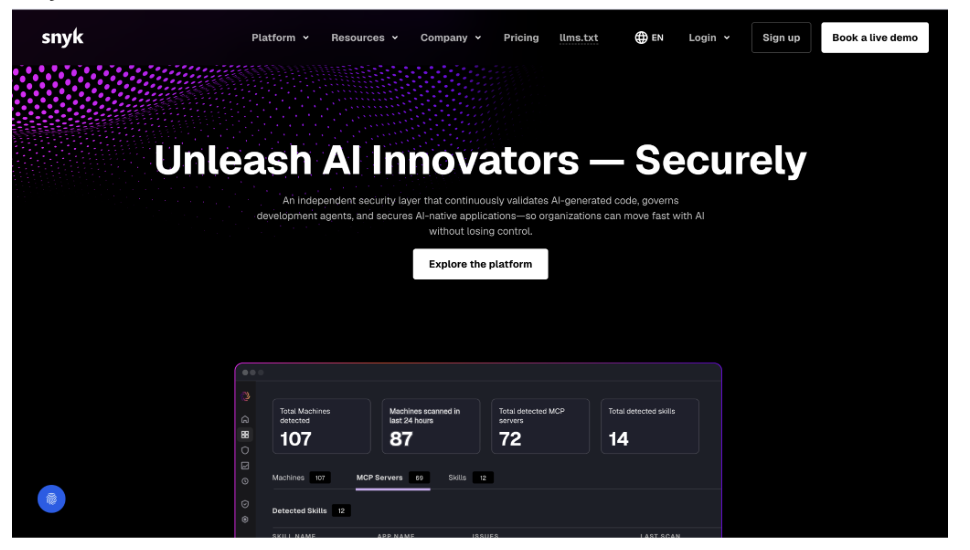
While some tools focus on making your code cleaner, Snyk Code is much more focused on making it safer.
It scans your source code for security vulnerabilities while you’re developing, helping you catch issues before they reach production. It also fits nicely into pull request and CI/CD workflows, so developers can fix problems before code is merged.
If your team already uses other Snyk products for open-source dependencies or container security, Snyk Code fits in naturally. But if you’re only looking for AI pull request reviews, it can feel more security-focused than review-focused.
What you’ll get
- Static application security testing (SAST)
- Pull request scanning
- CI/CD integrations
- Security-focused developer workflows
Worth knowing
Snyk Code is excellent for finding security problems, but it doesn’t offer the same AI review experience or merge-ready fixes that platforms like Aikido provide.
4. SonarQube
Best for: Teams that want consistent code quality across large projects.
Why people still use it
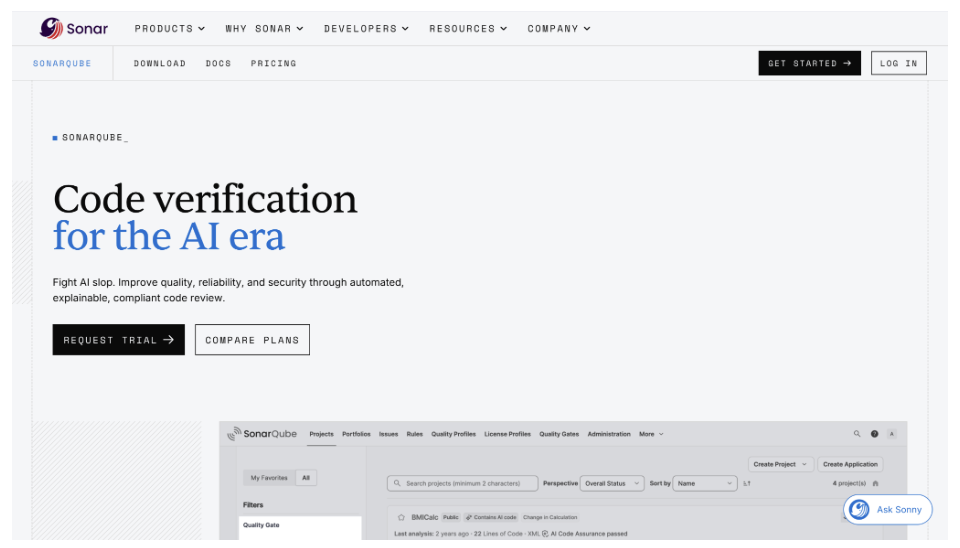
SonarQube has been around for years, and it’s still one of the most popular tools for improving code quality.
It checks your code for bugs, security issues, and maintainability problems, making it a good choice if you want to keep your codebase healthy over time. Many teams also use it as part of their CI/CD pipeline to automatically check new code before it’s merged.
Compared to newer AI review tools, SonarQube feels more like a traditional static analysis platform. It focuses on identifying issues rather than having conversations about your pull requests or suggesting AI-generated fixes.
What you’ll get
- Static code analysis
- Security and quality checks
- Code smell detection
- CI/CD integration
Worth knowing
SonarQube is great for long-term code quality, but it isn’t really designed to replace AI-powered pull request reviewers.
5. Semgrep
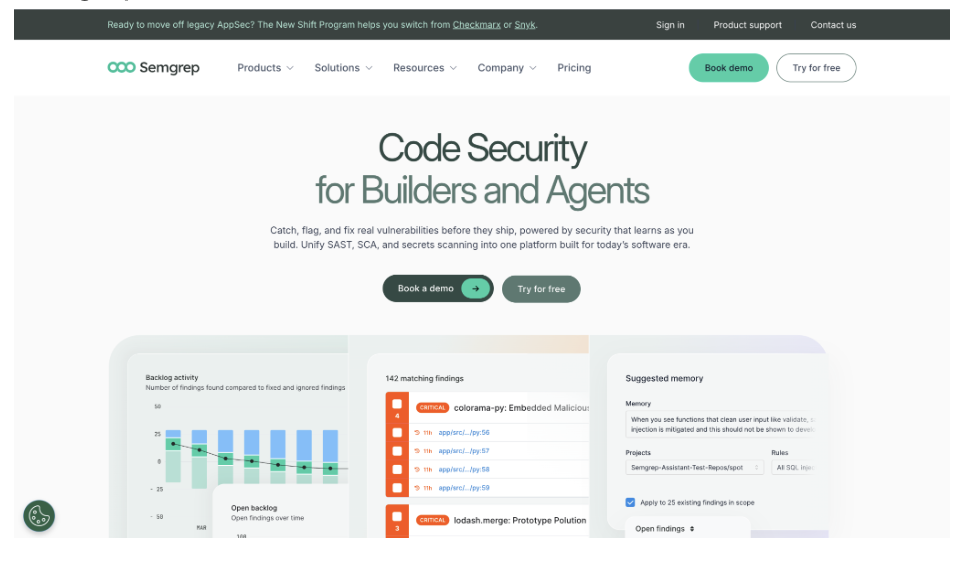
Best for: Teams that want flexible security scanning with custom rules.
Why developers like it
If your team likes having control over how security checks work, Semgrep is worth a look.
It comes with plenty of built-in security rules, but one of its biggest strengths is that you can create your own. That makes it a popular choice for teams with internal coding standards or specific security requirements.
It also runs quickly and integrates well into existing development workflows, which makes it easy to scan pull requests automatically.
What you’ll get
- Fast security scanning
- Custom security rules
- SAST capabilities
- Git and CI/CD integrations
Worth knowing
Semgrep is designed for security scanning rather than AI-powered code reviews, so it works best alongside human reviewers or AI review tools.
6. Codacy
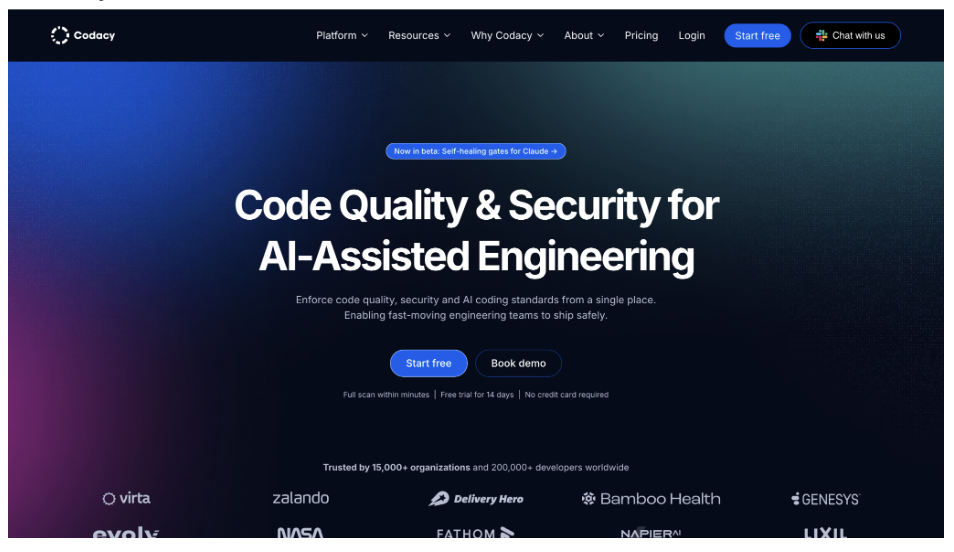
Best for: Teams looking to automate everyday code reviews.
What makes it different?
If your goal is to automate more of your code reviews without changing the way your team already works, Codacy is a solid option.
It checks every pull request for things like code quality, security issues, and coding standards, then reports the results directly inside your Git workflow. That means developers can spot problems before code is merged instead of finding them later. It can also suggest fixes for some issues directly in pull request comments.
It’s a good fit for teams that want consistent code reviews without spending hours checking the same kinds of issues manually.
What you’ll get
- Automated pull request analysis
- Code quality and security checks
- GitHub, GitLab, and Bitbucket integrations
- Suggested fixes for supported issues
Worth knowing
Codacy does a good job automating code reviews, but it isn’t built to replace a full application security platform. If security is a bigger priority than code quality alone, you’ll probably want something more comprehensive.
7. DeepSource
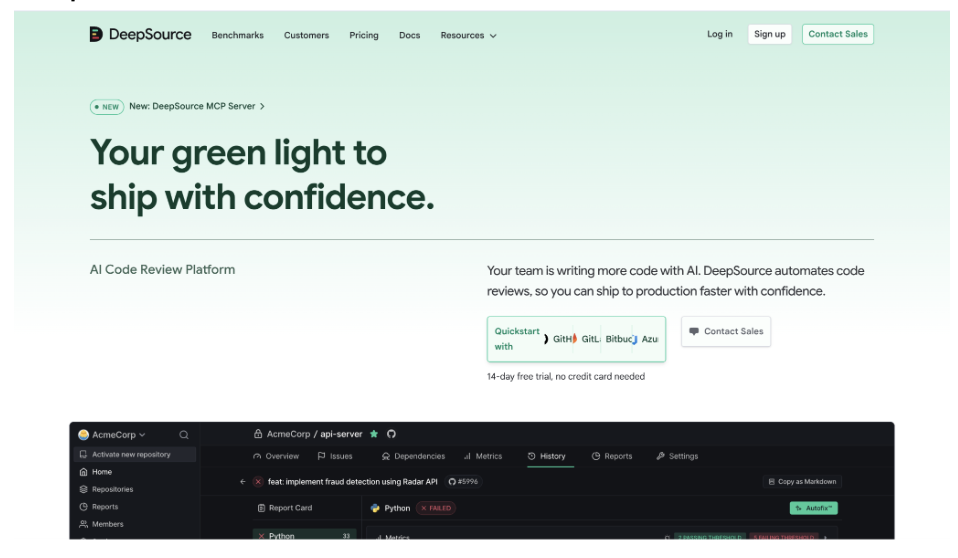
Best for: Teams that want ongoing feedback to keep their codebase clean and maintainable.
What makes it different?
DeepSource is designed to help you catch problems early, before they turn into technical debt.
It continuously scans your repositories for bugs, security issues, and maintainability problems, giving developers regular feedback instead of only checking code during pull requests. It can also suggest fixes for many common issues, helping teams clean up their code with less manual work.
I like that it focuses on keeping your codebase healthy over time, not just reviewing individual pull requests.
What you’ll get
- Continuous code analysis
- Security and quality checks
- Autofix suggestions for supported issues
- CI/CD and Git integrations
Worth knowing
DeepSource is great for improving code quality over time, but it isn’t as focused on AI-powered pull request conversations or broader application security as some of the other tools on this list.
8. Qodo Merge
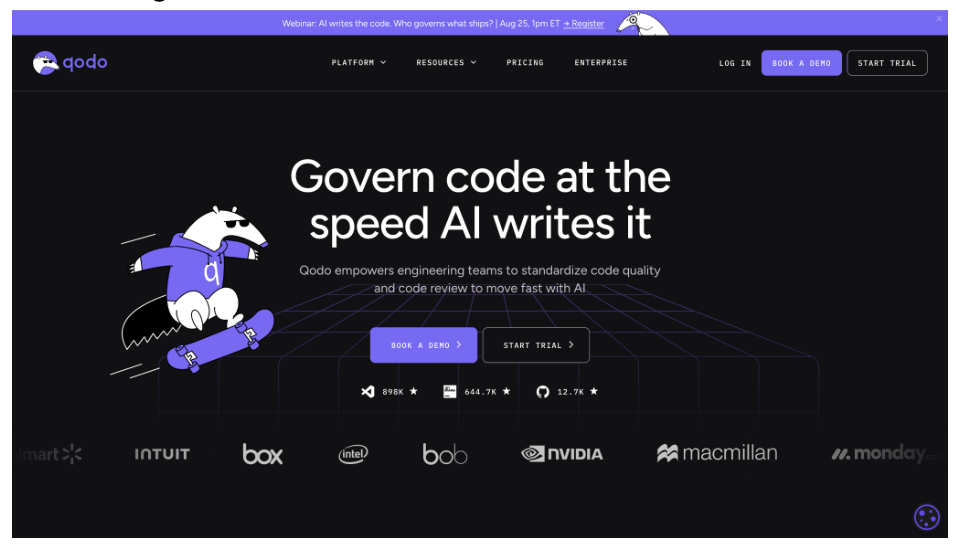
Best for: Teams that want faster, AI-assisted pull request reviews.
What makes it different?
If what you liked most about CodeRabbit was the AI review experience, Qodo Merge is one of the closest alternatives.
It automatically reviews pull requests, writes summaries, suggests improvements, highlights potential issues, and even lets you chat with AI about your code without leaving your Git workflow. It also understands more than just the code in the pull request by using additional codebase context to make its feedback more relevant.
It’s clearly built around helping developers review code faster rather than being a full security platform, which makes it a good choice if AI-assisted reviews are your main priority.
What you’ll get
- AI pull request reviews
- Automatic PR summaries
- Context-aware suggestions
- Support for GitHub, GitLab, Bitbucket, Azure DevOps, and more
Worth knowing
Qodo Merge is excellent for speeding up reviews, but if you’re looking for security features like dependency scanning, secrets detection, cloud security, or runtime protection, you’ll still need additional tools.
Conclusion
CodeRabbit isn’t the only option for AI-powered pull request reviews anymore. Whether your priority is code quality, security, or a mix of both, there are plenty of tools to choose from.
Some focus on making code reviews faster, while others help you catch security issues earlier in the development process. The right choice comes down to your team’s workflow and the level of security you need.
If security is a priority, it’s worth looking beyond traditional code review tools and considering platforms that can help you find vulnerabilities and fix them before they reach production.