Wars have long involved attempts to control communications infrastructure. What has changed is how deeply modern economies now depend on digital connections.
In March 2026, reports linked to the escalation between Iran, the US, and Israel suggested that cloud facilities supporting regional computing networks could become military targets because of their role in intelligence and AI-enabled coordination. This concern was reinforced by drone strikes that damaged regional cloud data-centre infrastructure in the United Arab Emirates and Bahrain during the same escalation. Whether or not such strikes become routine, the episode highlighted something important: modern economies now depend heavily on infrastructure most people never see.
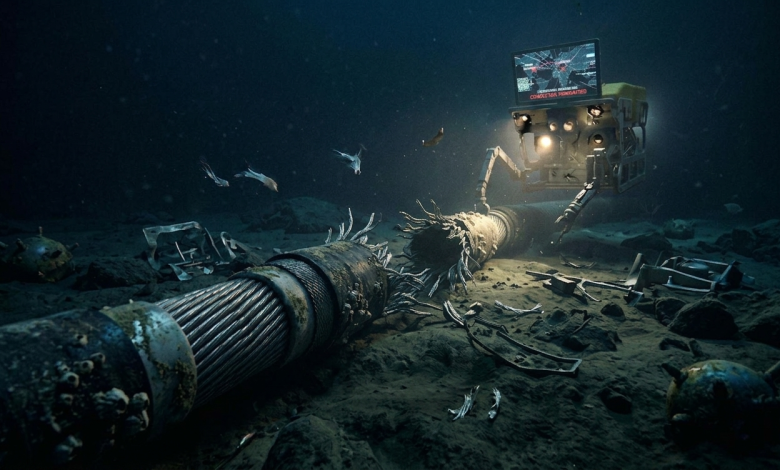
At the centre of this infrastructure are submarine fibre-optic cables that connect data centres across continents. Nearly 99% of global internet traffic travels through more than 500 such cablesbeneath the seabed. They carry financial transactions, logistics data, cloud services, and the computing traffic that supports artificial intelligence (AI) systems used by businesses and governments alike. In practice, this means that disruptions affecting only a small number of cables can slow digital services across entire regions.
Recent incidents show how exposed this infrastructure can be. Damage to several submarine cables in the Red Sea in early 2024 forced internet traffic between Europe, Asia, and the Middle Eastto be rerouted across longer routes, slowing connectivity across parts of east Africa, India, and the Gulf region. Around the same time, repeated infrastructure disruptions in the Baltic Sea placed NATO members on alert for possible interference with telecommunications links and energy networks. The result is that events far from major battlefields can still disrupt the systems that support everyday economic activity.
Together, these developments suggest a shift in how economic pressure is applied during conflict. Disruptions increasingly affect not only the movement of goods and energy, but the cables that keep digital economies running.
A century-old strategy in a new form
Attacks on communications infrastructure during wartime are not new. History shows that control over communications cables has shaped conflicts for more than a century.
First, cutting cables can isolate decision-making. During the Spanish-American war in 1898, for example, US naval forces severed Spanish submarine telegraph cables linking colonial command centres. Without those connections, coordination across Cuba and the Philippines became far more difficult.
Second, control over cables can reshape diplomacy as well as warfare. On 5 August 1914, just one day after declaring war on Germany, Britain sent the cable ship CS Alert to cut Germany’s transatlantic communications links. Germany was then forced to rely more heavily on radio transmissions that British intelligence later intercepted, including the famous Zimmermann Telegram that contributed to bringing the United States into the war. Germany later retaliated by cutting communications cables off the US east coast in 1918, showing that cable warfare could also affectdomestic connectivity.
Third, competition over data infrastructure does not always involve destroying it. During the Cold War, Operation Ivy Bells allowed the United States to secretly tap Soviet undersea communications cables in the Sea of Okhotsk. Control over information networks provided intelligence advantages without open conflict.
What has changed is not the strategy itself, but how much modern societies now depend on these networks. Today’s fibre-optic cables play a similar role, but on a far larger scale.
Why these hidden cables matter more than ever
Modern cables support everyday services such as online banking, cloud computing, airline scheduling systems, healthcare services, and global supply-chain platforms, among others. Many of these services now depend on AI systems running simultaneously across multiple regions rather than within a single country.
A single transatlantic cable such as MAREA, which is one of the highest-capacity links between Europe and North America, can transmit up to 224 terabits of data per second. Capacity on this scale helps keep digital services running smoothly across continents.
Because hyperscale data centres operate as distributed systems rather than isolated facilities, interruptions do more than slow communication. They affect how services remain synchronisedacross borders. Training models, processing transactions, and delivering digital services all depend on uninterrupted connectivity between data centres, as do just-in-time supply chains that rely on real-time coordination.
Industrial-era conflicts targeted railways, ports, and oil infrastructure because they sustained production and mobility. Today, economic activity increasingly depends on the digital infrastructure that keeps markets, logistics systems, and public services working in real time across continents.
As productivity growth becomes more closely tied to cloud computing and AI deployment, disruptions to the cables connecting data centres are becoming a strategic concern rather than just a technical one. NATO and several European governments have already stepped up patrols and monitoring around critical seabed infrastructure, reflecting growing concern that digital connectivity is becoming a strategic vulnerability.
These cables do not only support governments or military systems. As mentioned, they also underpin everyday services that societies rely on. Undersea cables may remain out of sight, but they are becoming central to how economic stability and political power are organised in an AI-dependent world.