When you search for a creator on your influencer marketing platform and they don’t appear in the results, you have two options: spend time tracking them down manually on social media, or move on and hope someone comparable exists in your tool’s database. Neither option is ideal, and both cost you something – time, or the creator who would have been the perfect fit for your campaign.
Database size is one of the most underrated factors in platform selection. A platform with 12 million indexed creators sounds impressive until you’re sourcing micro-influencers in a niche vertical and the tool returns the same 30 profiles everyone else in your category has already contacted. The difference between a 12M and a 450M+ creator database isn’t just a number – it’s the difference between competing for the same overexposed creators and discovering untapped talent that your competitors haven’t found yet.
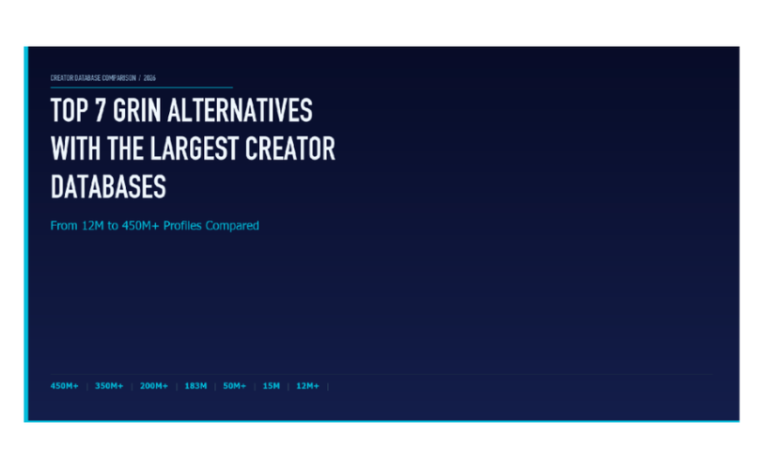
GRIN doesn’t publish its creator database size – an unusual omission in a market where competitors openly index anywhere from 12 million to 450 million+ profiles. This guide covers seven platforms – starting with Influencer Hero – ranked by database size, so you can evaluate exactly how much discovery ground each tool covers and what that means for your ability to find the right creators at scale.
- Influencer Hero (450M+ creators)
- Modash (350M+ creators)
- HypeAuditor (200M+ creators)
- Storyclash (183M creators)
- Heepsy (50M+ creators)
- Later (15M creators)
- Upfluence (12M+ creators)
Why Creator Database Size Matters for Discovery
Not every brand needs 450 million indexed profiles. But every brand eventually hits a discovery ceiling on a small database – and when that happens, it’s usually at the worst possible time. You’re launching in a new market, targeting a niche demographic, or trying to find creators who haven’t already partnered with three of your competitors.
Database size affects influencer marketing outcomes in three concrete ways:
- Niche and Micro-Influencer Coverage: Small databases tend to index well-known creators with large followings. That’s useful for broad awareness campaigns, but it misses the micro and nano-influencers who drive the highest engagement rates and conversion. A platform indexing 450M+ profiles captures creators at every tier – including those with 5,000 to 50,000 followers who may be your most cost-effective partners.
- Geographic and Platform Diversity: Expanding into new markets requires creators who are active in those regions. Larger databases with multi-platform coverage (Instagram, TikTok, YouTube, Pinterest, Snapchat, X, Twitch) provide far more options in emerging markets and non-English-speaking regions than databases built primarily from US-centric opt-in data.
- Competitive Differentiation in Discovery: When your platform and your competitors’ platforms draw from the same small pool, everyone contacts the same creators. Those creators are overexposed, often charging premium rates, and less likely to respond to outreach. A larger database increases the odds of finding high-quality creators who haven’t been saturated with brand partnership requests.
Database size alone doesn’t guarantee discovery quality – search filters, AI matching, audience analysis, and fraud detection all matter. But size is the foundation. The best search filters in the world can’t surface a creator who isn’t in the database to begin with.
GRIN Overview
GRIN has built a strong platform for eCommerce brands running large-scale creator programs. The platform delivers a unified workflow covering discovery, outreach, content management, gifting, affiliate tracking, and reporting. Native eCommerce integrations span Shopify, WooCommerce, BigCommerce, Magento, and Salesforce Commerce, with automated gifting and discount code generation. The creator portal system lets influencers manage briefs, submit content, and track earnings through private dashboards, and media rights are auto-granted when creators are booked.
Where GRIN creates uncertainty for discovery-focused teams is its approach to database transparency. GRIN does not publish the size of its creator database – an unusual position in a market where competitors openly report figures ranging from 12 million to 450 million+ indexed profiles. Instead, GRIN relies on a combination of its Gia AI assistant and curated discovery, where creators are surfaced through the platform’s own matching algorithms rather than a searchable open database.
This curated approach has merit – smaller, vetted pools can reduce noise and surface higher-quality matches for known use cases. But it limits discovery in unpredictable ways. Teams exploring new verticals, targeting emerging markets, or looking for creators outside their usual profile may find that the curated pool doesn’t contain what they need. Without knowing the database size, it’s impossible to evaluate whether a “no results” response means the creator doesn’t exist or simply isn’t in GRIN’s index. The platforms below publish their database sizes and let teams make informed decisions about discovery coverage.
Best GRIN Alternatives With the Largest Creator Databases
1. Influencer Hero – 450M+ Creators
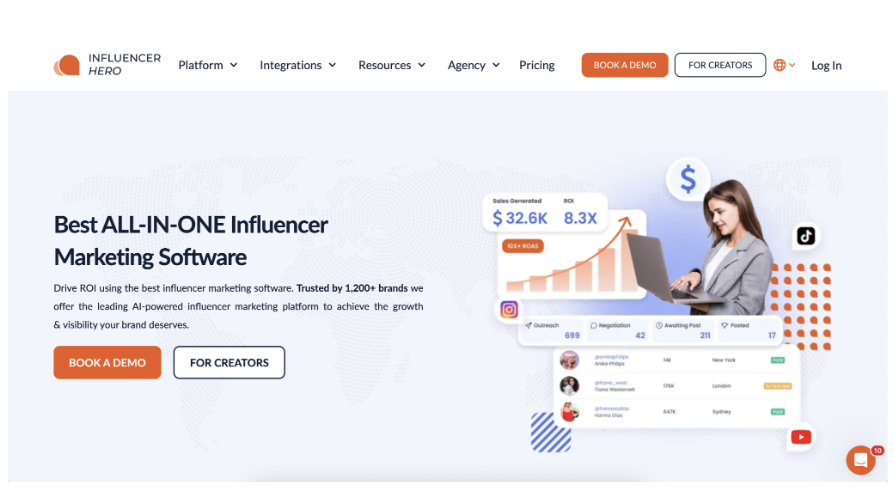
Influencer Hero operates the largest creator database in the influencer marketing industry – 450M+ profiles indexed across eight platforms: Instagram, TikTok, YouTube, Facebook, Pinterest, Snapchat, X, and Twitch. That eight-platform coverage is a meaningful differentiator. Most competitors index three to four platforms, which means entire creator populations on Pinterest, Snapchat, and Twitch simply don’t appear in their search results. For brands running cross-platform campaigns or targeting audiences on less-covered networks, those missing profiles represent missed opportunities.
The database size matters most when paired with intelligent search. Influencer Hero’s AI Smart Search lets teams describe what they’re looking for in natural language rather than building complex filter combinations. Instead of manually setting follower ranges, engagement thresholds, and location filters, you can search for something like “fitness creators in Germany with high engagement who post workout tutorials” and get relevant results. Lookalike discovery takes this further – input a creator handle or audience profile and the system surfaces similar creators across the 450M+ database, turning one successful partnership into a pipeline of comparable talent.
Beyond discovery, the platform covers the full influencer marketing lifecycle. AI-powered outreach analyzes each creator’s last three posts to generate personalized first lines, achieving a 43% average response rate. The three-layer CRM (Campaign Manager, Campaign Boards, Deal Pages) manages partnerships from first contact through payment, with rules-based automation that auto-generates Shopify discount codes, advances deal stages on creator actions, and flags overdue deliverables. Six eCommerce integrations (Shopify, WooCommerce, Magento, BigCommerce, Prestashop, and Amazon) give the platform the broadest native commerce coverage available.
The UGC Content Library uses AI Post Detector to auto-capture tagged content, Visual Quality Scoring (0-10 rating), and semantic search by themes. A free Chrome Extension provides real-time analytics directly on Instagram, TikTok, and YouTube profiles with fake follower detection and one-click CRM import. Case studies validate the scale – Arabian Oud generated 1,200+ UGC posts and 21M+ impressions, while a D2C brand scaled from $0 to $1.2M in a single year.
Best for: Teams that need the widest possible discovery net across eight platforms, combined with AI-powered search, outreach automation, and full lifecycle management in a single system.
Pricing:
- Standard: $649/month (1 seat, up to 1,000 creators, 1,000 outreach/mo)
- Pro: $1,049/month (3 seats, up to 5,000 creators, 5,000 outreach/mo)
- Business: $2,490/month (8 seats, up to 10,000 creators, 10,000 outreach/mo)
- Custom & Agency plans available with unlimited outreach
- All plans include consultation and training
- Month-to-month billing – no annual contract required
Standout features:
- 450M+ Creators Across 8 Platforms: The largest indexed database in the market covering Instagram, TikTok, YouTube, Facebook, Pinterest, Snapchat, X, and Twitch – no other platform matches this breadth.
- AI Smart Search and Lookalike Discovery: Natural language search across the full database plus lookalike matching by handle or audience profile – turning one successful partnership into a pipeline of similar creators.
- AI-Powered Outreach (43% Response Rate): Personalized first lines generated from each creator’s recent content, with automated drip sequences and Spam Score monitoring for high deliverability.
- Three-Layer CRM With Automation: Campaign Manager, Campaign Boards, and Deal Pages with rules-based triggers that auto-advance deals, generate discount codes, and flag overdue tasks.
- Six eCommerce Integrations: Shopify, WooCommerce, Magento, BigCommerce, Prestashop, and Amazon – the broadest native commerce coverage on this list.
- Free Chrome Extension: Real-time analytics overlay on Instagram, TikTok, and YouTube with fake follower detection, audience demographics, and one-click CRM import.
The comprehensive feature set means teams adopting the platform should expect an onboarding period to configure CRM automation rules, outreach sequences, and eCommerce integrations. The depth is built for brands scaling seriously – very small programs running only a handful of campaigns may not leverage every capability immediately.
2. Modash – 350M+ Creators
Modash indexes 350M+ public creator profiles on a non-opt-in basis across Instagram, TikTok, and YouTube – the second-largest database on this list. The non-opt-in approach is significant: rather than requiring creators to register on the platform, Modash indexes public profiles directly. This means you’re searching the actual creator landscape rather than a self-selected subset, which gives a more complete picture of available talent in any given niche.
The platform’s AI visual discovery feature adds a dimension that traditional filter-based search can’t match. Teams can describe a visual aesthetic in plain language or upload a reference image to find creators with similar content styles. For brands with strong visual identity requirements – fashion, beauty, food, lifestyle – this is significantly faster than keyword searches and manual feed evaluation. The “Find Your Fans” tool adds another discovery angle by identifying existing customers who are also creators, turning your customer base into a talent pipeline.
Shopify-native affiliate workflows handle discount codes, UTM tracking, product selection, and automated payouts directly from your catalog. Built-in outreach with Gmail and Outlook sync keeps communication inside the platform, and campaign tracking covers mentions, hashtags, and event-mode monitoring. At $199/month for the Essentials plan with month-to-month billing, Modash makes a 350M+ database accessible without a major financial commitment.
Best for: Teams that want access to one of the largest non-opt-in creator databases with visual AI discovery and affordable Shopify affiliate tools.
Pricing:
- Essentials: $199/month
- Performance: $499/month
- Enterprise: custom
- Month-to-month on non-Enterprise plans
Standout features:
- 350M+ Non-Opt-In Creator Profiles: Public profiles indexed directly from Instagram, TikTok, and YouTube – searching the actual creator landscape rather than a curated subset.
- AI Visual Discovery: Describe a visual style or upload a reference image to find creators with matching aesthetics – an approach that goes beyond traditional demographic filters.
- “Find Your Fans” Customer-Creator Matching: Identifies existing customers who are also creators, adding a discovery channel that doesn’t depend on database search at all.
- Shopify-Native Affiliate Workflows: Automated discount codes, UTM tracking, product selection, and payouts directly from your Shopify catalog.
- Accessible Entry Point: Starting at $199/month with month-to-month flexibility – the lowest-cost access to a 350M+ creator database on the market.
The 350M+ database covers three platforms (Instagram, TikTok, YouTube) compared to competitors indexing eight. Brands targeting Pinterest, Snapchat, X, or Twitch creators won’t find them here. eCommerce integration is Shopify-only, ruling it out for brands on WooCommerce, Magento, or Amazon. Outreach relies on templates rather than AI personalization, so response rates will be lower than platforms using AI-driven messaging. Teams that need broader platform coverage, multi-storefront eCommerce tracking, and AI-powered outreach with 40%+ response rates will find platforms with larger databases and deeper automation a stronger fit.
3. HypeAuditor – 200M+ Creators
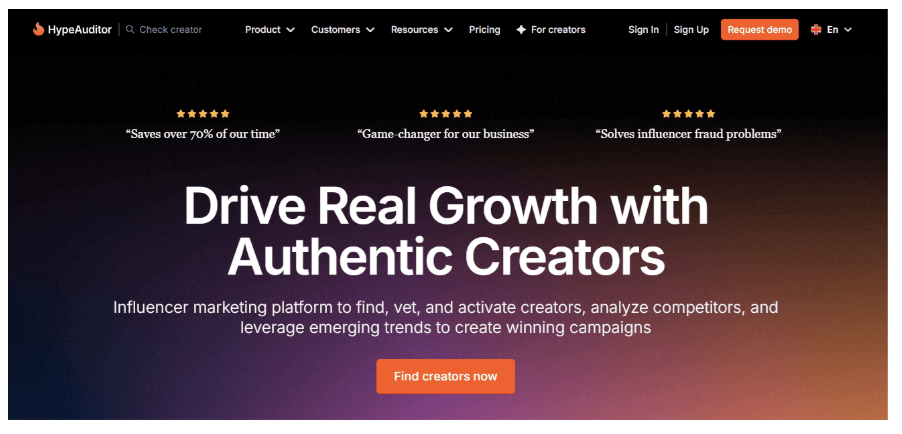
HypeAuditor indexes 200M+ creator profiles and pairs that database with what is widely considered the industry’s gold standard for fraud detection and audience authenticity analysis. The distinction matters in a database discussion: a large database is only valuable if you can trust the profiles in it. HypeAuditor’s fake follower detection identifies inflated followings, bot engagement, and purchased audiences with a level of accuracy that most competitors don’t match. When you find a creator through HypeAuditor, you can be confident the audience metrics are real.
AI-driven discovery supports lookalike search by analyzing captions and images, social listening for brand mention tracking, and competitor overlap detection. The competitor analysis is particularly useful for database-focused teams – you can identify which creators are already working with your competitors and either approach them or find similar untapped talent. Creator application pages and content approval workflows add campaign management capabilities beyond pure analytics.
The platform covers Instagram, TikTok, YouTube, Twitch, X, and Snapchat – six platforms, which provides reasonable breadth even if it doesn’t match the eight-platform coverage of the largest databases. Shopify integration handles revenue attribution through promo codes and tracked links. A free trial is available, which is uncommon for platforms at this database scale.
Best for: Teams that prioritize audience authenticity and fraud detection – brands that want a large database where every profile has been vetted for genuine engagement.
Pricing:
- Standard business: approximately $10,000/year
- Enterprise: approximately $60,000/year
- Modular custom pricing available
- Free trial available
Standout features:
- 200M+ Creators With Gold-Standard Fraud Detection: The largest database that pairs every profile with industry-leading audience authenticity analysis – fake follower detection you can trust.
- AI Lookalike Discovery: Search by caption themes and visual content patterns to find creators similar to your top performers across the 200M+ index.
- Competitor Overlap Detection: Identify which creators your competitors are partnering with – useful for finding untapped talent or understanding competitive positioning.
- Six-Platform Coverage: Instagram, TikTok, YouTube, Twitch, X, and Snapchat – broader than many competitors and covering key emerging platforms.
- Public Report Sharing: Generate detailed audience quality reports that stakeholders can review without needing platform access.
HypeAuditor is fundamentally an analytics and vetting tool, not a campaign execution platform. There’s no in-platform outreach automation, no CRM with deal pipeline management, and no gifting or product fulfillment. Teams need separate tools for those functions, which means managing multiple systems. The 200M+ database is substantial but leaves a gap of 150M to 250M+ profiles compared to the largest platforms – profiles that may include the niche or emerging-market creators you’re specifically looking for.
4. Storyclash – 183M Creators
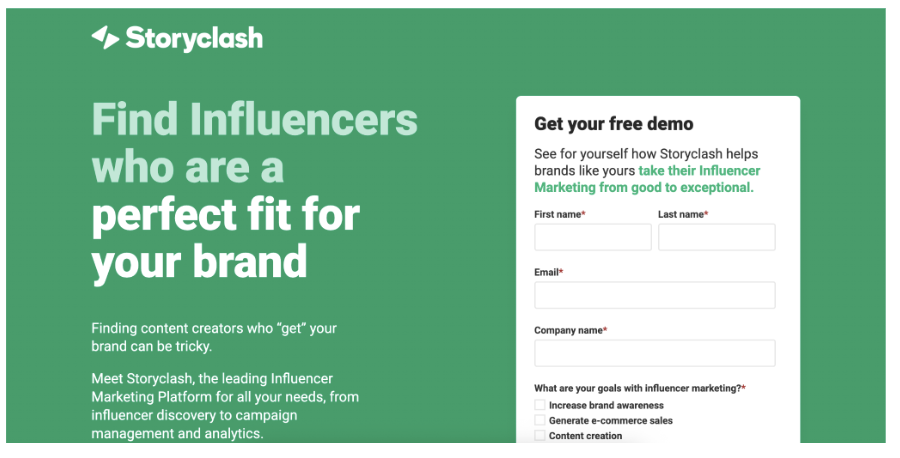
Storyclash indexes 183M creator profiles across Instagram, TikTok, and YouTube, with a discovery engine that goes beyond basic filters. AI-driven search supports keyword matching, image recognition, AI prompts, and lookalike discovery – four distinct paths to finding creators, each suited to different use cases. The image recognition capability is particularly relevant for brands with strong visual identities, where the aesthetic of a creator’s feed matters as much as their demographics.
Where Storyclash adds unique value to the database conversation is its historical data depth. The platform archives content including expired Instagram Stories, giving teams a complete picture of a creator’s content history rather than just what’s currently live. This matters for vetting – a creator’s Story content from six months ago can reveal brand partnerships, content consistency, and audience engagement patterns that current feed posts alone don’t show.
Competitive benchmarking lets teams see which creators their competitors are working with – intelligence that’s directly actionable for discovery. If a competitor’s campaign performed well with a specific creator segment, Storyclash helps you identify similar profiles. The Shopify integration tracks ROAS, CAC, and AOV for campaigns, and centralized campaign management with collaboration tools keeps teams aligned.
Best for: Brands that need content intelligence and competitive benchmarking alongside a substantial discovery database – teams that evaluate creators by content history rather than just current metrics.
Pricing:
- Starts at $870/month
- Enterprise plans available
Standout features:
- 183M Creators With Multi-Mode AI Discovery: Four discovery paths – keyword, image recognition, AI prompts, and lookalike – each returning results from the full 183M index.
- Historical Data Including Expired Stories: Access a creator’s complete content archive for thorough vetting – not just what’s currently live on their profiles.
- Competitive Creator Intelligence: See which creators your competitors are using and how those partnerships perform – actionable intelligence for discovery.
- Shopify ROAS, CAC, and AOV Tracking: Revenue attribution metrics that connect influencer content directly to eCommerce performance data.
- Team Collaboration Tools: Internal notes, task assignment, and campaign coordination within a centralized platform.
The 183M database covers three platforms (Instagram, TikTok, YouTube), which means creators on Pinterest, Snapchat, X, Twitch, and Facebook are outside discovery range. No built-in contract generation or content licensing workflows – media rights must be handled manually. The platform lacks outreach automation and CRM deal pipeline management, so teams handling high-volume creator partnerships will need to pair it with an all-in-one platform that handles execution at scale.
5. Heepsy – 50M+ Creators
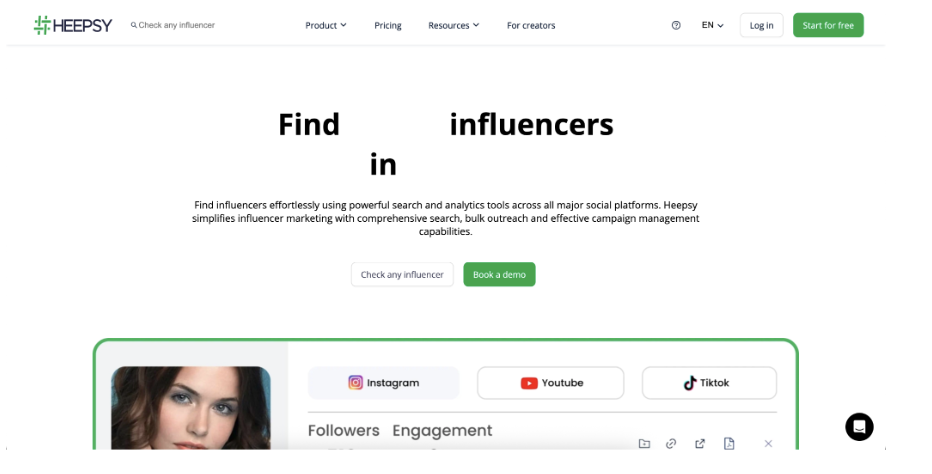
Heepsy’s 50M+ creator database may be smaller than the platforms above, but it compensates with strong authenticity filters and a focus on quality over raw quantity. The database has particularly strong coverage in the US and European markets, making it well-suited for brands whose target audiences are concentrated in those regions. Fake follower detection and quality scoring are built into the search process, so every result comes with an authenticity assessment.
The platform is designed for accessibility. A clean interface with straightforward search filters makes Heepsy usable from day one without a steep learning curve – a meaningful advantage for teams coming from complex platforms. The Kanban-style CRM provides visual pipeline management with drag-and-drop simplicity, and bulk email outreach supports up to 3,000 messages per month with automated follow-up sequences.
On the eCommerce side, Heepsy integrates with both Shopify and WooCommerce for affiliate tracking on advanced plans – dual-platform support that’s uncommon at this price point. A free plan allows basic exploration before committing, with paid tiers starting at $89/month. For small to mid-sized brands that don’t need to search 200M+ profiles but want reliable discovery in core Western markets with built-in quality vetting, the 50M+ database provides adequate coverage.
Best for: Small to mid-sized eCommerce brands focused on US and European markets that want quality-vetted discovery with Shopify/WooCommerce affiliate tracking at an accessible price.
Pricing:
- Free plan available
- Starter: $89/month
- Plus: $249/month
- Advanced: $369/month
Standout features:
- 50M+ Quality-Vetted Creators: Strong US and European coverage with built-in authenticity filters and quality scores applied to every search result.
- User-Friendly Interface: Clean, intuitive design that’s usable from day one without complex setup or onboarding.
- Kanban-Style Visual CRM: Drag-and-drop pipeline management giving an instant visual overview of all active partnerships.
- Shopify and WooCommerce Affiliate Tracking: Dual eCommerce platform support on advanced plans – uncommon at this price point.
- Bulk Outreach With Follow-Ups: Up to 3,000 emails per month with automated sequences – template-based but reliable.
The 50M+ database is a fraction of what platforms with 200M to 450M+ indexed creators offer, which limits discovery in niche categories, emerging platforms, and non-Western markets. The best features – including Shopify/WooCommerce tracking – are locked behind higher-priced plans. Outreach is template-based without AI personalization, so response rates will trail platforms that use AI-generated messaging achieving 40%+ averages. Teams planning to scale beyond mid-market volume or expand into global markets will likely outgrow the discovery coverage.
6. Later – 15M Creators
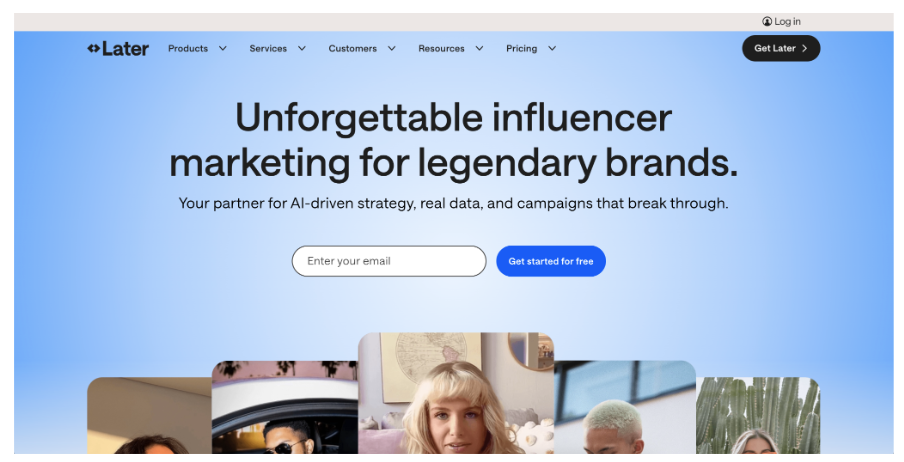
Later indexes 15M contactable creators with verified email addresses – a significantly smaller database than the platforms above, but with a specific advantage in the “contactable” qualifier. Every profile in Later’s database has a verified email, which means discovery results translate directly into outreach without the manual email-finding step that larger databases sometimes require. For teams that prioritize outreach efficiency over discovery breadth, that distinction matters.
The platform started as a social media scheduling tool and has expanded into influencer marketing, which gives it a unique hybrid position. The visual discovery engine operates within a modern dashboard, and self-serve plans coexist with managed and full-service options for teams that want hands-on support. Custom application pages let brands create branded landing pages for creator vetting, funneling inbound applications through a structured process.
Later’s Shopify-integrated gifting handles inventory management alongside product shipping, and AI-driven brand safety and content review tools help maintain quality standards. The Linkin.bio feature and UGC library with content repurposing across ads and storefronts add value beyond pure influencer marketing. Platform coverage spans seven channels – Instagram, TikTok, YouTube, Facebook, Pinterest, Twitch, and X.
Best for: Brands that want a verified-email creator database integrated with social media management, content scheduling, and structured inbound application workflows.
Pricing:
- Essentials: approximately $28,500/year
- Pro: $50,000-$60,000/year (includes campaign services)
- Annual commitment required
Standout features:
- 15M Contactable Creators With Verified Emails: Every profile has a verified email address – discovery results translate directly to outreach without manual email hunting.
- Seven-Platform Coverage: Instagram, TikTok, YouTube, Facebook, Pinterest, Twitch, and X – broader platform support than several larger databases.
- Custom Creator Application Pages: Branded landing pages for inbound creator applications with structured vetting workflows.
- Shopify Gifting With Inventory Management: Product shipping integrated with inventory tracking for campaign gifting.
- AI Brand Safety and Content Review: Automated content review tools that flag potential brand safety concerns before publication.
At 15M indexed profiles, Later’s database is 3 to 30 times smaller than competitors on this list – a significant limitation for teams sourcing niche or micro-influencers. Pricing starts at approximately $28,500/year with mandatory annual contracts, which is competitive with enterprise platforms but expensive for the database size. Automated affiliate tracking is limited, and the entry-level features overlap with cheaper platforms. The unique value – managed services and integrated social scheduling – requires the more expensive Pro tier. Teams that need broad discovery across hundreds of millions of profiles with AI-powered outreach and deep CRM automation will find platforms with larger databases and more comprehensive feature sets better aligned.
7. Upfluence – 12M+ Creators
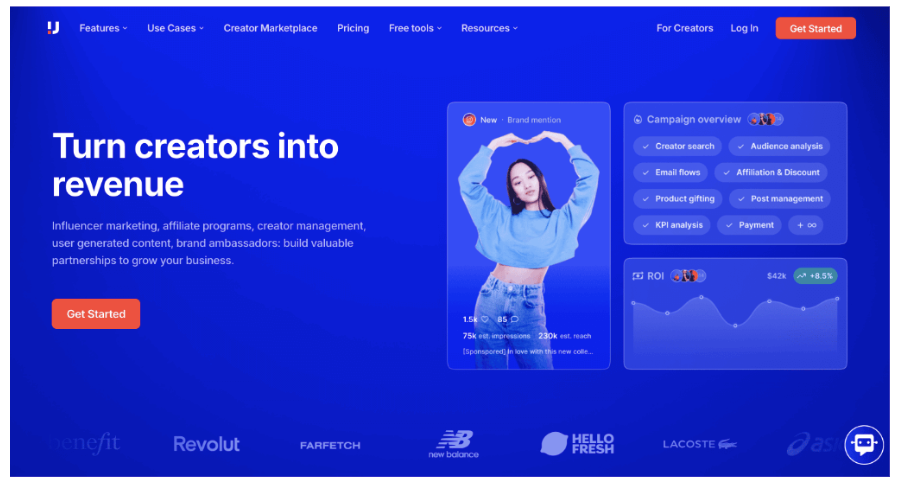
Upfluence rounds out this list with a 12M+ creator database that takes a fundamentally different approach to discovery. Rather than competing on raw database size, Upfluence focuses on turning your existing customers into influencer partners. The customer-affiliate identification feature cross-references your eCommerce customer data with social media profiles to find customers who have significant followings – people who already buy and love your products and can authentically promote them.
This customer-first approach partially offsets the smaller database. When your best creators are already your customers, the 12M+ profiles serve as supplementary discovery rather than your primary talent pool. The Jace AI campaign assistant helps with campaign management, and the platform supports both Shopify and Amazon for eCommerce ROI tracking – dual-marketplace support that’s valuable for brands selling on both platforms.
Social listening tracks brand mentions and sentiment, the IRM (Influencer Relationship Management) system imports existing creator relationships, and bulk payments operate with no usage commissions. Affiliate and gifting automation with discount code generation and referral commission tracking round out the campaign management capabilities.
Best for: eCommerce brands with large customer bases that want to identify and activate their most influential customers as creator partners, supplemented by traditional database discovery.
Pricing:
- Starts at approximately $2,000/month (~$24,000/year)
- Annual contract required
Standout features:
- Customer-Affiliate Identification: Cross-references your eCommerce customer data with social profiles to find influential customers who already use and love your products.
- Jace AI Campaign Assistant: AI-powered campaign management support for workflow optimization and decision-making.
- Dual Shopify + Amazon eCommerce Tracking: ROI attribution across both marketplaces – unusual at any price point and valuable for brands selling on both.
- Social Listening and Sentiment Tracking: Monitor brand mentions and audience sentiment across social channels for proactive relationship management.
- Bulk Payments With No Usage Commissions: Pay creators at scale without per-transaction fees eating into your influencer budget.
At 12M+ profiles, Upfluence has the smallest database on this list – 37 times smaller than the largest. For teams that rely on outbound discovery to find new creators in niche verticals or emerging markets, this is a meaningful constraint. The annual contract at approximately $24,000/year presents the same lock-in concerns as GRIN without offering the database scale of more affordable alternatives. The platform has a steep learning curve, and the customer-affiliate angle, while innovative, only works for brands with substantial existing customer bases. Teams needing the broadest discovery coverage across 200M to 450M+ creators will find the database limitation difficult to work around.
Final Thoughts
Creator database size is a foundational metric for influencer marketing platforms, but it’s not the only one. The right choice depends on how you weigh discovery breadth against other factors – search intelligence, audience verification, eCommerce integrations, campaign management depth, and pricing flexibility.
A few principles for evaluating databases alongside the platforms that house them:
- Test discovery in your actual niche, not just headline categories: Every platform performs well when you search for “beauty influencers in the US.” The real test is how it handles your specific use case – micro-influencers in a narrow vertical, creators in emerging markets, or talent on less-covered platforms like Pinterest or Twitch. Run those searches during your trial to see where each database’s coverage actually falls off.
- Database size without search intelligence has diminishing returns: A 450M+ database with AI Smart Search and lookalike discovery surfaces better results than a 450M+ database with only basic filters. The search layer determines how efficiently you navigate the database, and the difference between natural language search and manual filter stacking is significant at scale.
- Consider opt-in vs. open indexing: Opt-in databases (where creators register themselves) tend to be smaller but may have more reliable contact information. Open-indexed databases capture a wider view of the creator landscape but may require additional verification steps. Neither approach is inherently better – the right one depends on whether you value breadth or pre-verified contacts.
- Factor in platform coverage, not just total profiles: A database with 200M profiles across six platforms may serve you better than one with 350M across three, depending on where your target creators are active. Eight-platform coverage captures audiences that three-platform databases miss entirely.
The platforms on this list range from 12M to 450M+ indexed profiles, with corresponding trade-offs in pricing, features, and specialization. Start with how you find creators today, identify where your current tool’s database falls short, and evaluate alternatives based on whether they close that specific gap.
FAQs
1. Why doesn’t GRIN publish its creator database size?
GRIN uses a curated, opt-in discovery approach rather than open indexing of public profiles. The platform relies on its Gia AI assistant and proprietary matching to surface creators rather than letting users search a fully indexed database. This approach works well for known use cases but creates uncertainty for teams that want to evaluate whether a platform’s discovery coverage matches their needs before committing to a $25,000/year contract.
2. Does a bigger database always mean better discovery?
Not automatically, but it provides a stronger foundation. A larger database increases the odds of finding niche creators, micro-influencers, and talent in emerging markets. However, the search tools on top of the database matter just as much – AI Smart Search, lookalike discovery, visual matching, and audience authenticity filters all determine how efficiently you navigate the available profiles. The ideal combination is a large database with intelligent search.
3. What’s the difference between opt-in and open-indexed creator databases?
Opt-in databases require creators to register on the platform, resulting in smaller but potentially more engaged pools. Open-indexed databases capture public creator profiles directly from social platforms regardless of registration, producing much larger databases (350M-450M+) that represent the actual creator landscape. Some platforms like Modash and Influencer Hero index public profiles non-selectively, while others like Aspire rely on creators applying through their marketplace.
4. How many creators do I actually need in a database?
It depends on your campaign scope. Brands running campaigns in well-covered niches (beauty, fashion, fitness) within major markets may find 50M+ profiles sufficient. Brands exploring emerging verticals, targeting non-Western markets, running cross-platform campaigns, or looking for micro-influencers in narrow categories benefit from databases indexing 200M+. If you regularly hit “no results” in your current platform’s search, you’ve outgrown your database.
5. Can I use multiple platforms for different discovery needs?
Yes, and many teams do. A common approach is pairing a specialized analytics tool (like HypeAuditor for fraud detection) with an all-in-one platform (for CRM, outreach, and campaign management). The trade-off is managing multiple subscriptions and workflows. Platforms that combine large databases with full lifecycle management reduce the need for this multi-tool approach.
6. Does database size affect pricing?
Not linearly. Heepsy offers 50M+ profiles starting at $89/month, while Later provides 15M profiles starting at approximately $28,500/year. The pricing reflects the overall platform scope – CRM depth, automation capabilities, eCommerce integrations, and managed services – rather than just database access. Influencer Hero’s 450M+ database at $649/month represents a strong value ratio of database size to cost when factored alongside its full-lifecycle feature set.