For years, conversations around artificial intelligence and the future of work have centred on one question: which jobs will AI replace first?
It has often been assumed that the biggest risk is for entry-level employees. As automation progresses, customer service representatives, data entry clerks, junior analysts, and administrative staff are often quoted as the most at risk.
But this story ignores a much more important change already taking place.
Perhaps the layer of organisation under greatest pressure to change is not at the bottom of the hierarchy, but in the middle. Middle management has traditionally coordinated information, monitoredperformance, allocated resources, and linked objectives to day-to-day execution.
The need for these responsibilities developed as organisations required people who could collect information from a range of sources, make sense of it, and disseminate it throughout the business.
Remarkably, AI is now capable of doing many of these functions at scale.
That’s not to say managers are going the way of the dinosaur. Not at all. But it does mean that the nature of management is changing in ways that many organisations have not yet fully appreciated.
Why Middle Management Is There
To understand how AI might affect management, we need to understand why middle management became such a central part of organisational design in the first place.
At big companies, the top leaders can’t personally watch over every project, department, or employee. Information is naturally fragmented across teams and functions. Middle managers were created to fill these gaps.
Typical duties include:
- Track progress towards targets
- Managing cross-departmental projects
- Workload and resources management
- Report performance metrics
- Increasing risks and challenges
- Translating corporate strategy into action plans
- Facilitate communication between teams
In the past, these functions have required significant human effort. Collecting data from dozens of employees, generating reports, predicting workloads, and pinpointing operational bottlenecks can consume much of a manager’s time.
Many organisations still work like this today.
But AI is beginning to challenge the idea that humans are the most efficient coordinators of information.
AI Is Becoming an Organisation Coordination Engine
The AI tools we have today can do much more than just generate text or answer questions.
AI systems can increasingly analyse operational data, manage workflows, identify patterns, generate reports, forecast results, and surface risks before they are visible to human decision-makers.
AI is now being used in project management platforms to track task completion, identify delays, and recommend changes to project schedules. Business intelligence tools can automatically generate performance summaries. Meeting assistants can record conversations, create action items, and send summaries without the need for human intervention.
In many companies, managers spend a lot of time gathering information from multiple systems and stakeholders before they make decisions. AI increasingly has direct access to that information and can process it at a much greater speed than any individual can.
Picture a manager responsible for a team of 20 people working on a range of projects.
Traditionally, this might mean hours a week spent collating status updates, writing reports, attending progress meetings, and reviewing performance metrics.
Much of this work can be automated in an AI-enabled environment. You can monitor the project progress at all times. Risks can be automatically detected. Resource shortages can be predicted in advance. Dashboards can be live updates rather than reports manually prepared.
What this means is faster reporting, but that is not all. It’s a fundamental change in how companies process information.
The True Divide: Human leadership vs. information management
Despite these advances, organisations need to beware of confusing management with leadership.
Many management activities are information-based. Leadership is about people.
Computers are good with information. It can spot trends, analyse performance, and provide recommendations based on large amounts of data.
What it can’t do well is build trust.
It cannot mentor a struggling employee. It doesn’t have the emotional nuance for workplace conflict. It cannot build confidence in times of uncertainty. It is incapable of creating a sense of purpose that drives people to perform at their best.
These human dimensions of leadership still matter critically.
The risk for organisations is to assume that because AI can take on administrative management tasks, it can replace the wider role managers play within teams.
The most successful organisations will understand that management and leadership are two different things.
And with the AI taking on more of the coordination work, the human aspects of leadership may be more valuable than ever.
The Age of the AI-Augmented Manager
It seems unlikely that companies will get rid of managers altogether in the future.
Instead, we can expect the emergence of a new type of manager who is valued less for their administration and more for their judgment.
Rather than filling their days compiling reports and chasing updates, managers will increasingly focus on:
- Coaching personnel
- Talent Development
- Supporting collaboration
- Strategic decision making
- Managing change in organisations
- Culture building
- Addressing difficult problems
In this model, AI is a partner in operations, not a replacement.
It takes care of a lot of the information gathering, monitoring, and reporting, which used to eat up management time. Managers have more time in turn to focus on areas where human capabilities are still needed.
This change may at last energise leadership by removing administrative tasks and allowing managers to spend more time helping their teams.
But getting there will require businesses to rethink how they measure managerial performance.
The reasons why traditional management metrics may become obsolete.
In many firms, managers are still assessed on outputs that are directly related to coordination and supervision.
For example:
- Number of reports generated
- Meeting participation
- Project monitoring activities
- Administrative compliance
- Efficient resource allocation
These metrics made sense when managers were the primary way information moved around an organisation.
In an AI-enabled workplace, these may no longer be the most valuable contribution a manager can make.
Instead organisations may need to place more emphasis on measures such as:
- Education of staff
- Team involvement
- Levels of retention
- Innovation results
- Cross-business unit collaboration
- Successful change management
The problem is that these factors are often harder to quantify than operational reporting tasks.
But they are set to grow in importance as AI takes on more responsibility for managing information.
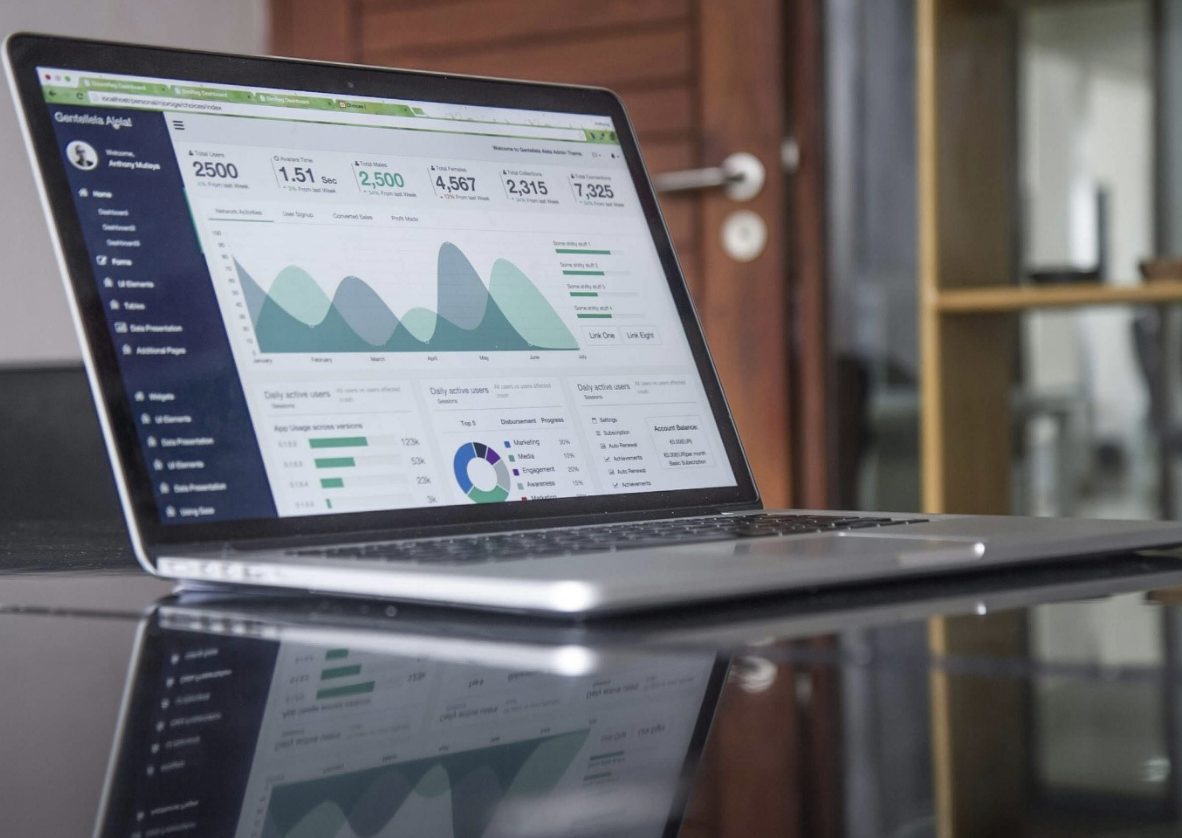
Photo by Carlos Muza on Unsplash
The Perils of Too Much Automation in Management
Despite the significant potential benefits, organisations need to be careful not to become too dependent on AI-led management systems.
Recommendations based on data are only as good as the data that feeds them.
Recommendations that seem objective but lead to bad outcomes can be the result of bias in the training data, incomplete data, or flawed assumptions.
And then there’s accountability.
And who is ultimately responsible for decisions to cut staff, reallocate resources, or prioritise projects if an AI system recommends these?
Organisations that move quickly to automate management processes without establishing clear governance frameworks may be creating new risks rather than mitigating old ones.
Additionally, workplaces that feel like all important decisions are being made by algorithms are unlikely to get a positive response from employees.
Trust remains a significant factor in organisational performance. People want to know why decisions are made and who is responsible for them.
We cannot outsource human accountability.
Preparing for The Next Level of Organisational Design
Many organisations view AI primarily as a productivity tool.
Productivity gains are certainly important, but this view may understate the broader structural shifts that AI is likely to bring.
Leaders should start asking more fundamental questions:
- What are the main administrative management activities?
- What are the tasks that truly require human judgment?
- What does leadership development look like in an AI-enabled workplace?
- What skills will tomorrow’s managers need that today’s managers may not have?
Companies that take these questions seriously now will be better positioned to adapt as AI capabilities continue to mature.
Those that don’t risk being stuck with organisational structures built for a world where information moved much more slowly than it does today.
Management Is Not Going To Go Away
Predictions about AI are often black and white. Some predict mass unemployment, others dismiss the technology as just another efficiency tool.
The reality is likely more nuanced.
Middle management isn’t going to disappear. But many of the traditional middle management tasks are increasingly being performed by intelligent systems that can process information at unprecedented speed and scale.
The best managers of the next decade won’t be the best at collecting updates, writing reports, or looking at spreadsheets.
They will be the great judges, coaches, communicators, and trust builders who are leaders.
As AI gets better at information management, the most valuable managers will be people managers.
That change could ultimately redefine leadership.
Author
James Owen, co-founder of Click Intelligence