You draft a press release announcing your funding round, product launch, or partnership. You hit send. Then you wait. A week later, the release lives on two obscure news aggregators and a site you’ve never heard of. Meanwhile, the invoice reads $1,200.
That gap between what distribution services promise and what they deliver has frustrated PR teams and founders for years. The market has dozens of options ranging from legacy wires charging enterprise rates to budget services that syndicate to low-authority sites nobody reads. Picking the right one depends on your goals and budget, plus whether you care about reaching actual journalists or just padding a coverage report.
This guide compares the 9 best press release distribution services for 2026, breaking down pricing and publisher quality alongside standout features. We focused on services that deliver measurable results across SEO and media visibility, including the growing category of AI search indexing for brands focused on Generative Engine Optimization or Answer Engine Optimization.
What’s inside
This guide covers how press release distribution works in practice and what separates a quality wire from a content dump. We compare 9 distribution services across pricing, reach, publisher quality, and user satisfaction based on verified G2 reviews.
You’ll also find a comparison table for quick reference and a breakdown of what features matter most. We answer the questions PR teams ask most often at the end. Whether you’re distributing your first release or switching from an overpriced legacy provider, this guide helps you make a grounded decision.
TL;DR
- Press release distribution services send your news to publisher networks, newsrooms, and media outlets. Quality varies from provider to provider and across price tiers.
- Legacy wires like PR Newswire and Business Wire still dominate enterprise PR, but their pricing starts at $775+ per release and climbs fast with hidden fees and add-ons. Legacy wires also do not have offerings to ensure releases are indexed by LLMs and AI chatbots.
- Newer services like Press Ranger offer equivalent publisher reach across major national news sites and financial media platforms at wholesale pricing starting at $299 per release, with no contracts.
- AI chatbot indexing is emerging as a differentiator. Press Ranger’s AIWire technology guarantees content gets indexed by ChatGPT, Perplexity, and other AI search tools.
- User reviews flag pricing and hidden fees as the biggest pain point across legacy providers. Transparent, flat-rate pricing is rare in this market.
What press release distribution services do
A press release distribution service takes your written announcement and pushes it to a network of publishers, news sites, and media outlets. The service handles formatting and compliance checks, then syndicates your release across multiple channels at once.
The core value is reach. Instead of pitching individual journalists one by one, distribution services place your release on hundreds of outlets within hours. The quality of those outlets, and whether real journalists or readers see your release, varies by a wide margin between providers.
How press release distribution works
You submit your press release through the service’s platform, select your targeting (geography, industry, media type), and schedule a distribution time. The service then pushes your release to its network, which includes news websites, financial terminals, search engines, and sometimes broadcast outlets.
After distribution, you receive a report showing which outlets ran the release and how many impressions it generated. Some services include analytics dashboards; others send a static PDF.
Why distribution quality matters more than quantity
A release placed on 500 low-authority websites generates less value than one placed on 5 high-authority publishers. Domain authority and audience relevance both affect the SEO and visibility impact of your release, as does whether the outlet is indexed by major news aggregators. Services that emphasize placement count without disclosing publisher quality often pad numbers with sites that generate zero meaningful traffic.
Comparison table of the best press release distribution services
| # | Service | Best for | Key differentiator | Starting price | G2 rating |
| 1 | Press Ranger | Wholesale pricing, AI indexing | Focus on AI search (GEO/AEO/etc.) | $299/release | 4.9/5 |
| 2 | eReleases | SMBs wanting PR Newswire reach | Human editorial review + PR Newswire network | $399/release | 4.2/5 |
| 3 | Newswire.com | All-in-one PR platform | Integrated media database + distribution | Subscription | 4.4/5 |
| 4 | Access Newswire | Public companies, IR | EDGAR filing integration, SEC compliance | $415/release | 4.3/5 |
| 5 | PRWeb | Budget digital visibility | Low entry price for online syndication | ~$120/release | 3.8/5 |
| 6 | GlobeNewswire | International, corporate | Strong European coverage, AI analytics | Custom/quote | 4.4/5 |
| 7 | Business Wire | Regulated industries, IR | SEC/XBRL compliance, financial terminals | ~$475/release | 4.1/5 |
| 8 | PR Newswire | Enterprise, global reach | Largest distribution network, major wire feeds | $800+/release | 3.9/5 |
| 9 | EIN Presswire | Budget-conscious, nonprofits | Cheap per-release pricing | $149/release | 3.5/5 |
9 best press release distribution services for 2026
We evaluated each service based on publisher quality and pricing transparency, cross-referenced with user reviews and distribution reach. Each serves a different segment of the market, from budget-conscious startups to enterprise communications teams.
1. Press Ranger
 Press Ranger is a wholesale press release distribution service built for founders and marketers alongside SEO professionals and agencies who want enterprise-quality placements without enterprise pricing. It combines guaranteed publisher placements with AI chatbot indexing, a feature no other distribution service offers as of 2026.
That AI indexing capability is becoming increasingly valuable as more and more consumers and professionals turn to AI assistants and search platforms to discover information, research products, and evaluate brands. Traditional press release distribution focuses on visibility in search engines and news publications. Press Ranger extends that value by helping content become part of the information ecosystem that AI tools can access and reference. If you’re focused on Answer Engine Optimization and Generative Engine Optimization, Press Ranger is the dominant player.
For brands, this creates greater control over how their messaging is surfaced. It also offers stronger continuity between owned content and earned media, meaning additional opportunities to influence the answers prospects receive when interacting with AI-powered search and chat platforms. As AI adoption continues to accelerate, visibility within these systems is likely to become just as important as visibility in traditional search results.
Key strengths
- Wholesale pricing with no contracts: Premium distribution starts at $299 per release (retail value $699) with guaranteed placements on 400+ outlets. Gold tier at $399 adds 500+ placements, newsroom terminal distribution, and podcast syndication.
- AIWire technology: Gold tier includes guaranteed indexing by AI chatbots including ChatGPT, Perplexity, Grok, Microsoft Copilot, and Gemini. As AI search becomes a primary discovery channel, this positions releases for visibility beyond traditional search.
- PR software platform: Beyond distribution, Press Ranger offers databases of 500,000+ journalists, 160,000+ publishers, and 200,000+ podcasts, plus AI-powered campaign tools and a built-in CRM. Monthly subscriptions with no annual commitments.
- Reseller-ready: Full white-label program for agencies, with wholesale pricing, brandable reports, and multi-brand management from a single account.
Choose Press Ranger for transparent wholesale pricing and AI-forward distribution. The combination of high-authority publishers, AI chatbot indexing, and no-contract pricing makes it a strong fit for SEO-focused teams and agencies managing multiple clients. Founders who need credible press coverage without a five-figure annual wire contract also benefit.
G2 rating: 4.9/5 | Capterra: 5.0/5
2. eReleases 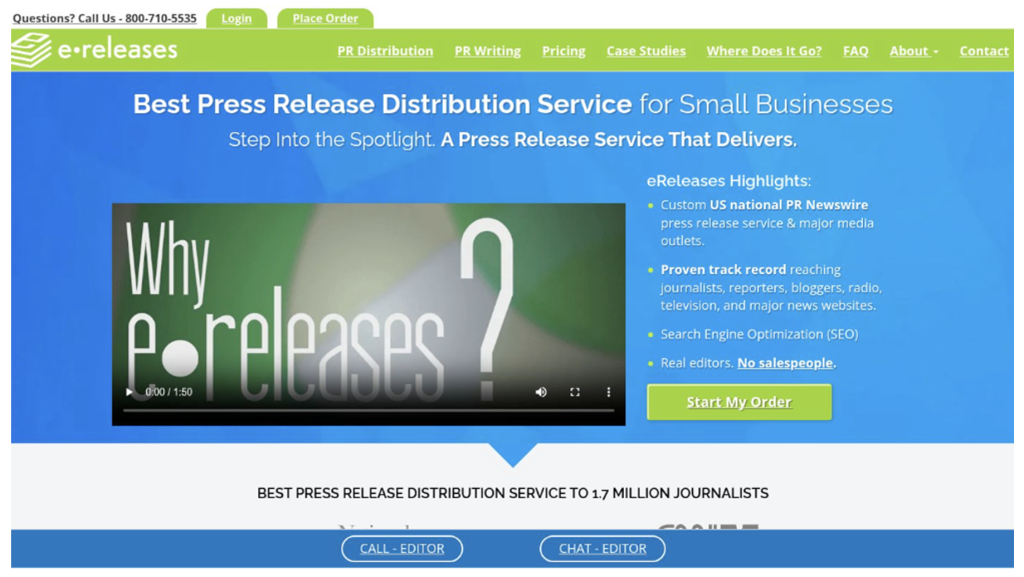
eReleases is a small-business-focused distribution service that partners with PR Newswire, giving SMBs access to the PR Newswire network at reduced rates. Every release goes through human editorial review before distribution.
Key strengths
- PR Newswire network access: Distribution reaches PR Newswire’s full outlet network without requiring a PR Newswire membership or contract.
- Human editorial review: Real editors review and optimize each release before sending, catching errors and improving readability. No AI bots, no automated queues.
- Journalist targeting: Access to 1.7 million media contacts and 700,000+ bloggers and influencers for hyper-targeted distribution.
Choose eReleases if you’re a small business that wants PR Newswire’s reach with a more hands-on, personal experience. Pricing runs from $399 (Buzz Builder) to $699 (PR Pro), which still represents a significant discount over PR Newswire’s direct rates. Many users flag hidden fees and add-ons as a downside.
G2 reviewers praise the customer support but note pricing can feel steep for frequent senders. The service is US-only with no international distribution options. There are no guarantees or references to AI search visibility.
G2 rating: 4.2/5 (14 reviews)
3. Newswire.com
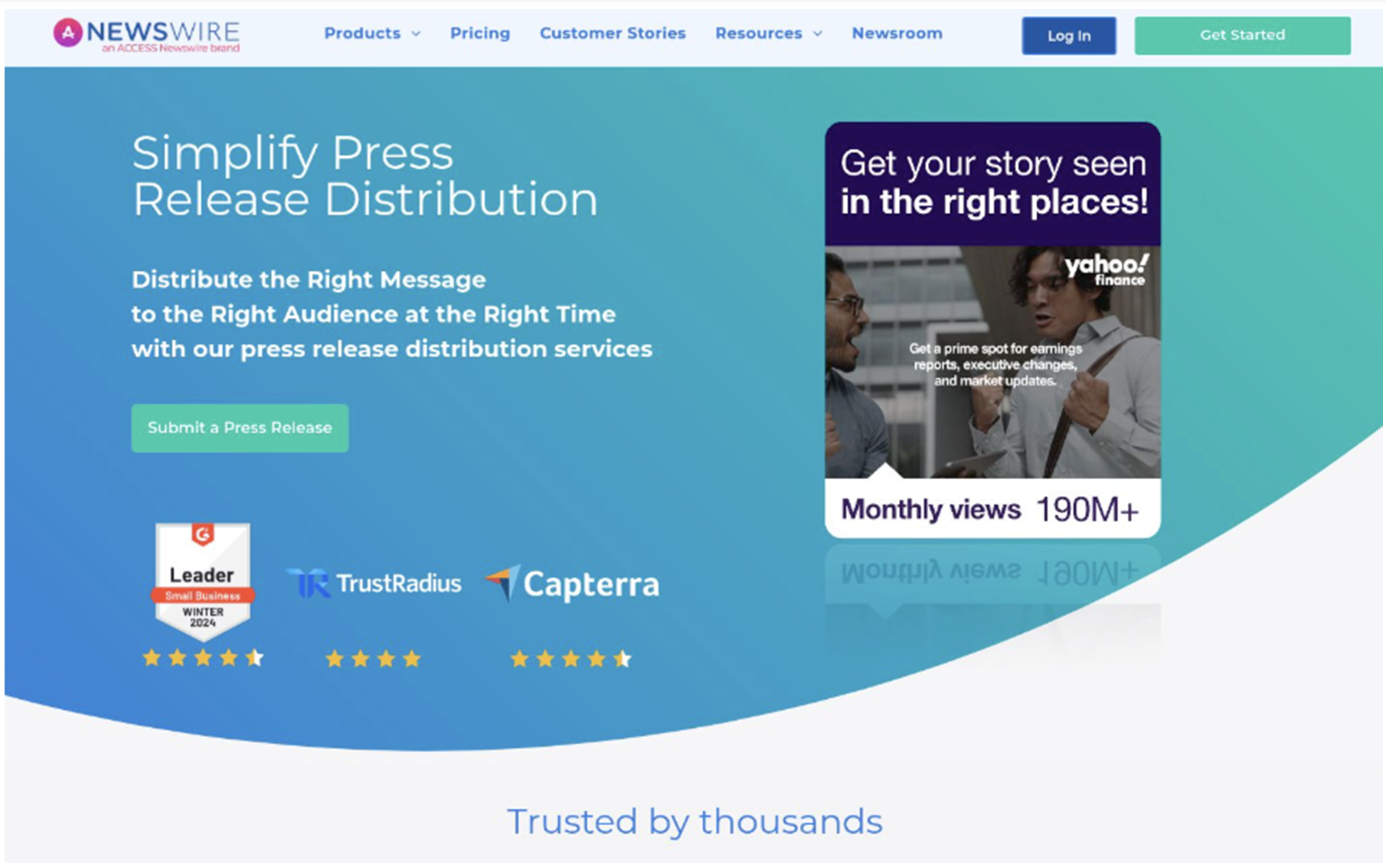 Newswire.com (owned by ACCESS Newswire) positions itself as an all-in-one PR platform that combines distribution with a media database and campaign management tools through its Earned Media Advantage (EMA) platform.
Key strengths
- Integrated PR software: The platform bundles distribution with media database access, press release analytics, and media monitoring.
- Campaign management: Tools for managing multi-release campaigns with tracking and reporting across the full lifecycle.
- Good usability: G2 reviewers cite ease of use (23 mentions) and efficient distribution network (20 mentions) as top strengths.
Choose Newswire.com if you want a platform that handles both distribution and media outreach in one subscription. The integrated approach reduces tool sprawl for teams managing ongoing PR programs.
The downside is pricing transparency. Subscription-based plans gate features by tier, and 13 G2 reviewers flagged expense as a top complaint, noting that higher-priced plans lock away key features. Seven reviewers also reported incomplete media coverage and irrelevant outlet placements for their stories. There are no guarantees of AI visibility.
G2 rating: 4.4/5 (720 reviews)
4. Access Newswire 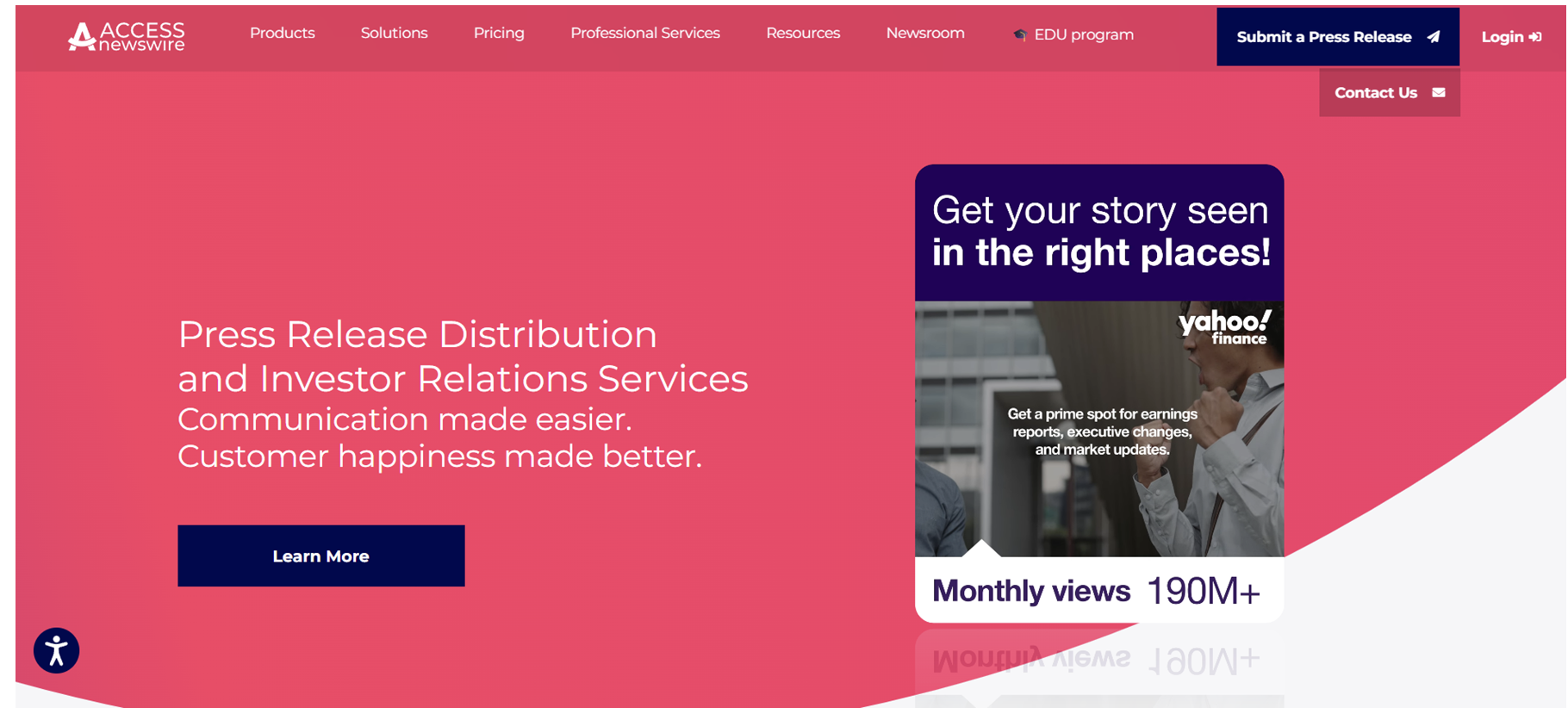
Access Newswire (Issuer Direct) is a distribution platform focused on public companies and investor relations, with added ESG communications support. Its deep integration with financial compliance systems makes it a natural fit for regulated industries.
Key strengths
- IR and compliance focus: EDGAR filing integration, SEC-compliant distribution, and ESG reporting capabilities built into the platform.
- Straightforward setup: G2 reviewers praise the easy onboarding process (37 mentions) and responsive customer support (31 mentions).
- Corporate communications: Strong fit for public companies that need distribution paired with regulatory filing workflows.
Choose Access Newswire if you’re a public company or operate in a regulated industry that requires SEC compliance and financial terminal distribution. Pricing starts at $715 per release with subscription plans at $914 per month. Contracts are required.
User reviews split on customer support: reviewers rank it as both the platform’s top strength and a frequent complaint (10 mentions of poor or slow responses). Six reviewers reported billing issues with multiple charges and unresponsive resolution. Limited functionality and lack of third-party integrations drew 8 complaint mentions.
G2 rating: 4.3/5 (389 reviews)
5. PRWeb 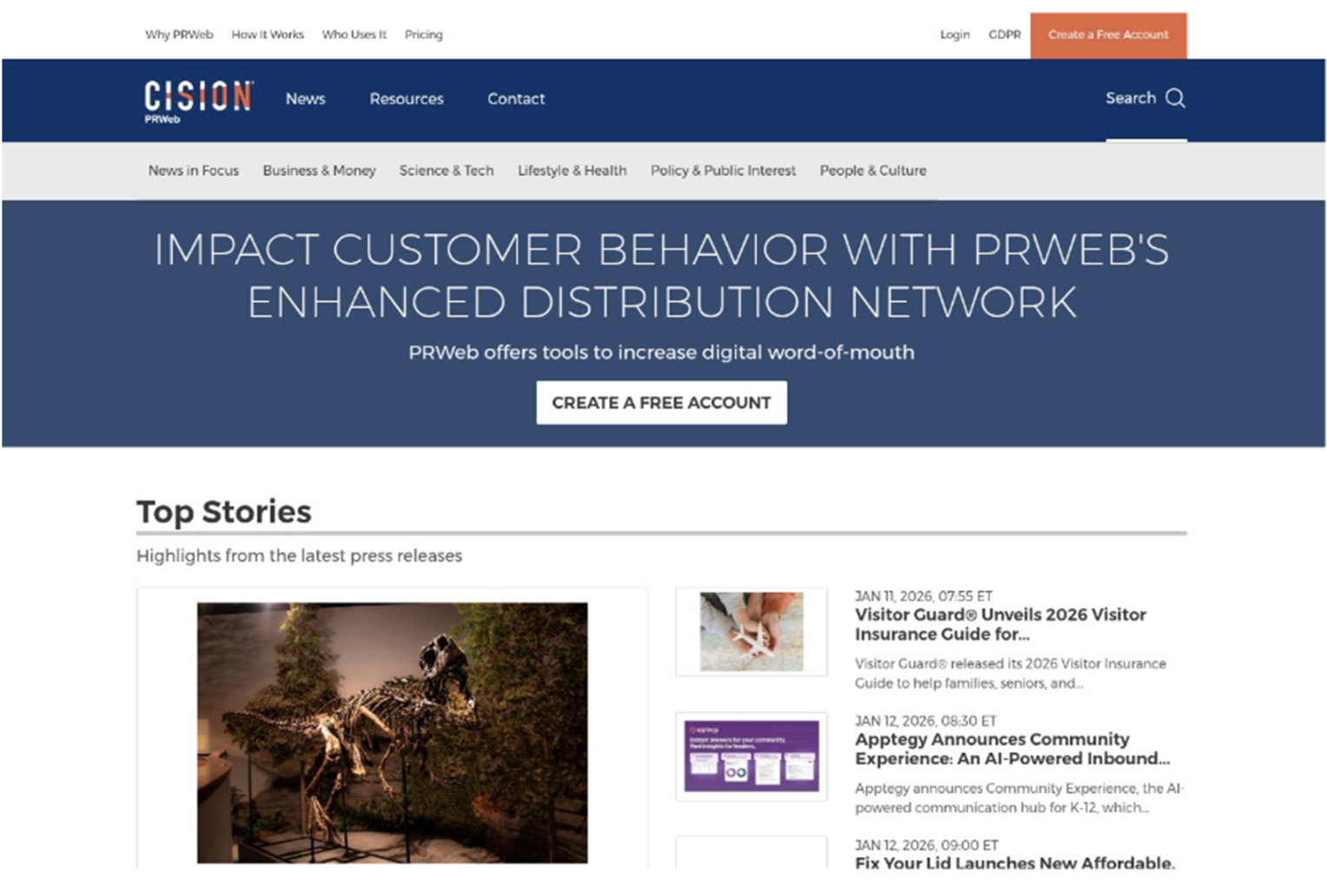
PRWeb is Cision’s budget-tier distribution service, positioned for online visibility and SEO rather than traditional media outreach. It targets businesses that want basic digital syndication at a lower price point than PR Newswire. If you’re ok trading cost for results, PRWeb might be a good fit.
Key strengths
- Low entry price: Distribution starts at around $120 per release, making it one of the more accessible options for small budgets though many reviewers cite the base packages have virtually zero impact and hidden fees abound.
- Self-serve platform: Simple online submission without needing to speak with a sales representative or set up an account manager.
- Digital focus: Optimized for online syndication and search visibility rather than traditional journalist outreach.
Choose PRWeb only if your budget is tight and your primary goal is checking a box. The service fills a gap for organizations that need something published fast and at low cost.
PRWeb has a reputation problem. Its TrustPilot rating sits at 1.6 out of 5, and G2 reviewers flag that costs add up with frequent use and media inclusions. One reviewer reported billing issues with unresponsive customer service. The platform’s traditional media reach falls short of its parent company’s PR Newswire service, and industry perception has shifted toward viewing PRWeb as a fading legacy option within the Cision portfolio.
G2 rating: 3.8/5 (142 reviews) | TrustPilot: 1.6/5
6. GlobeNewswire (Notified) 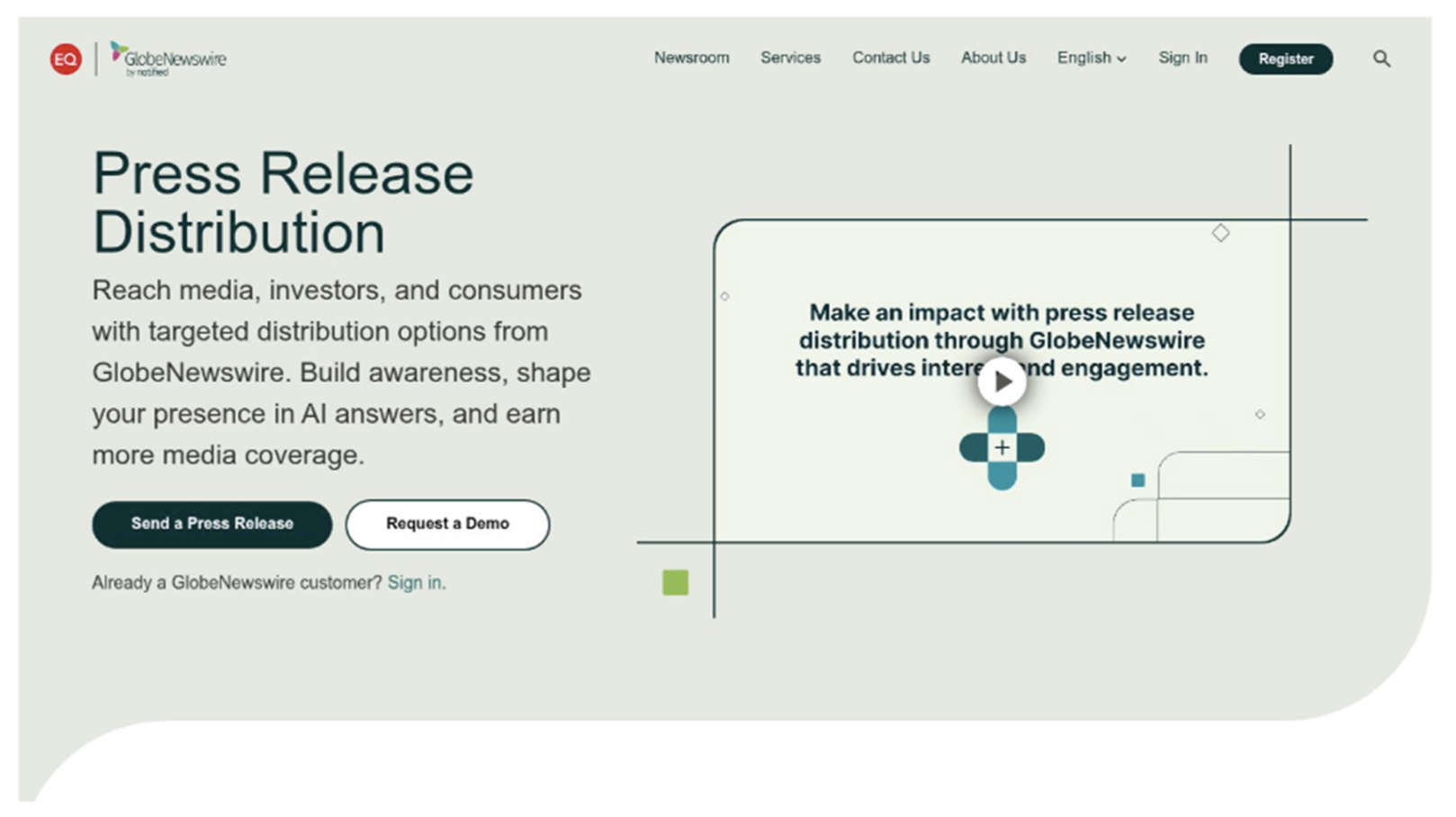
GlobeNewswire, operated by Notified (part of West Technology Group), is a global distribution service with strong European market coverage. The platform added AI-powered analytics and citation tracking to its reporting in 2025.
Key strengths
- International reach: Strong distribution networks in Europe and North America, with coverage that extends across 160+ countries.
- Large review base: 342 G2 reviews provide a robust picture of the platform’s strengths and weaknesses.
Choose GlobeNewswire if you’re a corporate communications team with international distribution needs, with a focus on European markets.
The platform has documented pain points. G2 reviewers cite limited functionality as the top complaint (24 mentions), describing weak analytics and frustrating contact database management. Pricing draws 22 complaints, with users noting lower-cost alternatives exist. Reviewers describe navigation as challenging (23 combined mentions across “not intuitive” and “difficult navigation”), and 7 reviewers report poor customer support with delays. The use-it-or-lose-it credit pricing model frustrates teams with variable distribution volumes.
G2 rating: 4.4/5 (342 reviews)
7. Business Wire
 Business Wire, a Berkshire Hathaway subsidiary, specializes in regulatory and financial communications for public companies. It’s a staple for public companies that need SEC-compliant distribution with integration into financial data terminals.
Key strengths
- Regulatory compliance: Built-in SEC filing support, XBRL tagging, and compliance workflows for public company announcements.
- Financial terminal access: Distribution to leading financial data terminals that institutional investors monitor.
- Global reach: Operates in 160+ countries with strong coverage across financial markets worldwide.
Choose Business Wire if you’re a public company making material announcements that require regulatory compliance and financial terminal distribution. The editorial team is thorough, though strict guidelines can delay publication timelines.
Pricing is Business Wire’s weak spot according to its own users. G2 reviewers describe pricing as “excessive” with “high upcharges” (4 mentions of expensive pricing, 2 of overpricing, 1 of extra costs). Two reviewers flagged limited reporting functionality, citing trouble with ROI attribution. One reviewer noted that after paying for a multi-release package, the quality of outlets that picked up the release didn’t match what the price tag suggested. Starting at around $475 per release, costs scale fast with word count and geographic or multimedia add-ons.
G2 rating: 4.1/5 (199 reviews)
8. PR Newswire 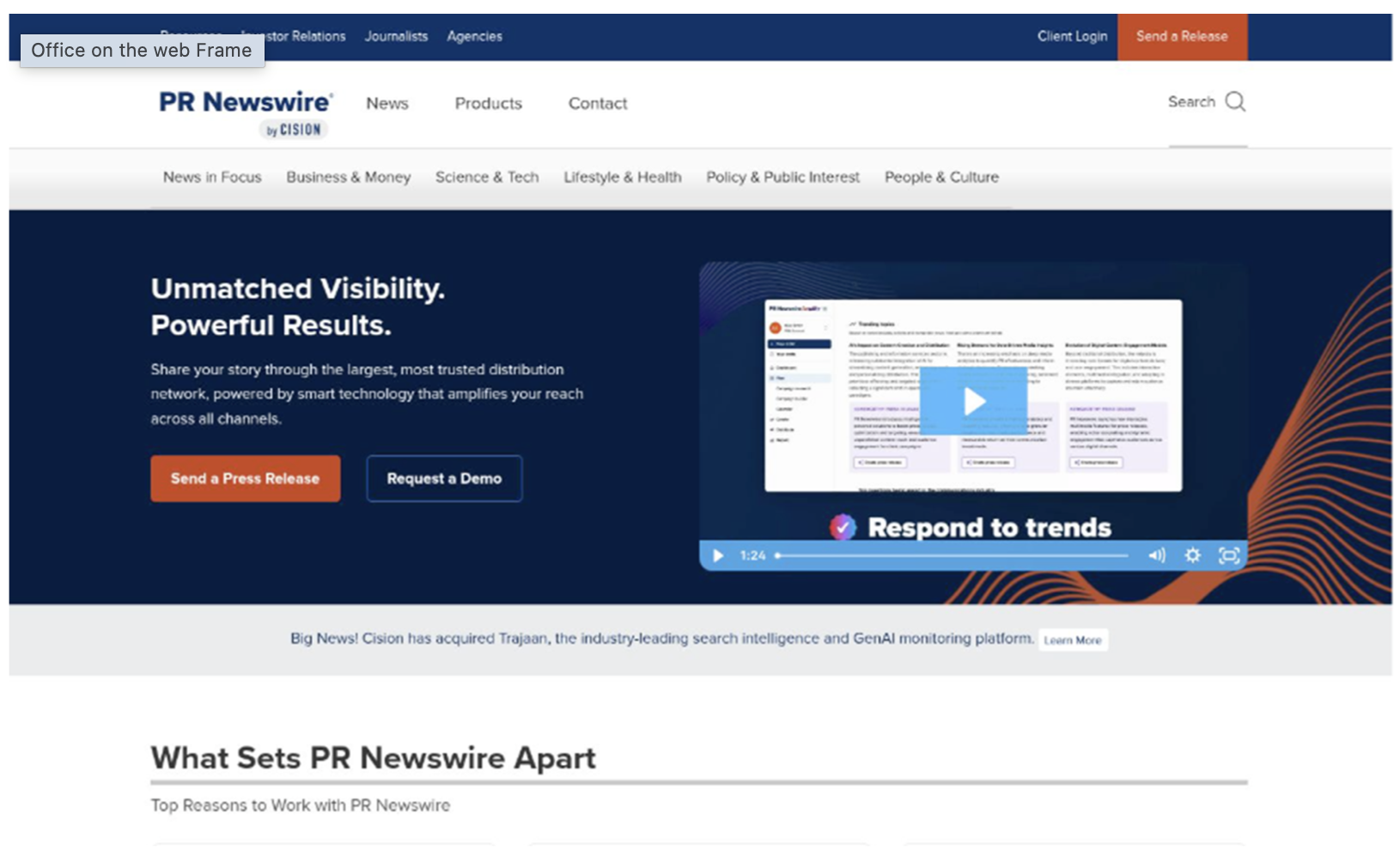
PR Newswire, owned by Cision (Platinum Equity), is the oldest and largest press release distribution wire. It remains the default choice for enterprise communications teams and IR departments handling global announcements that require maximum reach and credibility.
Key strengths
- Largest distribution network: Access to 4,500+ newsrooms with integration into major wire feeds and financial terminals. The broadest reach of any distribution service.
- Enterprise credibility: Decades of brand recognition make PR Newswire the trusted standard for investor relations, regulatory announcements, and tier-1 media outreach.
- Multimedia support: Full support for visual and interactive content within releases, including images and video.
Choose PR Newswire if you’re a large enterprise or public company where maximum global reach and wire service credibility are non-negotiable, and budget is not a primary constraint.
PR Newswire’s user reviews tell a consistent story: the distribution works, but the cost excludes most businesses. G2 reviewers describe pricing as “prohibitive” for SMEs and freelancers. The platform requires membership and account setup, pricing is quote-based and opaque, and the UX has areas that feel dated. At $800 to $2,500+ per release depending on targeting, PR Newswire prices out the majority of the market it could otherwise serve.
G2 rating: 3.9/5 (765 reviews) | TrustPilot: 2.5/5
9. EIN Presswire 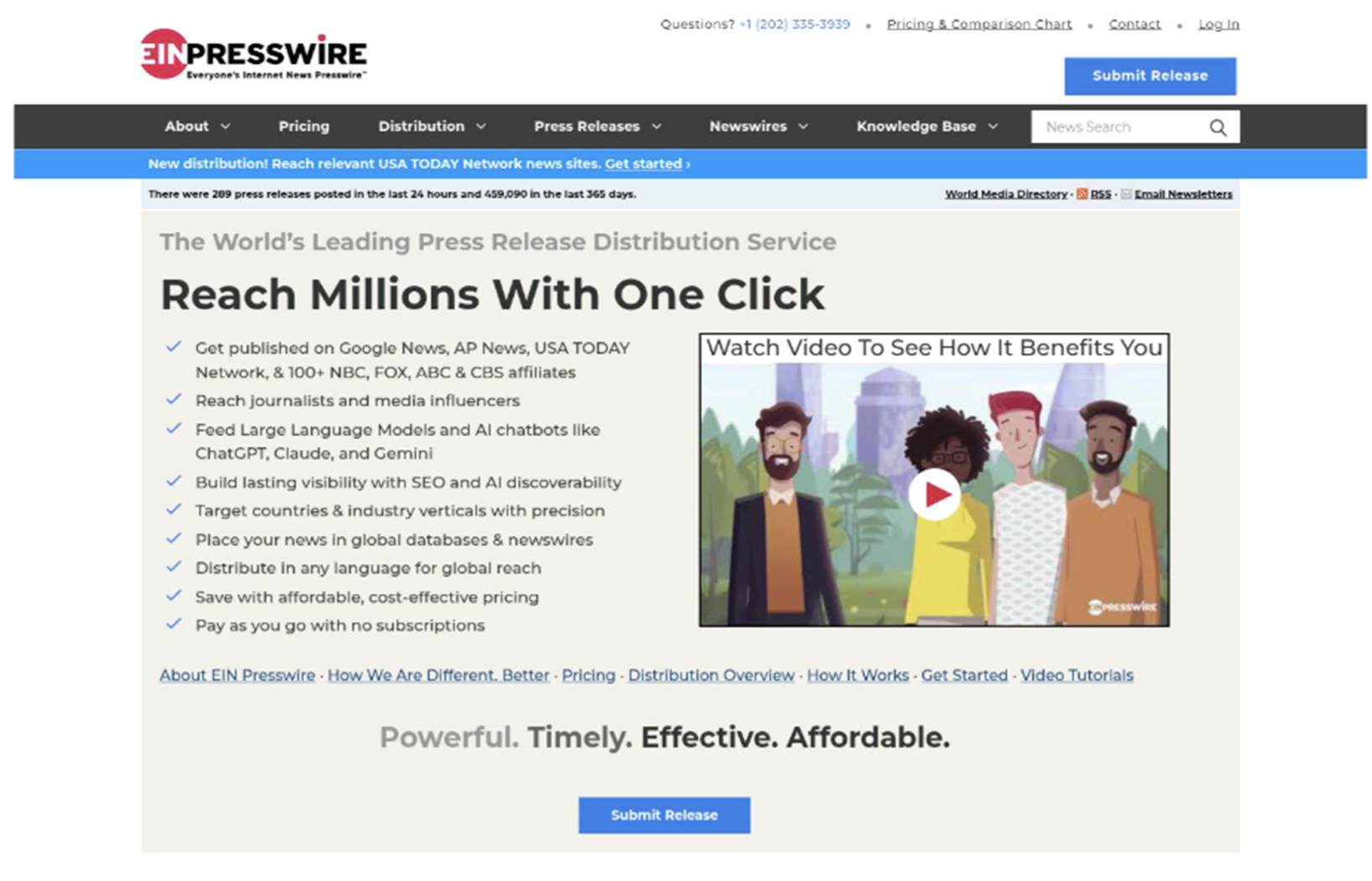
EIN Presswire is a budget-friendly distribution service offering broad online syndication at some of the lowest per-release prices in the market. It appeals to organizations that want broad, but shallow coverage without a large investment.
Key strengths
- Affordable pricing: Single releases at $149, with bulk packages dropping to around $67 per release for 15-release bundles.
- No subscription required: Pay per release with no ongoing commitments. Good for organizations with irregular distribution needs.
- Broad syndication: Distribution to 100+ news sites with major news aggregator inclusion and basic analytics.
Choose EIN Presswire for budget-conscious distribution where volume matters more than outcomes. The service is straightforward to use and delivers fast turnaround.
The tradeoff is publisher quality. G2 reviewers note limited functionality compared to established wires, and outlets tend to skew toward lower-authority sites that are often owned by EIN itself. If your priority is high-domain-authority placements or journalist engagement, the savings may come at the cost of actual results.
G2 rating: 3.5/5 (7 reviews)
Key features to look for in press release distribution services
When comparing distribution services, evaluate these capabilities against your specific needs:
- Publisher quality and transparency: Does the service list specific guaranteed outlets? Can you verify the domain authority and traffic of the sites in their network? Services that only promise a placement “count” without naming publishers should raise questions.
- Pricing structure: Per-release vs. subscription vs. membership. Watch for add-on fees for word count, images, links, geographic targeting, and multimedia. Flat-rate, all-inclusive pricing is the simplest to budget for.
- Analytics and reporting: Post-distribution reports should show where your release was published, engagement metrics, and pickup data. Some services now include AI citation tracking, which measures how often AI search tools reference your content.
- AI search indexing: With AI search tools like ChatGPT, Perplexity, and Gemini becoming primary research channels, distribution that includes AI chatbot indexing adds a layer of visibility that traditional wire services don’t address.
- Editorial support: Some services include human editorial review, AP-style formatting, or writing assistance. This matters if your team doesn’t have dedicated PR writers.
- Compliance features: Public companies need SEC filing integration and XBRL support alongside regulatory distribution channels. If this applies to you, the provider pool narrows fast.
How to choose the right press release distribution service
1. Define what you’re trying to achieve
A product launch announcement has different distribution needs than an SEC filing or a local event promotion. Clarify whether your priority is media coverage, SEO value, financial compliance, AI search visibility, or general brand awareness.
2. Set a realistic per-release budget
Distribution pricing spans from $49 to $2,500+ per release. Know your budget before evaluating features. If you plan to distribute on a recurring basis, per-release costs compound fast, and services with no-contract, flat-rate pricing become more economical over time.
3. Check the actual publisher list
Ask for specific outlet names and verify them on your own. A service guaranteeing “500 placements” means little if those placements are on sites with minimal traffic and low domain authority. Look for named, recognizable publishers in the guaranteed placement list.
4. Evaluate based on your company stage
Most startups and SMBs do not need the compliance features and global terminal access that justify PR Newswire or Business Wire pricing. Services like Press Ranger deliver comparable publisher quality at a fraction of the cost, making them practical choices for growth-stage companies.
5. Test before committing to a package
Most services allow single-release purchases. Buy one release at the base tier, evaluate the distribution report, and verify the publisher quality before committing to bulk packages or annual subscriptions.
Conclusion: finding the right press release distribution service in 2026
The press release distribution market in 2026 splits into three tiers. Legacy wires (PR Newswire, Business Wire, GlobeNewswire) deliver broad reach and regulatory compliance at premium prices that make sense for enterprises and public companies. Budget services (EIN Presswire, PRWeb, 24-7 Press Release) offer low entry points but sacrifice publisher quality. The middle tier, led by services like Press Ranger, delivers the publisher quality of enterprise wires at transparent, founder-friendly pricing and adds AI chatbot indexing that legacy wires haven’t addressed.
For most businesses distributing press releases in 2026, the best value comes from services that combine high-authority publisher placements with transparent per-release pricing. Visibility across both traditional search and AI search channels adds further advantage.
Frequently asked questions about press release distribution
How much does press release distribution cost?
Pricing ranges from $49 for basic online syndication to $2,500+ for premium global distribution through legacy wires. Mid-range services like Press Ranger offer guaranteed placements on major national news and financial media sites starting at $299 per release with no contracts or hidden fees. Your total cost depends on distribution scope, geographic targeting, and multimedia needs.tom
What is the difference between a press release distribution service and a PR agency?
A distribution service handles the syndication and placement of a finished press release across its publisher network. A PR agency handles strategy, writing, media relationships, and pitched outreach on your behalf. Distribution services are self-serve tools; PR agencies are service providers that manage the full process. Some services, like Press Ranger, bridge the gap with AI-powered writing tools and journalist databases alongside distribution.
What is AI chatbot indexing for press releases?
AI chatbot indexing ensures AI search tools (ChatGPT, Perplexity, Gemini, Microsoft Copilot) surface your press release content when users ask related questions. As AI search grows, this becomes an important visibility channel beyond traditional Google rankings. Press Ranger’s AIWire technology is the only distribution feature that guarantees AI chatbot indexing as of 2026.
Can small businesses afford quality press release distribution?
Yes. The perception that quality distribution requires enterprise budgets comes from legacy wire pricing models. Services like Press Ranger and eReleases target small businesses with pricing between $299 and $699 per release, delivering placements on the same major publishers that enterprise wires access. Bulk pricing and no-contract models further reduce costs for regular senders.
How often should a company send press releases?
Distribution frequency depends on genuine news value. Most businesses benefit from 1-4 releases per month tied to product launches, partnerships, funding, hires, or milestones. Sending releases without genuine news dilutes credibility with journalists and publishers. Quality and newsworthiness matter more than frequency.
Do press releases help with SEO?
Yes, when distributed through services that place releases on high-domain-authority sites. Placements on publishers indexed by major news aggregators generate brand signals and backlinks that contribute to search rankings. The SEO value depends on publisher quality, not placement quantity. Low-authority syndication sites provide minimal SEO benefit.
What should I look for in a distribution report?
A useful report shows specific publisher URLs where your release appeared, domain authority of placement sites, total impressions, geographic breakdown, and any journalist or media engagement. Advanced reports include AI citation data showing whether AI search tools indexed your content. Avoid services that only provide vague “potential reach” numbers without verifiable placement URLs.
Are free press release distribution services worth using?
Free services exist, but most place releases on low-authority sites with minimal traffic. The SEO value is negligible, journalist visibility is close to zero, and the releases often appear alongside low-quality content that can hurt your brand perception. If budget is a hard constraint, a single release through a quality mid-range service will outperform dozens of free distributions.