Many leaders today share a private doubt: is AI the genuine article, or just the latest wave of overpromising? It is a fair question because new technologies often incubate for a long time and early hype is oftenfollowed by disillusionment. AI itself has lived through two “winters” — collapses of funding and confidence in the mid-1970s and late 1980s — after each boom outran what the technology could actually deliver.The hard task for a leader is no longer noticing that AI matters, but separating real signal from noise.
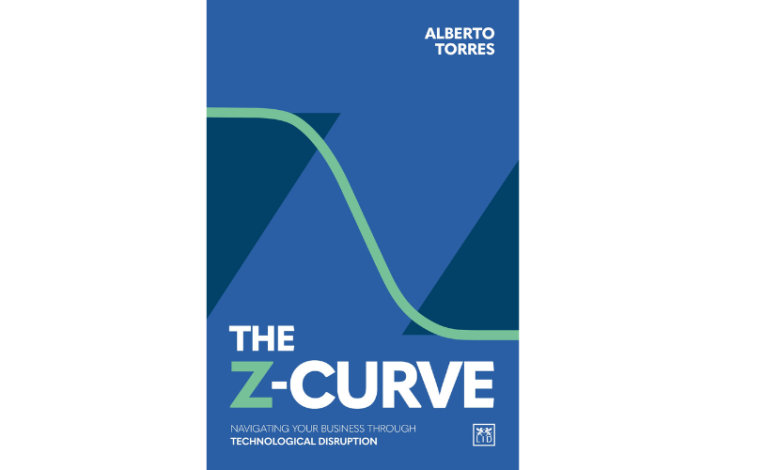
History helps. Over more than a decade spent studying how disruptions unfold, I have found they tend to follow a recognizable shape: a long incubation, a sudden inflection and then a cascade of structural change as value migrates and new entrants rise. I call the downside of that pattern the Z-curve — the threat that emerges when a familiar S-curve of adoption turns against an incumbent. Here are ten lessons that this pattern offers anyone leading through the current wave.
-
Expect the revolution to take longer than the hype suggests
Technology incubation is usually long and the road is rarely smooth. The Internet — probably the best analog for AI — crashed after unprecedented hype, only to go on to transform companies and industries beyond our imagination. The frictions today are different but just as real: the eventual end of subsidized pricing, constraints on advanced chips and energy capacity and the simple limits of how fast organizations can absorb change, especially when the facts change every week. Plan for a marathon, not a sprint and expect at least one stretch of disillusionment along the way.
-
But mistake the delay for safety at your peril
The flip side of a slow revolution is a dangerous complacency. The Z-curve’s defining feature is that the threat incubates quietly, then strikes at an inflection point that arrives faster than anyone expected. Today’s systems may not be good enough to replace your products or your people — but do not assume it will stay that way for long. The right posture blends patience with a healthy dose of paranoia.
-
Don’t expect every industry to be affected the same way
AI does not disrupt a single technology so much as entire classes of cognitive work and that exposure is unevenly distributed. Activities built on language, analysis and routine judgment are most vulnerable; physical, regulated and deeply human-centered work will change more slowly. Knowledge service sectors such as legal, accounting, software, advertising and research will likely be disrupted first. Assess your own industry honestly rather than assuming you are early or immune.
-
Look past your industry to the work itself: cognitive tasks are the front line
Your real exposure lies not just in your industry label but in the actual work your organization does day to day. Assess each process and activity. Those where routine judgment is applied to information — drafting, reviewing, summarizing, classifying, advising the most powerful phone company on earthhow the work is done but the basis on which you compete. Inventory your core workflows and ask, honestly, how much the human touch adds value for your customers and differentiates your company.
-
Watch the whole tech landscape — including the tools you depend on
AI has thrown even Big Tech into flux, with the balance of power within the sector shifting fast. Beneath the giants, the entire enterprise software stack is being reorganized. Microsoft CEO Satya Nadella has gone so far as to suggest that traditional business applications could “collapse” in the agent era, a prospect analysts quickly reframed as the “death of SaaS.” IT services firms face their own reckoning, as work once sold as multi-year projects becomes faster and cheaper to do with AI. The vendors and platforms you rely on today are themselves riding — or fighting — their own Z-curves.
-
Assume every layer of your tech stack is being rewired — and pick partners carefully
The “death of SaaS” is an exaggeration, but there is no question that AI agents will play an increasing role in capturing and evolving business logic. The practical consequence for buyers is that today’s vendor choices carry unusual weight. As the supplier landscape reorganizes at record speed, the partners you select will shape your competitiveness for years. Favor those positioned to survive and guide you through the turmoil, not merely those with the slickest demo today.
-
Remember that your greatest strength can become your heaviest anchor
Incumbents are forever torn between embracing innovation and protecting the core that funds them; the stronger that core, the harder it can pull. Nokia, once a tech giant and the most powerful phone company on earth, is the cautionary tale. The very assets and business practices that led to its dominance in mobile hardware in the early 2000s became anchors that held it and slowed it down when Apple redefined the smartphone market. Use AI as both an enabler and an excuse to simplify — clean up legacy systems, modernize your data and shed the customizations that once served a purpose but now quietly weigh you down.
-
Prepare your wartime moves
Put yourself in the shoes of whoever might disrupt you and genuinely run the exercise. How could an existing rival change the game and how would an AI-native upstart build a more compelling answer to your customer’s core need, unburdened by your legacy? Plan your countermoves in advance: you can disrupt yourself, reshape your business model, extend into new domains, acquire a disruptor, migrate to a higher-value or more emotionally anchored position, or stall deliberately to buy time and prepare (these are what I call DREAMS strategies). Line up the stakeholder allies you would need and decide which moves you would make under fire before the fire starts.
-
Reshape your people, not just your processes
AI will not only automate tasks; it will change what it means to learn, to judge and to create. Just as the pocket calculator quietly eroded our ability to do arithmetic in our heads, AI can blunt our broader cognitive muscles if we let it — and as teams take on fewer entry-level roles, the apprenticeship by which novices become experts is at risk. The answer is not only to train people in the new tools but to keep them genuinely engaged: applying judgment, questioning outputs and owning decisions. Treat the human transition as a core part of the strategy, deepening human capability rather than hollowing it out.
-
Decide early whether you should be the disruptor
The most uncomfortable question is also the most clarifying: could you be the one to upend your own market? Answering it well means getting clear on the real benefit you deliver to your customer — and protecting it, rather than letting the ordinary pull of short-term profit slowly erode it, as so often happens. If an attacker could serve that benefit far better than you do today, it is usually wiser to become that attacker than to wait for one. Ask yourself whether you can lead the disruption. If so and you have the courage and determination required to pull it off, act accordingly.
AI disruption will not arrive in a single dramatic moment, nor unfold uniformly across industries. It will come in waves, each with the same rhythm: a long stretch of experimentation and denial, a sudden inflection when capabilities cross a threshold and a cascade of structural change. No company will be untouched. Going beyond the hype and preparing for radical change is not an option; it is a necessity for survival. As Stewart Brand, then at the MIT Media Lab, wrote back in 1987, “Once a new technology rolls over you, if you’re not part of the steamroller, you’re part of the road.”