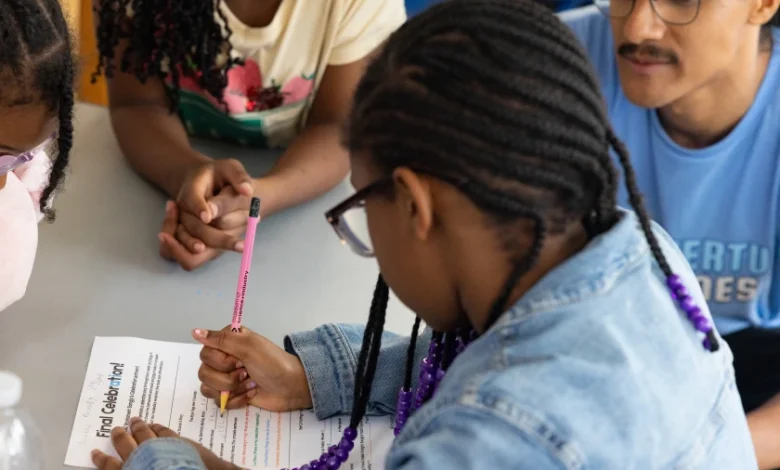
A school can want AI enrichment and still have no practical way to offer it. Someone has to choose the curriculum. Someone has to train the instructors. Someone has to schedule the classes, manage delivery, keep quality consistent, and make sure the program works with actual children in actual rooms. That gap is where Steven Jiang co-created Overture.
As co-founder and COO of the education company, Steven is not trying to hand schools another platform and hope they find time to use it. Overture partners with schools and community-based organizations to operate AI enrichment programs end-to-end. The company builds the curriculum, certifies instructors, manages scheduling, and delivers classes through trained Overture teachers. It currently runs programs in more than 50 schools across Chicago and Boston, with growth underway across multiple states.
Overture looks different from many edtech companies. The industry has spent years selling software into schools, often leaving already-stretched administrators and teachers to figure out implementation. Steven saw a different problem. Schools were not simply missing an AI product. Many were missing the operating layer that would allow them to introduce AI education responsibly, consistently, and at a quality level parents could trust.
For Overture, that means the product is not only the lesson. It is the whole system around the lesson.
“People think the hard part is building the curriculum,” Steven says. “That matters, but the harder part is getting a great learning experience delivered every week across dozens of sites.”
The company’s model is closer to an education operator than a software vendor. Overture recruits and certifies instructors, many of whom are local educators, community members, artists, and musicians. It trains them in a structured curriculum designed for young students. It coordinates with school partners and youth centers. It tracks what is working in classrooms and keeps improving the program as it grows.
That kind of work is not as clean as a software demo. It involves people, schedules, school calendars, classroom behavior, site-by-site needs, and the constant challenge of making one program feel reliable in many different places.
Steven does not pretend that part is easy.
“Operations are where the promise becomes real or falls apart,” he says. “If the instructor is not ready, if the school is confused, if the lesson does not work for that age group, the idea does not matter.”
That is especially true in AI education because many schools are still unsure where to begin. The public conversation can make AI sound urgent, but urgency does not create a plan. Administrators may understand that students need AI literacy while still lacking the time, staff, training, or confidence to launch programming on their own.
Overture’s answer is to remove as much of that burden as possible. A school does not have to invent its own AI curriculum for young children. It does not have to hire a specialist from scratch. It does not have to decide how to train teachers on a subject that is still changing quickly. Overture brings the program into the school and runs it.
Few schools have the staff capacity to build a new enrichment category from scratch. Overture’s model is designed for that reality: bring the trained people, the curriculum, and the management structure together so a school can add the program without absorbing the full operational load.
“If a program only works when a school already has extra staff, extra time, and extra expertise, then it is not really built for schools,” Steven says. “The model has to fit the reality of how education operates.”
That reality includes a lot of details that never appear in a pitch deck. Instructors need to be recruited, trained, scheduled, and supported. Lessons have to be clear enough to deliver consistently but flexible enough to work with different groups of students. Site partners need communication. Families and administrators need confidence that the program is safe, structured, and age-appropriate.
Overture has built more than 50 part-time teaching jobs in the process. For Steven, that matters because the company’s instructors are not interchangeable labor behind a curriculum. They are the people who turn the model into a classroom experience. Many come from education, music, art, and community backgrounds, including groups that can face barriers finding flexible teaching opportunities.
The jobs are part of the system, not a side effect.
“A strong program needs strong instructors,” Steven says. “If we want students to have a thoughtful experience, we have to invest in the people leading the room.”
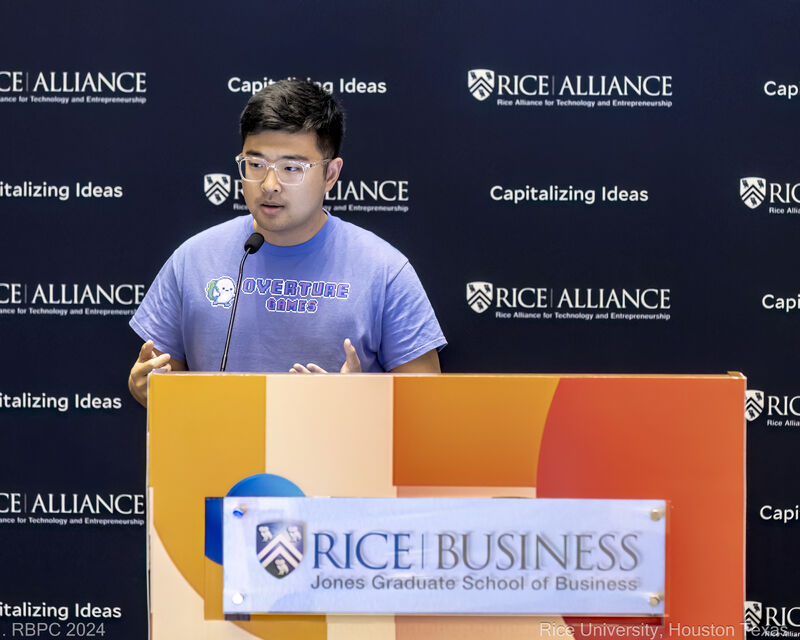
That investment has to continue after hiring. Overture’s certification process is built to make sure instructors understand not only the content, but also the way the program should feel in a classroom. A good instructor has to manage energy, explain unfamiliar ideas clearly, and keep students engaged without turning the lesson into a lecture.
Quality control becomes more complicated as the company grows. A lesson that works in one school still has to work in another. A strong instructor in one city does not automatically solve the staffing needs of the next one. Steven says the company continues to build internal tools as it scales so delivery can stay consistent instead of becoming fragile.
“We try to build a culture of always learning, because operations have so many small details you can always do better,” he explains. “That’s the point, and we want to give our partners the best possible experience and make them feel genuinely supported by our system.”
That practical mindset is part of what separates Overture’s model from the faster, lighter approach often associated with education technology. Software can scale quickly, but education does not only happen when a tool is available. It happens when a child understands what to do, when an instructor can guide the room, and when a school can trust that the program will not collapse under its own complexity.
Steven studied music and economics at Northwestern University and later went through Techstars while building Overture. He has been named to Forbes 30 Under 30 and Inno 25 Under 25, and he has spoken at Tulane University and Northwestern University. Still, he does not frame his credibility around recognition alone. He points back to the week-after-week evidence of running programs with real students.
“I would rather be judged by what happens in classrooms,” Steven says. “Can we deliver? Can kids engage? Can schools trust us to come back next week and do it well again?”
Overture is now on track to serve more than 120 programs across multiple states, reaching thousands of students. The long-term ambition is much larger: bring high-quality AI education to children regardless of where they live. Steven knows that goal will require more than a strong curriculum or a timely subject. It will require partners, trained people, reliable systems, and an operating model that can survive contact with real classrooms.
That is why he believes edtech’s future may not look like another app. It may look like a company willing to do the harder work between idea and impact.
“Anyone can say they want to bring AI education to kids,” Steven says. “The question is whether you can build the system that makes it happen again and again.”
For Steven Jiang, that system is the work. The curriculum matters. The mission matters. But the part that determines whether Overture can grow is less visible and more demanding: the schedules, the people, the training, the tools, and the discipline to make a promising idea reliable enough for schools to trust.