The fastest way to use AI in test automation is also the most dangerous: let the model do everything. It reads the requirement, writes the test, runs it, and judges the result. It feels like magic until the same suite passes on Tuesday and fails on Wednesday with no code change in between. Then it feels like something else.
The problem is not the model. The problem is giving a probabilistic system a deterministic job. Models are superb at interpretation: reading ambiguous acceptance criteria, diagnosing a failure from a stack trace, suggesting what to test. They are unreliable at execution: the same prompt can produce different actions on different runs, and ‘usually correct’ is not a standard any test suite can live with.
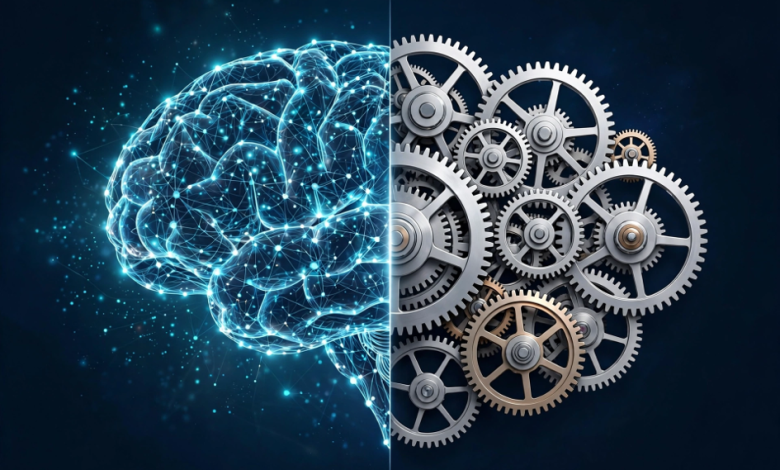
The fix is architectural. Draw a hard boundary between AI reasoning and deterministic execution. Models interpret. Established frameworks execute. Test outcomes then stop varying with model behaviour, which is the only way AI-assisted testing survives contact with systems of record.
The business pressure
Nondeterminism destroys trust in test results. A test suite exists to answer one question reliably: did the system behave as specified? When the test machinery itself is nondeterministic, a failure means nothing and a pass means little. Teams respond by rerunning suites until they go green, which converts testing from a signal into a ritual.
Some systems cannot afford a wrong answer. Systemsof record and transaction-processing applications carry financial or regulatory consequences when defects reach production. A mispriced transaction or a corrupted ledger entry is not a bug report. It is an incident with external consequences. In these environments, ‘the model usually gets it right’ is not a defensible position in front of an auditor or a customer.
AI-driven failures are miserable to debug. When afully model-driven test fails, the failure has no stable reproduction. The engineer cannot tell whether the application broke, the model’s plan was flawed, or the model simply chose differently this time. Debugging requires controlling variables, and a model in the execution path is a variable you cannot control.
The practical playbook
Give the model the interpretive work. This is wheremodels earn their place. Feed acceptance criteria to the model and ask it to extract testable assertions, edge cases, and data variations. Feed it a failure, logs, screenshots, the spec, and ask for a diagnosis. Interpretation plays to the model’s strengths: language understanding, pattern recognition, and breadth of knowledge. It also keeps the model away from anything that must behave identically twice.
Give execution to deterministic frameworks. The model’soutput should be a test plan, a set of assertions, or a diagnosis, never the execution itself. Established open-source frameworks then run the tests: same inputs, same steps, same verdicts, every time. The framework is the part you can reason about, reproduce, and certify. The model advises; the framework decides what happened.
Define the handoff contract between them. The boundaryneeds a precise interface. The model produces structured artifacts: machine-readable test definitions, ranked failure hypotheses, explicit preconditions. The framework consumes them without interpretation. If the model’s output requires a human to squint at it before it can run, the contract is too loose. Make the model’s output executable or make it a draft for human review, and be explicit about which.
Version and pin the interpretive layer. Models change.A new model version can interpret the same criteria differently, which shifts what gets tested. Treat the model, its version, and its prompts as part of the test configuration: pinned, versioned, and changed deliberately. When test coverage shifts, you should be able to point to the exact model change that caused it, the same way you would point to a code change.
Keep humans deciding what is consequential. The model can propose, diagnose, and draft. It should not independently decide that a release is safe, that a failure is a false positive, or that coverage is sufficient. Those judgments carry the financial and regulatory weight described above, and they belong to people. AI accelerates the loop. It does not own the verdict.
Evidence in practice
The pattern in production looks like this. A language model reads a user story and its acceptance criteria, then generates a structured test plan: scenarios, data combinations, and expected outcomes in a machine-readable format. Engineers review the plan, which takes minutes against the hours that manual test design required. The approved plan is then executed by the standard automation framework, with no model involvement at runtime. Results are deterministic and reproducible.
On failure, the loop reverses. The framework’s logs, screenshots, and the relevant requirement go back to the model for diagnosis. The model proposes a ranked list of likely causes: application defect, test data issue, timing sensitivity, or outdated expectation. The engineer investigates from that starting point instead of from a blank log file. Diagnosis time drops because the model did the reading, while the verdict about what actually failed remains grounded in deterministic evidence.
What this buys is the best of both sides. Coverage design and failure diagnosis, the two most labour-intensive parts of testing, get AI acceleration. Execution and verdicts, the two parts where reliability is non-negotiable, stay deterministic. Neither side is asked to do the other’s job.
Action plan
First 15 days: pick one test suite and draw the boundaryon paper. List everything the suite does, and mark each activity as interpretive or executory. You will find model-suitable work you did not expect, usually in test design and failure triage, and deterministic work currently entrusted to prompts.
Days 15 to 45: move one interpretive task to the modelwith a structured output contract, while keeping execution fully in the framework. Measure diagnosis time and plan-review time against your baseline. Pin the model version and prompt in your test configuration.
Days 45 to 90: extend the pattern to test generationfor new requirements, with human review of every generated plan before it enters the suite. Establish the rule explicitly: the model never executes, the framework never interprets, and humans own consequential verdicts.
Closing
AI’s contribution to testing is real, but it is specific. Models understand requirements and explain failures better than any previous tooling. They do not, and should not, become the machinery of verification. The organisations that get this right will test faster and think harder. The ones that blur the boundary will get fast answers they cannot trust, which is worse than slow answers they can.