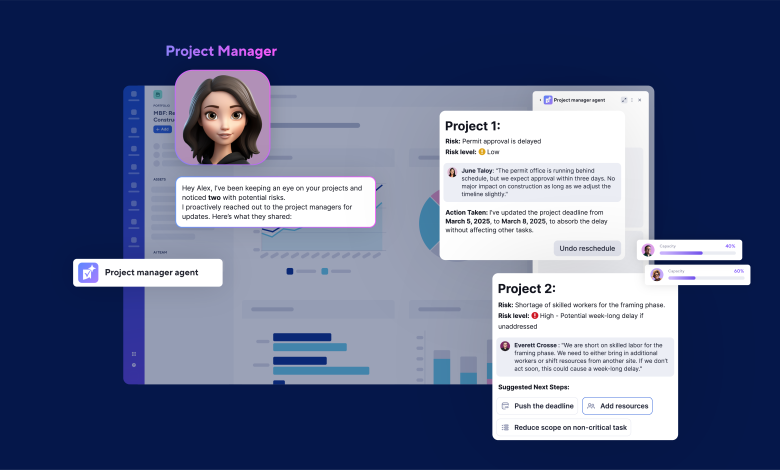
AI has changed how quickly work begins. A blank page is not as intimidating as it used to be. A meeting becomes a summary in seconds. A brief can become a first draft before the conversation has ended. And a workflow can be created before the team leaves the meeting room. That is a real shift, and it matters. AI is already helping people start faster and spend less time on repetitive tasks. But we are now reaching a more important question: what happens after the work starts?
Research from Harvard Business Review found that AI tools didn’t always reduce work and, in some cases, can make work feel more intense. Employees worked at a faster pace, took on a broader scope of tasks and allowed work to stretch further into the day. The same research warned that this can lead to cognitive fatigue, burnout, and weaker decision-making.
These points should make leaders pause. If AI helps us create more, faster, but the same number of people still need to review, approve and prioritise it, then we haven’t removed the pressure. We’ve moved it further up the chain.
The shift from doing to deciding
Instead of spending as much time producing the first version, people are spending more time evaluating what has been produced. Is this accurate? Does it reflect the right strategy? Is this the right next step? These aren’t small questions. They’re judgement calls. This is the shift leaders need to pay closer attention to. If more work is moving from doing to deciding, then people will feel the strain. Decision fatigue is not just a personal issue; at scale, it becomes an operational one.
We can see this in the way work moves through organisations. Smartsheet analysis of 1.4 million active enterprise projects found that automation intensity per enterprise account is up 55% year on year, while overall activity is up 46%. That tells us something important. More work is being initiated, more tasks are being created and more updates are moving through systems, but human judgement hasn’t scaled by the same percentage.
People still have the same number of hours in the day. They still need context before they can make good calls. And when more decisions compete for the same attention, they can become slower, less consistent or less reliable. That erosion of decision quality is what holds companies back. Great decisions compound; poor ones compound in the wrong direction.
More activity, same human capacity
This is the productivity paradox many leaders are starting to recognise. AI can increase output, but output still has to become a decision. It’s a bit like air traffic control. AI lets you get more planes in the air, faster. But there’s still a control tower responsible for sequencing landings and preventing collisions. Increasing the number of planes doesn’t automatically increase the airport’s ability to handle them safely. In fact, it places greater pressure on the people and systems responsible for coordinating them. The bottleneck was never “how many planes can we launch,” it was always “how many can safely land at once.” The challenge is that most organisations weren’t designed to handle that volume of activity. Instead of being coordinated by connected systems, work is often stitched together by people.
That’s because many teams are still holding work together across disconnected systems, with people carrying the “context tax” between tools. They know where the latest update lives and why a deadline moved, and they understand which stakeholder needs to be involved before a decision can be made. People have historically been the “connective glue” between disconnected systems, synthesizing information holding context in their heads and routing decisions through relationships and historical knowledge. That worked when the pace was manageable. It becomes much harder when AI increases the speed and the volume of work moving through the system.
AI value has to mature
None of this means human judgement becomes less important. I think the opposite is true. As AI creates more work, judgement becomes the quality layer. It is where people apply context, experience and accountability. It is also where risk is managed.
But judgement needs support. If people are constantly piecing together information before making a decision, the system is asking too much. Creating the conditions for better judgment means rethinking three fundamentals:
- Context must move with work. AI outputs arrive without the reasoning behind prior decisions or constraints. Link decisions to outputs they inform so reviewers have visibility into why similar decisions were made and what outcomes are expected.
- Clarity about what matters. As volume increases, decision fatigue comes from filtering signal from noise. Establish what requires human judgement and what can move forward automatically. This removes the cognitive load of determining what deserves your attention.
- Support system for decision makers. Even with strong judgment, people get tired. Centralise information so decision makers don’t hunt across systems. Protect calendar time for decisions. Make bottlenecks visible so swamped leaders can escalate early.
It’s useful to know how many people interact with AI tools and how much faster certain tasks can be completed, but those measures don’t tell the full story. The better question is whether AI helps work move through the organisation with less friction. Are people making decisions with the right information? Are approvals clearer? Are teams spending less time chasing context before they act? If the answer is no, then faster output may simply create a longer queue of work waiting for human judgement.
This is where context matters. AI that understands context is fundamentally different from AI that generates content. A model can draft a status update, but does it know which deadline cannot move? Or understand why a decision was made last week? That distinction is becoming critical.
The real opportunity
For most organisations, the bigger opportunity is not simply generating more activity, it’s finishing the right work faster, with better decisions made along the way. That requires a different mindset. Leaders need to stop measuring AI success by output volume and start measuring it by decision quality and business outcomes. The question isn’t “how many more drafts can we generate?” It’s “how much faster can our teams decide what matters, aligns with the business and customer outcomes and execute on it?”
AI can draft, summarise, and start the next task. But people still decide what matters. They decide what’s ready, where the risks sit, and what should happen next.
If we ignore that, we will keep asking people to absorb more activity with the same human capacity. If we recognise it, we can build a better relationship between AI and judgement. One where AI helps work move faster, and the right systems ensure people have the context, clarity and support to make better decisions. Because the real promise of AI is not more output for its own sake. It’s stronger execution. And that only happens when human judgement has the context, clarity and support it needs to keep up.