M&A due diligence has always been document-heavy. Buyers, sellers, lawyers, financial advisers, and specialists may need to review thousands of files before a transaction can move forward. Contracts, financial statements, tax records, intellectual property documents, employment agreements, and compliance materials all need to be organized and assessed.
Virtual data rooms already made this process more secure and structured. Now, artificial intelligence is changing what deal teams can do inside them. AI-powered search, redaction, translation, document analysis, and emerging agentic tools are turning data rooms from passive repositories into more active due diligence workspaces.
AI search reduces time spent finding information
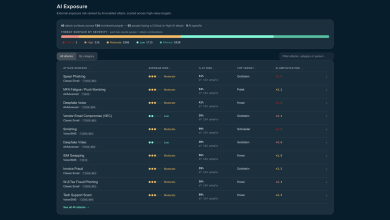
Traditional keyword search works well when reviewers know exactly what they need. Due diligence is often less predictable. A buyer may need to identify change-of-control provisions, unusual termination rights, related-party transactions, or customer concentration risks across hundreds of documents.
AI-assisted search can help reviewers find relevant information even when different files use different terminology. Instead of opening documents one by one, users can search across a larger dataset and narrow the review to the most relevant material.
This does not remove the need to read source documents. It shifts more time from locating information to interpreting the provisions, figures, and risks that matter.
Automated redaction supports controlled disclosure
Preparing a sell-side data room often requires teams to remove personal data, commercially sensitive terms, or information that should not yet be disclosed to a particular bidder.
Manual redaction can be slow when the same names, account details, or sensitive terms appear across many files. AI-assisted redaction can help identify repeated information and apply redaction rules across larger document sets.
The benefit is not only speed. A more consistent process can reduce the risk that sensitive information remains visible in one version of a document. Human review is still important when context determines what should be disclosed.
Data rooms are becoming intelligent deal workspaces
The role of a virtual data room is expanding beyond secure file storage. A modern data room can combine granular permissions, document controls, structured Q&A, audit trails, and AI-assisted review in one transaction environment.
This matters because AI is most useful when it works close to the source material. Instead of downloading confidential documents and uploading them into a separate AI tool, reviewers can increasingly use AI capabilities within the controlled deal workspace.
That approach can preserve stronger information governance. Access remains tied to permissions on the underlying files, while the platform continues to record user activity. Buyers can work faster without automatically gaining broader access to sensitive information.
AI-assisted Q&A can improve buyer-seller communication
Q&A is one of the most time-consuming parts of due diligence. Buyers submit questions, sellers route them to subject-matter experts, answers are reviewed, and supporting documents may need to be added.
AI can assist by categorizing questions, identifying similar requests, locating supporting documents, or showing where an answer may already exist in the dataset. This can reduce duplicate work and help transaction managers organize a large Q&A process.
However, AI-generated responses should not automatically become approved seller answers. Legal, financial, and commercial questions often require context that cannot be inferred safely from documents alone.
Translation helps cross-border deal teams
Cross-border transactions create another challenge. Contracts, corporate records, regulatory filings, and operational documents may appear in several languages.
AI-assisted translation can help reviewers understand the general content of foreign-language files more quickly and identify documents that require detailed professional review. It can also make early document triage more efficient.
For legally significant material, professional or certified translation may still be necessary. AI translation should be treated as a review aid rather than a substitute for formal legal interpretation.
AI agents may be the next step
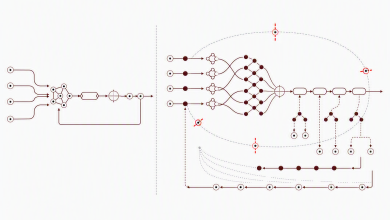
The next development is likely to involve AI agents that interact with transaction systems rather than simply analyze individual files. Protocols such as the Model Context Protocol, or MCP, are designed to let AI assistants connect with external tools and data sources.
In due diligence, an authorized agent could potentially search documents, compare agreements, prepare summaries, populate a checklist, or identify missing information. The key issue is permission design.
An AI agent should not have broader rights than the user or team it represents. Deal teams also need visibility into what information the agent accessed and what actions it performed. As agentic workflows become more common, identity controls and auditability will become as important as model capability.
Human judgment remains central
AI can reduce repetitive document work, but due diligence is not simply an information-retrieval exercise. The significance of a contract clause, financial discrepancy, regulatory issue, or customer dependency depends on the transaction and the buyer’s risk tolerance.
The strongest use of AI is therefore as an accelerator for professional review. It can surface information, organize files, and reduce manual effort. Lawyers, accountants, investment professionals, and other specialists still determine what the findings mean.
The data room is evolving rather than disappearing. It remains the controlled environment where sensitive deal information is shared, but AI is making that environment more searchable, responsive, and connected to the wider due diligence workflow.
For M&A teams, the advantage will not come from using AI everywhere. It will come from applying it where it shortens review time without weakening security, traceability, or human oversight.