Introduction: From Automation to Collaboration
For years, many leaders feared that artificial intelligence would replace human jobs. Today, a different story is taking shape. As companies build distributed and remote teams, the reality is that AI is not replacing people but helping them work smarter and connect more effectively across the world.
From hiring to daily operations, the organizations that win are the ones that see AI as a tool to extend human capability rather than replace it.
The Global Workforce Is Becoming Human and Machine
The rise of AI has transformed the idea of remote work into a truly global phenomenon. AI-driven tools now match candidates to roles with more accuracy and speed than traditional recruiting methods.
Research from McKinsey shows that automation and AI can boost global productivity by up to 1.4% each year. The biggest gains happen when technology enhances human judgment instead of replacing it.
AI can evaluate skills, time zones, and communication styles. Human leaders provide the empathy and cultural awareness that make global teams thrive.
Data-Driven Hiring Still Depends on Human Intuition
AI can scan thousands of profiles and predict job fit, but the best hiring decisions still rely on trust and communication. A recruiter might find two candidates with identical skills, yet an experienced manager can sense which one will adapt better to the company’s culture or collaborate more smoothly with others.
AI gives us the data. Humans give it meaning.
Balancing Automation and Empathy in Global Teams
Once the team is hired, AI helps streamline operations through scheduling tools, translation models, and automated reporting. These systems make collaboration across time zones faster and more organized.
But the technology only works when paired with empathy. Leaders who combine efficiency with real human connection build stronger, more motivated teams.
A study by Deloitte found that 92% of executives believe emotional intelligence is essential for success with AI integration. The lesson is simple: people work best when they feel seen and supported, not just managed by systems.
The Myth of “AI vs. Human”
Many business discussions still frame AI as a competitor to human workers. That mindset misses the bigger picture.
AI is opening new opportunities for skilled professionals in regions where geography or infrastructure once limited access. Translation tools and automated onboarding are giving more people a seat at the global table.
Rather than replacing jobs, AI is redistributing opportunity. It allows people with specialized skills to reach markets they could never reach before.
Examples of AI Empowering Global Teams
AI-assisted talent matching: Advanced models can read resumes and portfolios for deeper context, improving role alignment beyond simple keyword searches.
Onboarding support: Sentiment analysis can alert managers when a new hire feels isolated, prompting timely personal outreach.
Cultural understanding: AI tools can analyze communication patterns to identify tone and engagement levels, helping leaders adjust management styles.
These examples show that AI reveals insights, but it takes human awareness to act on them.
The Next Era of Leadership
The leaders of the future will combine data-driven decision making with empathy, creativity, and cultural intelligence.
AI can detect burnout trends, but it cannot inspire a team or mentor a struggling employee. People remain the heart of innovation and trust.
Harvard Business Review reports that companies balancing digital transformation with human-centered leadership outperform competitors in profitability. Technology may optimize performance, but people sustain it.
Shared Intelligence Is the Future of Work
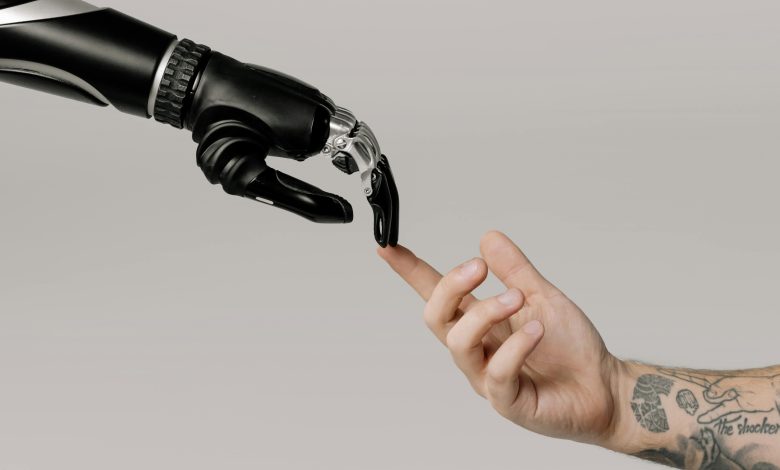
The future of work does not belong to machines or humans alone. It belongs to those who know how to combine both.
AI helps us make faster, more informed decisions, while people bring emotional depth, ethics, and imagination. Together, they create a stronger, more connected workforce that spans the globe.
The companies that succeed will be the ones that treat AI as a partner that helps people do their best work, not as a replacement for them.