Animation has always been one of the most resource-intensive formats in content production. A single 60-second animated explainer could require a team of specialists, weeks of iteration, and a budget that most small businesses cannot justify. That equation is now changing, driven by a new generation of AI-native platforms that treat the entire production pipeline — script, characters, voice, lip sync, and timeline editing — as a single automated workflow accessible from any device, at any time. Understanding how this shift works, and what it means for content teams and independent creators, is fast becoming a genuine competitive advantage.
The Traditional Animation Pipeline and Why It Breaks Down
Every Handoff Has a Cost
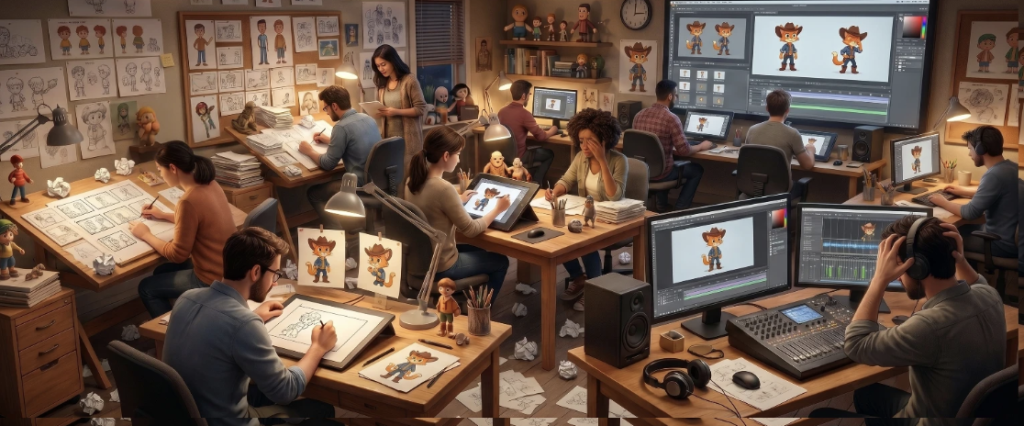
Traditional animation production is a chain of handoffs.
- A writer drafts a script
- moves to a storyboard artist
- character designer, an animator, a voice actor and so on
- a sound editor who handles lip sync
Each handoff introduces delay, miscommunication, and cost. For brands and creators who need to produce video content at a pace, this model is simply not viable.
Consistency Breaks Across Scenes
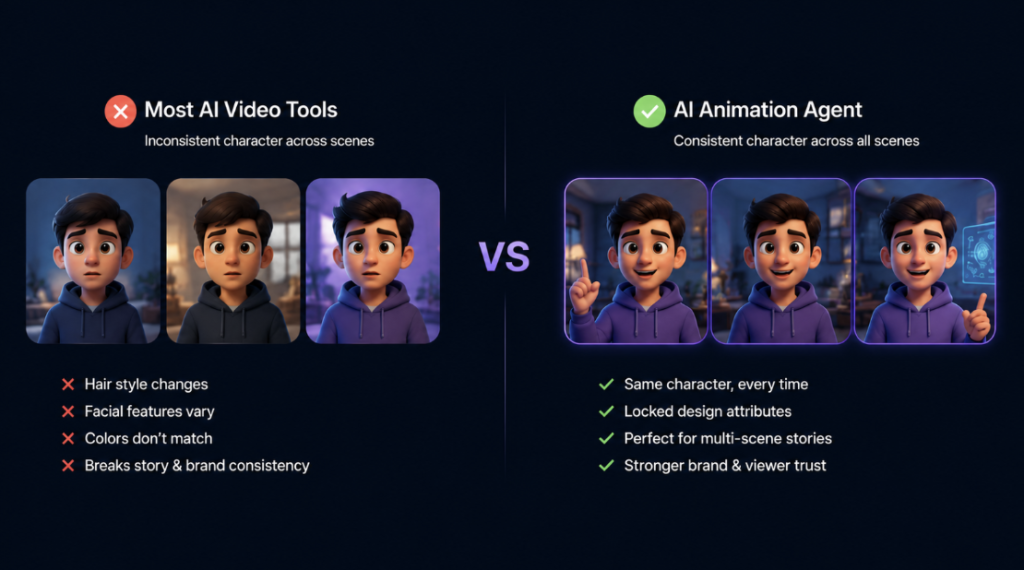
The problem compounds when characters need to appear across multiple scenes. Maintaining visual consistency — the same face, color palette, and proportions — across a dozen scenes without a disciplined team is extremely difficult. Most AI video tools released in the past two years have solved speed at the expense of consistency, producing clips that look polished in isolation but fall apart from the moment the same character appears in a different scene. This is the structural problem that purpose-built AI animation platforms are now directly addressing.
A Market Responding to Demand
According to a 2024 report by Precedence Research, the global AI video generation market is projected to reach USD 2.4 billion by 2034, growing at a compound annual rate of roughly 19.5%. That growth is being driven not by hobbyists but by enterprise content teams and marketing departments that need video at scale — and cannot afford the traditional production timeline.
The AI Agent Model: One Canvas, One Complete Workflow
From Prompt to Finished Sequence
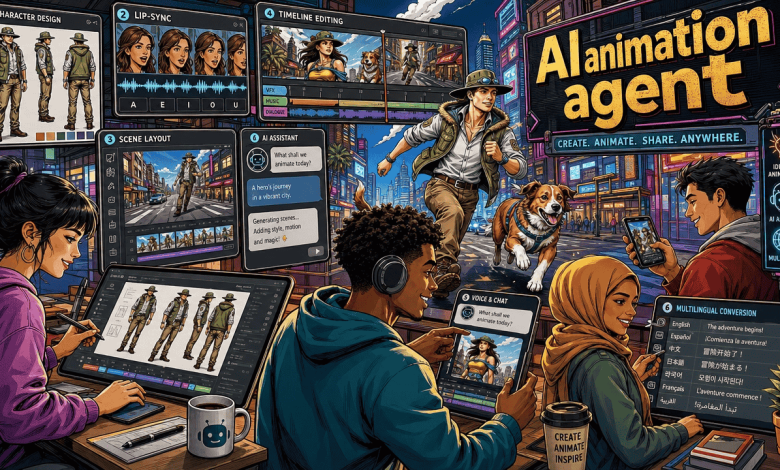
The biggest change in AI animation over the past year is the AI agent as a production coordinator. Instead of moving between separate apps for image, video, voice, and editing, creators simply describe what they want, and the agent handles scene generation, character placement, audio sync, and clip sequencing — all in one canvas.
Eliminating Coordination Overhead
The main bottleneck isn’t rendering, but managing files, formats, and tools. Agents remove this overhead, speeding up production without losing control. Localization that once needed separate runs can now be done in a single production, reducing costs and turnaround time.
End-to-End AI Animation Workflow
Anijam AI provides an end-to-end production pipeline managed by an AI agent, from script to final timeline, all within a single canvas. Solo creators or small teams can produce fully animated, lip-synced videos with consistent characters much faster than with traditional tools. AI animation platforms support multiple visual styles out of the box — and platforms like Anijam AI take this further by enabling custom style training, so brands can define their aesthetic once and generate new content that matches it indefinitely.
Mobile-First Creation: Animating Anytime, Anywhere
Breaking the Desktop Dependency
Professional video production has long been inextricably linked to desktop computers—not due to technical limitations, but because traditional production tools typically demand large screens and robust hardware support. Today, AI-native platforms are empowering users to execute the entire animation production workflow directly on their mobile devices. Take Anijam AI, for instance: its mobile and desktop versions offer identical functionality, enabling many users to rely exclusively on their mobile devices to produce videos lasting up to ten minutes. This shift liberates creators from the constraints of a fixed workspace, allowing them to create anytime, anywhere.
The Same Pipeline, on the Go
Mobile tools are no longer just simplified previews — they offer the same AI-driven workflow as desktops. Creators can develop characters on the commute, generate scenes at a café, and review lip-sync output between meetings, all from their phones. Complete sequences can be finished without ever sitting at a computer.
Character Consistency: The Problem Most AI Tools Still Get Wrong
Why Characters Break Between Scenes
A common frustration with AI video generation is that the main character often looks different between scenes. Hair color may shift; proportions change, and distinctive design elements can disappear, breaking visual continuity. This isn’t just an aesthetic problem — it makes it hard to tell coherent stories or maintain a consistent brand identity.
The Technical Root Cause
Most generative video models are stateless, producing each clip independently without remembering the character’s previous appearance. Ensuring consistency requires a system that locks core design attributes — style, proportions, color, and behavior — and applies to them across every scene. Animation-focused platforms are now building this consistency as a foundational feature.
Maintaining Character Consistency Across Projects
Anijam’s character consistency engine allows creators to design a character once, give it a name, and have that design held reliably across every scene in a project — including across different camera angles and emotional states. For creators working on multi-scene projects — animated explainers, short-form series, or branded content campaigns — this capability is decisive. It is also what makes AI animation practical for enterprise use cases, where brand consistency is non-negotiable.
Lip Sync and Voice: Closing the Last Gap Between Static and Living Characters
Why Lip Sync Has Lagged
The most visible marker of a professionally produced animation is the quality of its lip sync. A character whose mouth movements do not match the audio immediately registers as unfinished, regardless of how sophisticated the underlying visual style is. For AI animation tools, lip sync has historically been the last-mile problem — image generation and video synthesis have advanced rapidly, but matching mouth shapes to phonemes in real time has remained technically demanding.
Animation-Native Engines Produce Better Results
Purpose-built lip sync animation engines designed specifically for animated characters — rather than adapted from deepfake or avatar tools — are producing noticeably better results in 2026. They map phonemes to stylized character proportions rather than realistic human faces. This ensures mouth movements appear natural and expressive, avoiding the uncanny results that occur when real-face models are applied to exaggerated cartoon characters.
Multilingual Voice Support
The depth of voice libraries is becoming an important differentiator across AI animation platforms. The Anijam AI voice generator supports over 30 languages, allowing creators to produce consistent, lip-synced content for global audiences without needing to re-record. For teams targeting multilingual markets — where localization traditionally requires separate production runs for each market — this significantly reduces effort and streamlines the content creation process.
Practical Use Cases Across Industries
The most productive applications of AI animation currently fall into several clear categories:
- Marketing and brand content: Teams produce animated spokespeople and product explainers that can be reused across platforms and updated without re-production. The same animated character can appear across YouTube, LinkedIn, and email campaigns with consistent styling and voice.
- E-learning and corporate training: Educators and L&D teams produce character-driven instructional videos that are more engaging than screen recordings and cheaper than live-action alternatives. Multi-language support enables global rollout, making training content accessible to diverse audiences.
- Social media content: Creators building audiences on short-form platforms are using AI animation to produce consistent, high-quality content without appearing on camera — and increasingly, doing so entirely from mobile devices.
- Animated storytelling and series: Independent filmmakers and writers are using AI animation platforms to produce short animated series that previously required a studio budget. Character consistency engines make it possible to sustain a cast across multiple episodes.
- Enterprise communications: Internal communications — including onboarding, compliance training, and executive messaging — are being delivered through animated video at organizations that previously relied on slide decks or written documents.
According to McKinsey’s 2024 State of AI report, most organizations using generative AI report meaningful cost reductions and productivity gains in the business functions adopting these tools, with broader adoption tied to workflow and process redesign.
Conclusion
AI animation has reached a tipping point. With agent-driven pipelines, character consistency engines, animation-native lip sync, and multi-language voice generation, professional-quality animation is no longer a specialist skill — it can scale from a solo creator with a smartphone to enterprise teams across multiple markets.
The content economy is evolving faster than most production strategies can keep up with. At the Bloomberg New Economy Forum, industry veteran Jeffrey Katzenberg noted that AI could reduce the cost and labor for producing animated films to about 10% of current levels within a few years. Even if the exact figure is uncertain, the takeaway is clear: integrating animation into standard workflows can make content production more efficient and scalable.
Tools like Anijam that consolidate the full production pipeline onto a single canvas are not incremental improvements to existing workflows — they represent a different model of how animated content gets made. The handoff costs, revision friction, and localization overhead that defined traditional animation production are structural problems this model is designed to eliminate.
The question for any content team today is not whether AI animation is ready. It is whether their workflows are.
For more on AI-native animation production, visit Anijam.ai