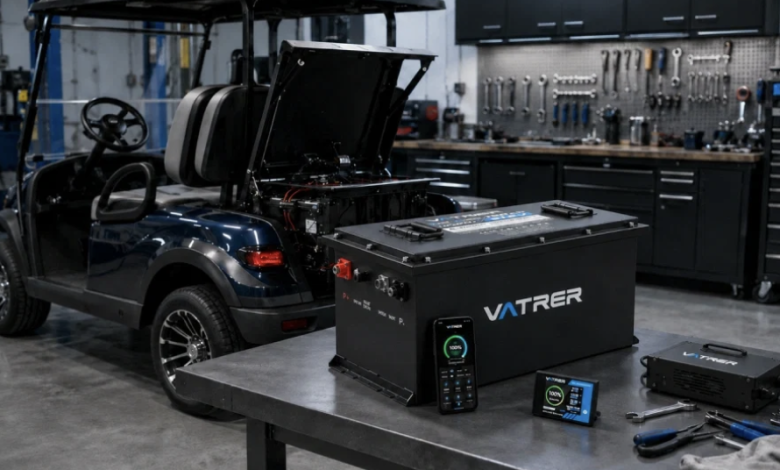
The battery was just a supporting component in cars for a long time. People were more interested in the engine, styling, the software, and how fast it drove. The battery just had to get the car started.
But that’s not how it works anymore. Electric vehicles are popping up in more places, like golf courses, resorts, neighborhoods, colleges, and in utility work. So the battery is now a vital part of the vehicle’s performance, reliability, and user experience.
Smart battery technologies, specifically lithium iron phosphate (LiFePO4), are changing batteries from being simple stores of power to smart energy storage.
Electric vehicles are being used in more ways than ever before.
Golf carts were once just for golf courses, but now they’re all over the place.Resorts use them to shuttle guests, neighborhoods and farms use them for convenience and commuting. Farms, campuses, and businesses are also using them as electric transportation.
As these uses become more common, people want more from their batteries. They don’t want a battery that gives power; they want a system that performs consistently, lasts longer, is safe, and easy to own.
Moving from Old Batteries to Smart Lithium Ones
For years, golf carts used lead-acid batteries because they were familiar and cheaper at the outset. But it often came with heavy batteries and maintenance chores, batteries didn’t last very long, and performance of the batteries diminished.
LiFePO4 (LiFePO4) batteries offer a solution. They are more durable, operate steadily, are less frequently maintained, and are more energy-efficient than the old batteries in your car.
Recent numbers further illustrate this trend. According to Statzon, the global market for golf cart batteries is expected to reach $2.08 billion by 2035, growing 12.8% per year. This is happening because businesses and consumers are switching from old lead-acid batteries to LiFePO4 batteries, saving money in the long run and making their vehicles more efficient.
In turn, more and more people and companies are choosing lithium batteries.
Smart Features: Making Batteries Talk to You
When people begin to use lithium batteries, they expect a lot more than knowing how much power it holds or how long it lasts. They want to know how their energy system works, they want to control it, and they want it to be more convenient. Batteries are no longer passive sources of power, they’re smart energy platforms that connect with their users.
As companies look to the future, batteries are becoming a communication component, rather than a black box. Vatrer Power, for example, is showing how software and communication can solve some problems users have encountered. By adding Bluetooth into their BMS, they help drivers and fleet managers avoid guesswork. Rather than looking at a broken analog gauge, users can check the State of Charge (SOC), voltage, and other metrics on their smartphone or tablet screen. This removes the “range anxiety” that has plagued low-speed electric vehicles.
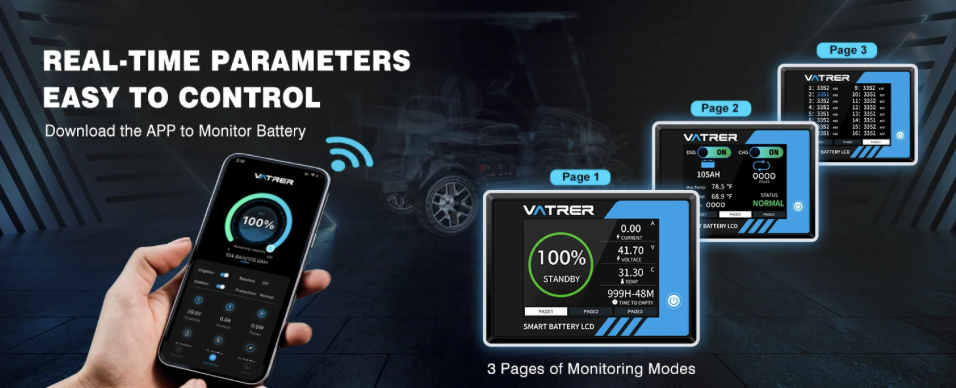
But visibility is only part of it. Smart BMS’s main duty is to monitor the battery’s operating conditions during driving and charging. It helps protect against overcharge, over-discharge, over-current, short circuit, high temperature, and low temperature conditions. With the BMS monitoring these conditions in real time, users can spend less time worrying about battery issues and more time focusing on the drive.
Moving Away From “One-Size-Fits-All”
As applications for low-speed vehicles increase, battery design is shifting away from a standard of engineering and toward a scenario-specific approach. The conditions that a vehicle should be operating in a smooth suburban neighborhood are different from those of a utility vehicle navigating a rough off-road construction site.
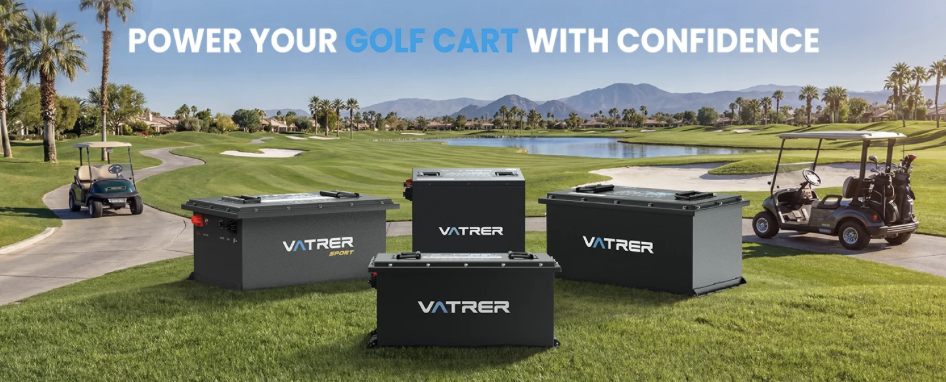
In response to this need, companies have segmented their product lines to match the needs of their clients. Vatrer Power’s ultra-compact Vatrer 48V 105Ah Mini Battery overcomes the space limitations on older carts, enabling them to be simply dropped in without having to purchase expensive tray modifications. Vatrer Power’s Vatrer 48V 105Ah UTV Battery is a beast entirely. Built to handle intense power output surges, high current drain, and serious vibration on the off-road trail, these units show that modern power must be tailored to the terrain.
Battery Strategy Is Product Strategy
Battery strategy for those creating the next generation of electric mobility hardware is now as much part of product strategy as product strategy. It’s not just a question of cost per kilowatt-hour; it’s also about software, heat resistance, and durability.
As the industry continues to professionalize and LSVs become an integral part of modern transportation, seeing these intelligent solutions in action will be critical for both dealers and consumers. Innovators driving this shift, including Vatrer Power, will be showcasing these next-generation LiFePO4 technologies at the highly anticipated 2026 Golf Carting Expo in Charleston, offering the industry a firsthand look at how smart, scenario-driven power is truly moving mobility forward.
About Vatrer Power
Vatrer Power is a manufacturer of lithium (LiFePO4) batteries for RVs, golf carts, marine use, and off-grid solar systems. The company develops LiFePO4 batteries for RV, golf cart, marine, and off-grid applications, with products featuring integrated battery management and monitoring systems.
Learn more: Vatrer Power