

AI and the New Energy Engineering Workforce
Buildings consume a large share of the energy used in the United States, and the effort to upgrade aging facilities has created steady demand for engineers, estimators, and commissioning specialists. At the same time, artificial intelligence is changing how much of that work gets done. For professionals entering the field, and for the leaders hiring them, understanding this shift is more useful than guessing which jobs might disappear.
Where AI Is Already Changing the Work
Much of the early impact sits in data-heavy tasks. Energy analysts once spent days compiling utility bills and interval meter data before modeling a retrofit. Machine learning tools can now flag unusual consumption patterns and suggest likely causes, such as simultaneous heating and cooling or equipment running outside occupied hours.
Estimating is following a similar path. Software trained on historical project records can produce early cost ranges for materials, labor, and indirect expenses. These figures still require careful review, because local labor markets, code requirements, and site conditions vary from one facility to the next. An algorithm can generate a number quickly, but it cannot walk into a mechanical room and notice that replacing a chiller will require removing a wall.
Commissioning benefits as well. Analytics platforms connected to building automation systems can check continuously whether equipment operates as designed, rather than relying only on periodic manual testing.
Skills That Carry More Weight
As routine analysis becomes faster, the value of judgment rises. Graduates weighing construction engineering careers should expect employers to look for people who can interpret model outputs, question assumptions, and explain findings clearly to facility owners who may not have technical backgrounds.
Technical fundamentals remain essential. An engineer who does not understand thermodynamics or electrical load calculations cannot recognize when an automated recommendation is wrong. Professional licensure also carries the same weight it always has, because a licensed engineer, not a software tool, takes legal responsibility for a stamped design.
Field experience matters too. Hands-on roles in design, commissioning, and project management give early-career professionals the context needed to test automated outputs against real conditions on a job site.
What Leaders Should Prioritize
For firms, adopting AI without proper training poses a greater risk than adopting it slowly. Tools introduced without clear review processes can spread the same error across many projects at once. Leaders can reduce that exposure by pairing new hires with experienced mentors, defining which decisions require human sign-off, and treating data quality as a shared responsibility across engineering, construction, and operations teams.
Internship and early-career programs offer a practical starting point. Students who learn to validate digital tools alongside seasoned professionals enter the workforce with sound habits already in place. Continued support for licensure and leadership development helps retain those people as their responsibilities grow.
A Workforce Built for Both
The building sector still depends on people who can design systems, install them safely, and keep them running for decades. AI is changing the speed and the inputs of that work, while the purpose stays the same. Professionals who combine strong engineering fundamentals with the ability to question and apply digital tools will be well positioned as facilities across the country pursue lower energy use and greater reliability.

I am Erika Balla, a technology journalist and content specialist with over 5 years of experience covering advancements in AI, software development, and digital innovation. With a foundation in graphic design and a strong focus on research-driven writing, I create accurate, accessible, and engaging articles that break down complex technical concepts and highlight their real-world impact.
More from Balla
See all AI Business Strategy
How Industrial Companies Should Choose a Revenue Operations Consultant: A 2026 Comparison of Six Firms
 AI & Technology
Website Chatbots for Auto Repair Shops
 Automation
Beyond Automation: Why Human Creativity Still Matters in Modern Marketing
 Data
From Pipelines to Products: How Himant Goyal Is Redefining Enterprise Data Strategy in the Age of AI
Recommended for you
More stories AI Business Strategy
The EU AI Act is forcing businesses to get serious about AI accountability
 AI Business Strategy
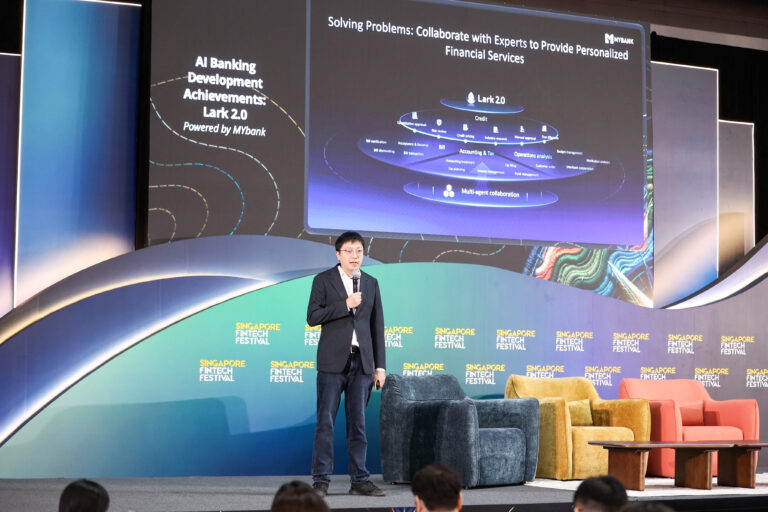
How MYbank Is Rebuilding Itself Around AI Agents to Serve 42 Million Small-Business Owners
 AI Business Strategy
Helping the Next Generation of Investors Understand Market Information
 AI Business Strategy
Why Payers Are Funding the Same AI Problem Three Times
 AI Business Strategy
Taking control: why AI needs managing to deliver ROI
 AI Business Strategy