
Enterprise API programs have spent years solving a predictable problem. Applications need reliable ways to request data or trigger business functions, and developers usually know the caller, endpoint, and expected sequence in advance.
AI agents change that assumption.
An agent may begin with a goal rather than a fixed workflow. It can choose a tool, inspect the response, carry context forward, and decide which permitted action should come next. The execution path becomes less predictable.
The shift became more visible with the Linux Foundation’s announcement of the Agent2Agent Protocol Project, an initiative designed to support agent discovery, communication, and collaboration across different systems. A2A does not settle on which interoperability approach will dominate. It does show that agent-to-agent interaction has become an enterprise architecture concern.
For architects, the harder question is whether an agent can discover a capability, request it under the right authority, and execute it within controls that the enterprise can audit.
Why Enterprise APIs Need to Adapt for AI Agents
Most enterprise integrations make assumptions about who is calling, when the call occurs, and what step comes next.
Agentic systems loosen those assumptions. The caller may still use the same endpoint, but the decision to invoke it can depend on the task, available context, and an earlier result.
Research on AI agentic workflows and enterprise APIs describes the tension between predefined enterprise interactions and more dynamic, goal-oriented agent behavior. Existing endpoints don’t suddenly stop working, and the assumptions surrounding how they are invoked change.
Architecture reviews should therefore ask whether existing API contracts and integration patterns still make sense when invocation can be selected at runtime. The challenge is less about replacing working APIs and more about adapting the architecture around a consumer whose actions are not fully predetermined.
APIs as a Core Layer of Agentic Architecture
APIs remain central because they provide defined access to enterprise capabilities. They connect software to data, business services, and operational systems without exposing backend details.
Agentic systems can use that same model. An agent may conclude that it needs information or that an operation should happen. The API provides a controlled route to the system that owns the function.
That makes the API contract an important boundary between an agent’s decision-making and the business function that executes the request. Connecting an agent to more tools does not make the model more dependable. It increases the range of actions the wider system may attempt.
Architecture teams, therefore, need to decide how much of the enterprise capability surface agents should see and how clearly those interfaces describe available operations.
From Prediction to Enterprise Action
The move from recommendation to action changes the consequences of a model output. A generated answer stays inside the conversational layer until another system or person acts on it. An agent with access to tools can move closer to operational systems by making API calls based on its objective.
A simple model keeps the responsibilities clear.
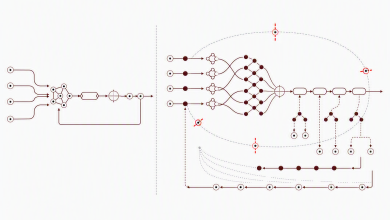
AI agent → execution controls → enterprise API → business system → result
The agent can propose or select a permitted action. The control layer checks the request. The API carries out the approved operation on the relevant service. The result can be returned as context for another permitted step.
Keeping those responsibilities separate gives teams room to stop an invalid request before it reaches a live process. It also lets teams assess the model’s action choice separately from the identity, policy, and validation controls applied to the request.
What Agentic Workflows Require From API Architecture
Agents and orchestration layers need clear, structured information about available capabilities. Machine-readable API descriptions can define operations, parameters, responses, schemas, and security requirements in a form that other software can process.
That helps an agent understand what an interface offers, but discovery does not grant permission. An agent may know that an operation can update a record, yet lack the authority to use it.
That distinction matters when agents act on behalf of users or services. Existing OAuth mechanisms can support delegated authorization, allowing software to operate under constrained authority rather than broad credentials. Delegation still forms only one part of the control model. Policy and runtime checks remain necessary before an action reaches a business system.
Multi-step workflows also need orchestration that can coordinate approved actions and carry relevant context between steps.
Once those actions span multiple systems, observability matters too. Teams need enough information to reconstruct what the agent called, which permissions applied, what came back, and what happened next.
Discoverability, authorization, orchestration, and observability solve different problems. Treating them as one capability can leave gaps during execution.
The Role of Integration and Middleware
Many enterprises already have components that can sit between the agent and the systems it can affect.
Middleware can route requests, validate their structure, apply policies, verify identity, and decide whether a call should proceed. That gives the integration layer a larger role than simply connecting applications.
For agent-driven workflows, least-privilege API access can help limit what an agent may do. Related controls can include fine-grained OAuth scopes, API allow- and deny-lists, gateways, schema enforcement, rate controls, and human review for selected high-impact actions.
Not every workflow needs the same controls. A read-only lookup and an operation that changes a business record carry different consequences. Architecture should reflect that difference.
Middleware also reduces the need to expose every backend directly to an agent. Existing integration services can translate between agent-facing requests and the rules governing downstream systems.
Where Harness Engineering Fits in the Agentic Enterprise
“Harness Engineering” describes how surrounding components form the operating environment for the model and its tools. In this context, the term refers to how orchestration, tool interfaces, identity, permissions, validation, human intervention, and logging work together.
That framing helps architecture teams separate probabilistic choices from deterministic boundaries. A model may select a sensible next action, while the surrounding environment determines which actions are available, what conditions must be satisfied, and where execution should stop or require intervention.
It is therefore a broader system-design concern rather than another name for middleware or model quality. Its value lies in making the agent’s operating boundaries explicit across tools and workflow steps.
What Enterprise Architects Should Prioritize
A practical review can start with one workflow rather than a large redesign. Trace the path from the agent’s goal to the final business action, then test the architecture against a short set of questions.
- Can the agent discover only the capabilities relevant to its task?
- Does the system separate discovery from permission?
- Can the agent act with constrained and attributable authority?
- Do policy and validation checks run before consequential operations?
- Does the design reserve human review for actions that justify it?
- Can logs reconstruct tool calls, permissions, results, and later steps?
The aim is controlled autonomy within clear, explicit boundaries. Enterprises don’t need to rebuild every API before experimenting with agents. They do need to identify which assumptions around access, identity, execution, and traceability no longer hold when software can choose its next step.
From API Access to Governed Agent Execution
AI agents don’t necessarily require enterprises to replace their APIs. They require teams to revisit the assumptions about API consumption, including who selects the next call, how authority is passed along that call, and how execution is traced across multiple steps.
The objective shifts from providing API access to governing how agents use it. For teams planning agentic workflows, the next step is concrete. Choose one workflow that could move from recommendation to action, map every API decision it requires, and identify where stronger controls are needed before expanding agent access.
References:
- Jones, M., Nadalin, A., Campbell, B., Bradley, J. and Mortimore, C. (January 2020). RFC 8693: OAuth 2.0 Token Exchange. Internet Engineering Task Force. https://www.rfc-editor.org/info/rfc8693/
- The Linux Foundation. (23 June, 2025). Linux Foundation Launches the Agent2Agent Protocol Project to Enable Secure, Intelligent Communication Between AI Agents. https://www.linuxfoundation.org/press/linux-foundation-launches-the-agent2agent-protocol-project-to-enable-secure-intelligent-communication-between-ai-agents
- OpenAPI Initiative. (24 October, 2024). OpenAPI Specification v3.1.1. https://spec.openapis.org/oas/v3.1.1.html
- OWASP GenAI Security Project. (27 July, 2025). Securing Agentic Applications Guide 1.0. OWASP GenAI Security Project. https://genai.owasp.org/resource/securing-agentic-applications-guide-1-0/
- Tupe, V. and Thube, S. (22 January, 2025). AI Agentic workflows and Enterprise APIs: Adapting API architectures for the age of AI agents. arXiv 2502.17443. https://arxiv.org/abs/2502.17443