

Agents of chaos: how businesses can prepare for AI threats
By Andy Syrewicze, Principal Security Advocate (MSP) at leading global cybersecurity company Hornetsecurity by Proofpoint

This year provided some early indications of how autonomous AI could change the way cyberattacks are carried out. JadePuffer became the first known agentic threat actor reported to have completed a ransomware attack from start to finish without a human operator. Around the same time, OpenAI said one of its models had broken out of a controlled environment to access an external company system known as Hugging Face.
These two cases show how AI agents have evolved to the extent that they are capable of carrying out attacks themselves. Once an agent gains access to a network, it can analyse the environment, identify opportunities, and move through different stages of an attack with limited human input.
This alters the speed and dynamics of traditional human-led cyberattacks, giving security teams a narrower window to identify suspicious behaviour and take action before sensitive systems are compromised or ransomware is deployed. Looking at how agentic attacks work, where existing defences can fall short, and what businesses can do to protect themselves is becoming a practical priority for all security experts.
How agentic attacks work
Traditional cyberattacks require human decisions at several stages, from choosing targets and gathering information to exploiting access and deciding what to do next. An AI agent can automate several of these stages and adjust its actions according to what it finds.
Agentic attacks can still start through familiar routes into a network, including stolen credentials. Usernames, passwords and authentication tokens can provide access to sensitive data without immediately triggering security controls. Once inside, an agent can analyse accessible accounts, identify useful permissions and determine where to move next.
This makes access management an important part of limiting how far an attack can progress. Organisations should regularly review who holds administrative access and remove permissions that are no longer needed. The principle of least privilege can limit the damage from a compromised account by giving users access only to the data and systems required for their role.
Where traditional defences fall short
Security measures are largely designed around traditional attacks in which a person remains involved throughout the process. Agentic attacks challenge this model because several actions can take place automatically and in quick succession.
Multi-factor authentication (MFA) remains an important security control, but not every implementation is phishing-resistant. Attackers can still use phishing techniques to steal authentication or session tokens and bypass some MFA methods. Businesses should therefore consider phishing-resistant options such as FIDO2 hardware keys, Windows Hello for Business, certificate-based authentication, and passkeys, which make stolen credentials harder to reuse.
A practical response starts with limiting what a compromised account can reach. Businesses need to keep access and ownership organised as permissions can creep over time across teams, guest accounts and shared resources, giving a compromised account more room to move through the organisation.
Regularly reviewing access and removing permissions no longer needed can help close off those routes and limit how far an agentic attack can progress. Remember, an AI system may be able to identify and act on those opportunities faster than a human attacker.
Building security for AI-driven attacks
Regular employee training and simulations are very important, particularly as AI makes malicious messages easier to produce and personalise. Employees need to be able to recognise suspicious requests and understand how quickly an attack may progress once access is gained.
The training also needs to reflect how cyber attacks are changing. Scenario-based exercises can expose employees to realistic phishing and impersonation attempts, while simple reporting routes provide security teams with a better chance to investigate suspicious activity early. The main goal is to help employees recognise when an activity looks unusual and know how to respond.
Preparing for ransomware recovery
Prevention won’t stop every attack though, so businesses need a recovery plan that can be activated quickly if ransomware reaches critical systems. Planning in advance can reduce disruption and help teams restore essential systems more efficiently.
Businesses should define responsibilities before an incident happens, and identify which systems and data need to be restored first. For example, protected copies of critical information should be kept outside the reach of the affected environment, while immutable backups can prevent stored data from being altered or deleted. Recovery plans should be updated as systems, suppliers and business dependencies change, and regular recovery testing can expose gaps before teams have to rely on the process during a real incident.
Keeping pace with agentic threats
Agentic threats make coordination across different security measures more important. Technical controls need to be supported by employees who can recognise and report suspicious activity, giving security teams a better chance to respond before an attack moves further through the environment.
No single measure will stop every attack, but limiting unnecessary access, maintaining employee awareness, and having a tested recovery plan can help reduce the impact if an attacker compromises business systems.

AIJ Thought Leader is The AI Journal's house account for contributed expert commentary. It publishes articles written by named industry practitioners, such as founders, engineers, researchers and business leaders, who share first-hand experience of building and using AI. Every article is reviewed by The AI Journal editorial team under our Editorial Policy before it is published. Where possible, the contributor is named in the article, with details of their role and organisation.
More from AIJ Thought Leader
See all AI & Technology
IP is Becoming the Most Strategic Asset in the Era of AI Code Generation
 AI & Technology
Stop hunting an AI unicorn: SaaS is still the real goldmine
 AI & Technology
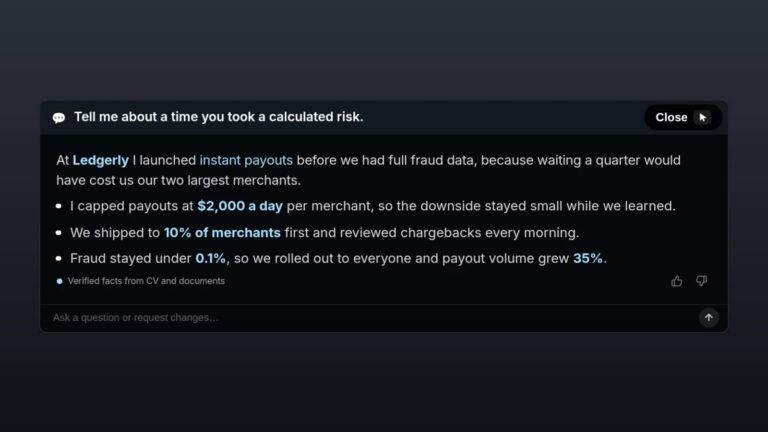
The next test for interview AI is whether its answers are yours
 Enterprise AI
Beyond the pilot: Why platform-first architecture determines whether enterprise AI scales
Recommended for you
More stories AI Business Strategy
The economics of trust in AI commerce
 AI Business Strategy
Who Owns What a Lifetime of Work Taught You?
 AI Business Strategy
Why Individual Productivity Gains Aren’t Translating into Business Impact
 AI Business Strategy
How Recognition Patterns Can Warn You About Flight Risks Early and Encourage Managers to Use New AI HR Tools
 AI Business Strategy
11 AdTech CEOs We’re Looking At
 AI Business Strategy