

The Wedding Where Nobody Showed Up: What AI Staff Scheduling Changed for One Caterer
By Derick Dorner, CEO & CO-Founder at Roosted
It was a Friday evening in summer, and a Los Angeles catering company had a wedding to serve. Ten servers and two bartenders were booked for the first shift. The tables were set, the couple had planned this night for months, and the guests were on their way.
Not one of the twelve workers arrived.
The company’s scheduling manager, Libby, grabbed her phone and started working through a roster of about 200 part-time workers, calling and texting anyone who might be free and close enough to get there in time. She scraped together enough people to get through the night. “The party turned out okay,” she said later. She and the owner made a promise to each other that evening: it would never happen again.
Keeping that promise turned out to be a lesson in where AI belongs in staff scheduling, and the numbers that followed are worth a close look for anyone in event staffing or event planning.
A problem hiding in plain sight
Libby’s wedding was the worst night, but it was no outlier. On the company’s busiest days, she estimated that about half of scheduled workers either arrived late or never showed. She described her job at the time as “spinning her wheels and grinding her teeth.”
The business was substantial: around 20 full-time staff, about 200 part-time workers, and roughly $4 million in annual revenue. Libby scheduled about 15 parties in a typical week, which added up to hundreds of shifts. Her tools were handwritten notes, Google Sheets, phone calls, texts, and Facebook messages. Nothing was shared across the team, and nobody tracked who was reliable. Every piece of that knowledge lived in her head and her notebooks, and it consumed her entire 40-hour week.
Anyone who has run event management or shift scheduling for a flexible workforce will recognize this. Catering, event security, stage labor, and per-diem healthcare staffing all run on the same fragile machinery: a large pool of part-time workers, availability that shifts every week, and one overstretched scheduler holding it together.
Why shift scheduling is a natural fit for AI
Shift-based staffing gets little attention in AI headlines, yet it fits the technology unusually well, for three reasons.
Volume. A staffing agency covering a busy weekend of events might need to fill 300 shifts across a dozen venues. The same kind of decision is made hundreds or thousands of times a month.
Constraints. Every shift carries requirements. A bartender may need an alcohol service certification, a security post needs a licensed guard, and a nurse needs current credentials for the facility. Every worker brings their own availability, location, skills, and pay rate. Holding all of that in your head at scale is close to impossible.
Feedback. Every shift produces an outcome. The worker arrived on time, arrived late, or didn’t come. That stream of data can sharpen every decision that follows.
Put those together and you have a problem that rewards a system able to weigh many factors at once and learn from what happened last week.
Step one: matching the right people to every shift
When Libby’s company moved its staff scheduling into Roosted, onboarding took less than a week. The first change was how shifts got filled.
Roosted’s Smart Shift Matching, built on the company’s patented AI, weighs each worker’s skillsets, availability, and location to assign the best-qualified person to each shift. Libby could also invite her most trusted workers first and let the system fill the remaining slots from the wider pool.
For a scheduler, this removes the most draining part of the job. A request for eight servers and two certified bartenders at a venue across town comes back as a shortlist of people who are free that evening, hold the right certification, and live close enough to get there. The scheduler reviews it, adjusts, and sends offers. Every candidate is checked against every requirement, every time, which is something a tired person at 10pm on a Thursday can’t promise.
Step two: a confirmation before every shift
The second change was simple, and it struck at the heart of the problem. Before each shift, every worker had to confirm by text or email that they were coming.
That small habit transformed Libby’s evenings. A missing confirmation at noon is a warning with hours to spare. The same gap discovered at 5pm, as guests are walking in, is a crisis. According to Roosted’s case study, this one change cut no-shows and late arrivals immediately.
The communication around it was automated too. Roosted sends shift details, updates, and confirmation requests to workers automatically, which the company reports cuts back-and-forth messaging by more than 80%. When a venue pushes load-in back an hour, one update reaches everyone on that shift at once.
Step three: learning who shows up
The third change is where AI earns its reputation. The system recorded lateness, no-shows, and performance on every shift. After about a month, it had enough data to see clear patterns, and shifts began flowing to the people who turned up on time and away from those who didn’t.
This replaced Libby’s memory with a record the whole team could trust. It also changed the incentives for workers. Reliability now carried a reward, more and better shifts, and the people who showed up consistently stayed longer.
The lesson for anyone building or buying an AI scheduling app is that outcome data matters as much as the matching logic. A model that ranks candidates without knowing who actually arrives is optimizing for the wrong goal.
The results: from 50% to under 5% in 60 days
Measure
Before
After 60 days
Late or no-show rate on busy days
About 50%
Under 5%
Attendance issues
Baseline
Down 90%
Libby’s weekly scheduling time
A full 40-hour week
Under 10 hours
Staff turnover
Baseline
Lower (no figure reported)
Thirty hours a week came back to Libby. A wedding like the one that nearly collapsed would now have its gaps flagged by midday and filled before the first guest arrived.
Labor rules belong in the schedule
Flexible work creates tangled wage and hour situations. Workers pick up shifts across several clients in a single week, events run past midnight, and overnight load-outs complicate break rules. When those rules are checked after the schedule is built, overtime surprises land on the payroll run.
Good employee scheduling software builds them in from the start, flagging an assignment that would push someone into overtime or skip a required break before the shift is ever offered. Roosted is designed to handle complex wage and hour rules, including overtime and break requirements, and helps businesses comply with the FLSA. GPS-verified clock-ins from its mobile time clock generate timesheets automatically, and approved hours flow straight into payroll, which closes the gap where many pay errors begin.
Where the scheduler stays in charge
Libby still makes the final call. She knows that a certain client always asks for the same lead server, that two workers shouldn’t share a crew, and that a new hire needs to shadow someone experienced on a first event. Some of that can become rules over time, and some of it will always be judgment.
The right design gives the scheduler a strong default to accept in one click or override in two. Reliability scores should be visible and explainable to the people who use them, especially when they shape how much work someone is offered. Workers should know that showing up affects the shifts they get, and Libby’s story shows that clear expectations improve attendance on their own.
How to know if AI scheduling is working
Anyone evaluating workforce management tools for event staffing or on-demand teams should measure these before and after rollout:
Metric
What it tells you
Shift fill rate
Whether shifts are being covered at all
Time to fill
How fast open shifts are covered, especially last-minute ones
Late and no-show rate
Whether matching accounts for reliability
Scheduler hours per week
Whether the tool saves time or adds admin
Payroll corrections
Whether hours and pay rules are captured correctly
When fill rate and attendance climb while scheduler hours fall, the system is doing its job. If scheduler hours stay flat, the tool is likely adding a layer of review on top of the same manual work.
The night that changed the business
What Libby’s catering company needed was simple to say and hard to pull off: the right people at the right venue at the right time, and a way to know by lunchtime if that wasn’t going to happen. For the thousands of event staffing agencies, caterers, and security firms running on spreadsheets and group texts today, that is where AI delivers its clearest, most measurable value. The wedding where nobody showed up became the last one of its kind for that business.
Author bio:
Derick Dorner is CEO & CO-Founder at Roosted, an AI-powered workforce management platform built for companies that staff flexible, on-demand shifts, including event staffing agencies, caterers, security firms, stage labor crews, and healthcare staffing providers. Roosted’s patented AI matches workers to shifts based on skills, availability, and location, and connects scheduling, communication, time tracking, and payroll in one system. Learn more at roostedhr.com.

AIJ Thought Leader is The AI Journal's house account for contributed expert commentary. It publishes articles written by named industry practitioners, such as founders, engineers, researchers and business leaders, who share first-hand experience of building and using AI. Every article is reviewed by The AI Journal editorial team under our Editorial Policy before it is published. Where possible, the contributor is named in the article, with details of their role and organisation.
More from AIJ Thought Leader
See all AI & Technology
Your Underwriting Agent is Ready to Act, Your Risk Architecture Isn’t
 AI & Technology
The next AI frontier in insurance is not automation – it is orchestration
 Data
The commercial cost of AI skills gaps: UK business leaders report lost opportunities
 AI & Technology
AI could move healthcare from reacting to disease to preventing it
Recommended for you
More stories AI Business Strategy
How Recognition Patterns Can Warn You About Flight Risks Early and Encourage Managers to Use New AI HR Tools
 AI Business Strategy
11 AdTech CEOs We’re Looking At
 AI Business Strategy
The EU AI Act is forcing businesses to get serious about AI accountability
 AI Business Strategy
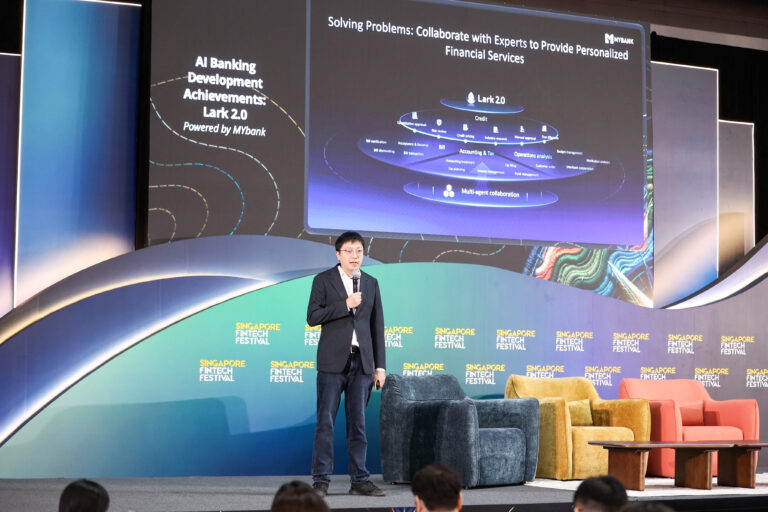
How MYbank Is Rebuilding Itself Around AI Agents to Serve 42 Million Small-Business Owners
 AI Business Strategy
Helping the Next Generation of Investors Understand Market Information
 AI Business Strategy