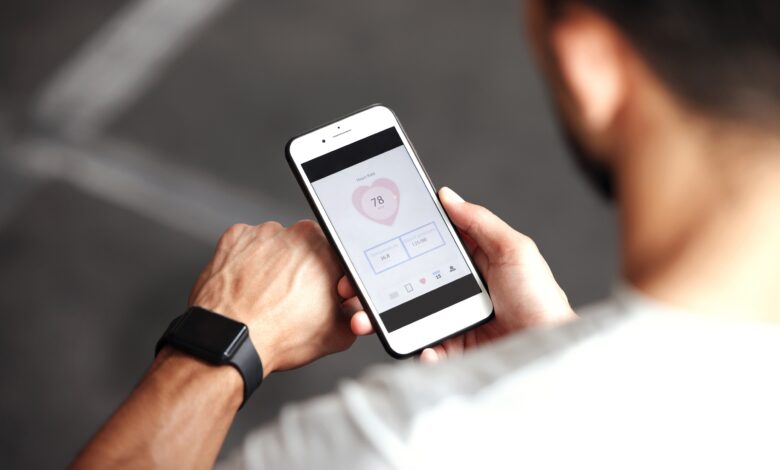
Billions of people now wear sensors that record heart rhythm, sleep, blood oxygen and activity. The global wearable technology market was valued at USD 92.9 billion in 2025 and is projected to reach USD 229.9 billion by 2033. Yet very little of that data reaches the clinicians who make care decisions.
A nationally representative US study in the Journal of Medical Internet Research found that 78% of wearable users were willing to share their data with a clinician, but only 26.5% had done so. The gap is not about willingness. It is about infrastructure, trust and workflow.
Healthcare has become very good at generating data. It is far less effective at turning that data into earlier diagnosis, prevention and better outcomes.
From Snapshots to Continuous Health Timelines
For more than a century, healthcare has relied on snapshots: a blood pressure reading at an annual check-up, a blood test every few months, a scan every few years. Continuous sensing replaces those isolated points with a timeline that can show subtle changes before symptoms appear. Modern devices track heart rate variability, blood oxygen, respiratory rate, sleep, ECG waveforms and, increasingly, glucose.
Some already carry regulatory clearance for specific uses, such as screening for atrial fibrillation or supporting diabetes management. Others are moving towards estimating recovery, resilience and even biological ageing. The question is shifting from “How active are you?” to “How healthy are you likely to remain?”
Why More Signals Alone Create More Noise
The obstacles to using this data are practical. A recent whitepaper from Future Health, Abu Dhabi’s global health initiative, developed with Deloitte, identifies four of them: data quality and clinical validation, fragmented technology ecosystems, privacy and data governance, and clinical integration. None of these is solved by a better sensor.
Research in PLOS Digital Health suggests many people struggle to interpret wearable data or know when to act on it. A 2025 review in Frontiers in Digital Health found that digital health tools often underperform clinically because behavioural science and clinical integration are introduced too late in the design process. More signals without more meaning simply produce more noise.
What AI Can and Cannot Do With Wearable Data
Artificial intelligence can help. By analysing continuous physiological streams alongside clinical history, genomics and population health data, it can detect patterns that humans could not consistently find at scale. The strongest opportunity lies in combining these sources, not in any single one.
The limits matter as much as the promise. Models need representative data, validation in the populations they will serve, and human oversight. AI should support clinical judgement, and its performance should be monitored against patient outcomes and safety.
For clinicians, the practical test is whether a signal fits into the way they already work. An alert that arrives without context, or that cannot be verified against the patient’s record, is likely to be ignored. Interoperability, clear thresholds for action and explainable outputs are therefore as important as the model itself.
A Working Example: Connecting Records, Genomes and Wearables in Abu Dhabi
Abu Dhabi offers one example of what connecting these layers can look like. Malaffi, the emirate’s health information exchange, gives clinicians a shared view of patient records across healthcare facilities. The Emirati Genome Program, which the Department of Health reports had sequenced more than 900,000 Emiratis by June 2026, adds genomic insight.
Through the Sahatna digital health platform, the Department of Health combines wearable data with longitudinal records from Malaffi to produce a personalised Health Age score. The aim is to show residents the clinical and lifestyle factors that influence their health, and to give clinicians a fuller picture. Together, these initiatives show what becomes possible when records, genomic information and digital tools are designed to work together.
None of this is finished. Integrating wearable data into care is still at an early stage, and the hardest parts, from standards and validation to clinical workflows, are still being worked through.
Five Building Blocks for Any Health System
The whitepaper proposes a five-pillar framework that other health systems can adapt: technology and interoperability; data governance and privacy; regulatory and policy enablement; consumer and clinical adoption; and ecosystem partnerships. It pairs the framework with a three-phase roadmap. The first phase builds policy clarity, standards and early pilots, the second deepens integration into provider workflows, and the third makes wearable data a routine, trusted input into clinical decisions.
High-value early applications include diabetes and obesity, maternal health and elderly fall risk. In each, continuous data can support earlier intervention for major public-health priorities. The condition is that the data can be used safely, consistently and meaningfully across the system.
The Next Challenge Isn’t Better Sensors
Every health system now faces the same question: how do we turn billions of individual health signals into earlier diagnosis, better prevention and healthier lives? The answer does not lie in smarter devices alone. It lies in connected health systems that can turn individual signals into clinical action.
We have spent the past decade teaching technology to observe us. The next decade will determine whether our health systems can learn from what it sees.
References
Chandrasekaran R, Sadiq T, Moustakas E. Usage Trends and Data Sharing Practices of Healthcare Wearable Devices Among US Adults. Journal of Medical Internet Research, 2025;27:e63879. https://jmir.org/2025/1/e63879/
Future Health – A Global Initiative by Abu Dhabi, with Deloitte. Embedding Wearables into the Future of Health and Wellbeing (2026). https://futurehealthinitiative.ae/wp-content/uploads/2026/10/ONLINE-VERSION-Embedding-Wearables-into-the-Future-of-Health-and-Wellbeing.pdf
PLOS Digital Health study on interpreting wearable data: [ADD full citation and link]
Frontiers in Digital Health 2025 review on behavioural science and clinical integration: [ADD full citation and link]
Department of Health – Abu Dhabi, Emirati Genome Programme figure (June 2026): [ADD link to DoH/WAM source]