AI agents are changing who gets access to the business infrastructure behind creator success.
The creator economy is divided, in general, between which creators have talent managers and which ones do not. These managers are typically triage specialists that sit between the creator and the business that comes from their audience. Some creators have full business operations and strategy teams behind them, but most hire talent managers who serve more as high-level assistants.
Having a talent manager like that used to be a sign that you were popular enough to benefit from the expertise and infrastructure they provided. You had to do the work and build an audience, then prove you were valuable enough to get your foot in the talent manager door. But we’re now at a key moment of change.
AI agents could rewrite the gatekeeping role that managers played in helping creators turn their audiences into real businesses.
The Business Behind the Content
It’s a classic haves-versus-have-nots situation. If you’re a creator who didn’t have a big enough audience, you basically had to do everything yourself. If you did reach a certain level of success, managers for creator talent helped with a variety of valuable behind-the-scenes business work.
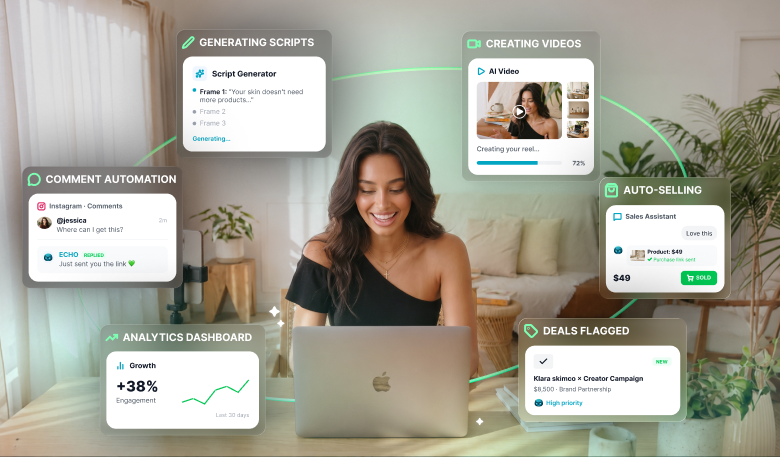
These managers watch inboxes to surface relevant partnerships or respond to key followers. They filter brand deals to see whether offers are fair or whether they need to follow up with a more lucrative option. They negotiate contracts to align compensation with a creator’s stated worth. They work hand in hand to understand their client’s voice and priorities when responding to a comment or DM, and more.
Keeping track of the day-to-day follow-ups and opportunities like these can easily fall through the cracks, which seemed to justify the manager’s role alone. Most importantly, the managers make sure the business side of being a creator doesn’t get in the way of what made the person such a popular creator in the first place.
However, AI agents are poised to make that functionality and manager infrastructure available to creators much earlier. As they evolve, agents could cover talent manager tasks but at a fraction of the cost and for creators of any size. By making the infrastructure of a manager’s role more accessible, creators can begin to define their own business support before they can even afford more traditional representation.
What to Do When a Deal Hits the DMs
Let’s say a startup brand reaches out with a partnership offer to a relatively successful 19-year-old creator on Instagram. Without a manager, that creator has to take time to vet the brand to see if they’re legitimate or not, and whether the offer benefits both parties. If it did seem like a good offer from a genuine brand, they were still stuck with reading through complex contract legalese of payment terms, liability and other restrictions.
Beyond that, they have to weigh whether the partnership made business sense for their audience. The creator would have to sift through comments and DMs to see what their followers actually respond to, or which followers were genuinely engaged enough to guide those decisions and demand their attention.
This kind of frustrating and mundane work usually gets pushed to the bottom of the creator to-do list. And the creator, fresh out of sophomore year of college, still doesn’t necessarily have the experience or context to know whether they’re missing something for the brand or the audience. An AI agent could change that.
Representation Reimagined
While the creator is busy racking up views, an AI agent could continuously learn a creator’s voice and audience, surfacing the moments that could be missed altogether. The creator won’t miss the signal that someone is ready to buy or engage, and they also won’t miss the opportunity to shoot the video for their latest viral sensation.
This way, the business infrastructure becomes something a creator can access while they’re building their audience and brand recognition, instead of something they gain after they’ve quote-unquote “made it.” Most creators will never have a traditional talent manager, but they can now access those capabilities through AI at a scale that wasn’t practical before.
None of this makes human-to-human representation obsolete. Some creator careers will inevitably depend on a manager’s strategic guidance and industry relationships to make decisions alongside them. Sometimes it’s impossible to reach the next level without some sort of gatekeeper. But the extent of those responsibilities goes well beyond the effective autonomous work an agent can handle.
For now, that still means if AI democratizes access to business infrastructure for creators at any stage of their journey, the value of a talent manager has to change. As agents take on more of the work that once defined talent managers, it raises the bar for what representation needs to provide. They will need to bring even more value through areas like extra benefits and high-stakes judgment. Think: strategies that will continue to elevate the creator and open doors in the long term, or even helping them expand into new formats that don’t exist yet.
Changing the Access Equation
The creator economy has made building a loyal audience easier and more open than ever. The next step is making the infrastructure for turning that audience into a business just as accessible.
AI agents have broken down the idea that access to business opportunities should depend on scale. That is the biggest impact AI will have on social media talent management. It won’t eliminate the gatekeepers, but it will fundamentally change who needs them to build a creator business.