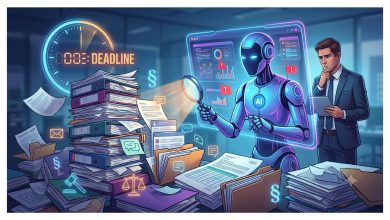
The concept of AI superintelligence, where technology becomes capable of outperforming humans across most or all cognitive tasks, is rapidly becoming less sci-fi and closer to a real-world capability as every month goes by.
The topic is already a source of fierce debate, often framed in existential terms. Earlier this year, it even reached the House of Lords, with the Parliamentary Under-Secretary of State in the Department of Business and Trade opening the debate by stating, “Some experts believe that AI could exceed human capabilities by 2030, which would significantly impact the UK’s economy and national security.”
Contained in that one sentence is a prediction of enormous significance. Indeed, in certain domains, such as processing and analysing large volumes of information, AI already outperforms humans by a considerable margin. Whether 2030 turns out to be correct or not, many organisations face a much more immediate challenge: whether they are ready to take advantage of the AI technologies available today, let alone systems that are far more advanced.
Believe the hype?
The industry narrative suggests organisations are moving beyond the initial excitement surrounding generative AI and taking a more pragmatic view of what it can realistically deliver. At the same time, AI agents continue to generate enormous interest as businesses explore how autonomous systems could be applied in practice.
However, very few, if any, organisations are in a position to plan for the emergence of superintelligence. One of the biggest factors limiting further progress is the amount of compute power available. Building increasingly capable AI models demands vast processing capacity, which has triggered an unprecedented wave of investment in hyperscale data centres and supporting infrastructure around the world.
That investment also highlights the practical realities of scaling AI. Advanced data centres require enormous amounts of electricity, while many rely on significant volumes of water for cooling. In some regions, proposed developments have already prompted difficult planning decisions as authorities weigh the economic benefits of AI infrastructure against environmental impact and pressure on local resources. These are not constraints that can be solved simply by developing more capable AI models.
Granted, quantum computing has the potential to change that equation by providing vastly greater processing capabilities. While this is expected to address some of the technical barriers holding back more advanced forms of AI, at the moment it remains highly specialised and prohibitively expensive. Although progress is continuing, including recent Presidential Executive Orders that aim to accelerate development, widespread commercial viability is still years away.
Artificial intelligence but real risk
But as we also all know, AI moves extremely fast. It’s not even four years since ChatGPT was introduced to the world, and progress since then has been remarkable. The fundamental challenge is that many businesses are nowhere near optimising their current AI integration strategies. The emotional reaction to what AI might be able to do doesn’t yet align with reality.
For instance, many businesses still lack a clear understanding of what information AI systems can or could access, how it is being used and where it is ultimately shared. The issue is often not a lack of AI capability, but a lack of visibility and control, particularly as organisations are looking to apply AI at scale.
This directly equates to risk. As AI models consume increasing volumes of data, uncertainty around ownership and privacy becomes harder to manage. Despite the excitement surrounding AI, establishing the right foundations remains an unglamorous task. Measures such as data loss prevention and information classification become increasingly important as AI adoption expands, alongside stronger controls around sensitive information.
Then there are the problems associated with shadow AI, which not only creates additional complexity but also typically operates without oversight of how corporate information is used.
For many businesses, these foundational issues have historically been difficult to address at scale and rarely deliver immediate commercial benefits. As a result, data readiness has often been treated as a lower priority than more visible AI initiatives. But this is a mistake when those initiatives are unlikely to succeed without the groundwork being laid.
Some organisations also still have various other governance issues to address. Questions about which use cases should be entrusted to AI and where human oversight should remain essential are likely to become increasingly important as systems become more capable. It’s for these and other reasons, such as the risks associated with AI hallucinations, that human-in-the-loop approaches are likely to remain critical, particularly in environments where decisions have significant consequences.
So where does this leave us? The biggest AI-inspired divide may not end up sitting between humans and machines, but between organisations that successfully integrate AI and those that struggle to move beyond experimentation. By the time genuine superintelligence becomes a reality, many markets will already have been reshaped by years of incremental AI-driven change. This would mean that the businesses best positioned for a superintelligent future are unlikely to be those trying to predict when it arrives, but those putting in the effort now to ensure they are ready when it does.