Instagram Stories are useful for more than casual viewing. Brands, creators, marketers, journalists, and researchers often use them to follow short-lived campaigns, promotions, product launches, announcements, and content trends that may never appear on a profile’s permanent feed.
Because most Stories disappear after 24 hours unless they are saved as Highlights, reviewing them at the right time matters. An anonymous story viewer can help users monitor supported public Story content through a browser without relying on their personal Instagram account for every research session.
This guide focuses on using anonymous Story viewing for public-content research in 2026, including competitor monitoring, trend analysis, campaign observation, and responsible archiving.
Why Use an Anonymous Story Viewer for Research?
Instagram feeds usually show polished, permanent content. Stories often reveal more immediate activity: limited-time offers, behind-the-scenes updates, event coverage, product teasers, creator partnerships, polls, questions, and calls to action.
For researchers and marketers, this makes Stories valuable because they can show how an account communicates from day to day rather than only what it chooses to keep permanently.
An anonymous Story viewer provides a separate browser-based way to look at supported public Stories without opening each one through your personal Instagram profile.
For example, Grabfy’s anonymous Instagram story viewer can be used to browse supported public Story content from a browser, making it useful when you are reviewing campaigns, creative formats, or public account activity as part of a research workflow.
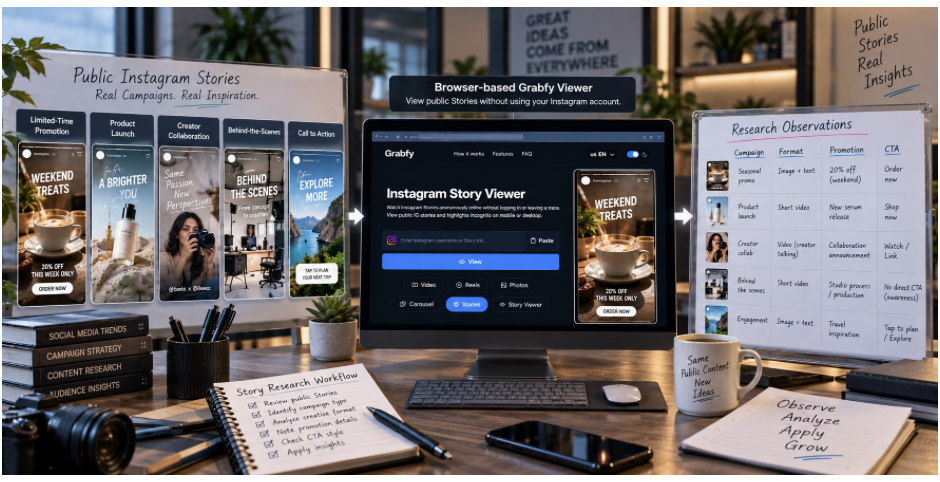
The important boundary remains the same: these tools are designed for publicly accessible content. They should not be expected to unlock private profiles, Close Friends Stories, deleted content, or other restricted information.
What Can You Learn from Public Instagram Stories?
Story research becomes more useful when you focus on patterns instead of isolated posts.
A competitor’s main feed may communicate its overall brand identity, while Stories can reveal how it promotes individual products, how frequently discounts appear, when creators or customers are featured, and which calls to action are used after different types of content.
You can also observe how brands structure Story sequences. Some accounts may introduce a problem, follow with a product demonstration, add customer feedback, and finish with a link or promotional message.
Over time, these patterns can help you understand how different businesses use short-form content to guide attention and encourage action.
How an Anonymous Story Viewer Fits into a Research Workflow
An anonymous Instagram Story viewer generally works by presenting supported content from public accounts through a third-party website.
Instead of opening each Story while signed in to your personal Instagram account, you search for the public profile through the viewer and browse the available Story content there.
This can be convenient when researching several public accounts regularly. It reduces the need to switch between personal and professional Instagram profiles or use a personal account for routine competitor observation.
However, anonymous Story viewing should not be confused with bypassing access controls. Public content and restricted content are fundamentally different, and legitimate research should respect those boundaries.
Using Grabfy for Public Story Research
Grabfy.com can serve as a practical option when your research involves more than one type of public Instagram content.
Start by opening the relevant viewer in a current browser and entering the requested information for the public account you want to examine. If supported Stories are currently available, you can review them through the browser-based interface.
The broader benefit is that Instagram research rarely involves Stories alone. A campaign may also include Reels, photos, videos, or carousel posts. Access to multiple supported public formats within the same broader service can make research more convenient when you want to compare how one brand communicates across different types of content.
This makes Grabfy relevant for users building a repeatable public-content research process rather than simply checking one Story occasionally.
What to Track When Monitoring Public Stories
A good research system should focus on useful signals rather than saving everything you see.
Posting Frequency
Track how often an account publishes Stories and whether activity increases around launches, promotions, events, or specific days of the week.
Story Formats
Notice whether the account relies mostly on product images, short videos, talking-head clips, screenshots, polls, questions, reposts, or user-generated content.
Calls to Action
Watch for repeated instructions such as visiting a link, sending a message, checking a product page, joining an event, or viewing another post.
Promotional Patterns
Pay attention to how often discounts appear, whether urgency is used, and how brands introduce sales or limited-time offers.
Creator and Customer Features
Stories can also reveal how frequently brands feature creators, customers, testimonials, reviews, or community content.
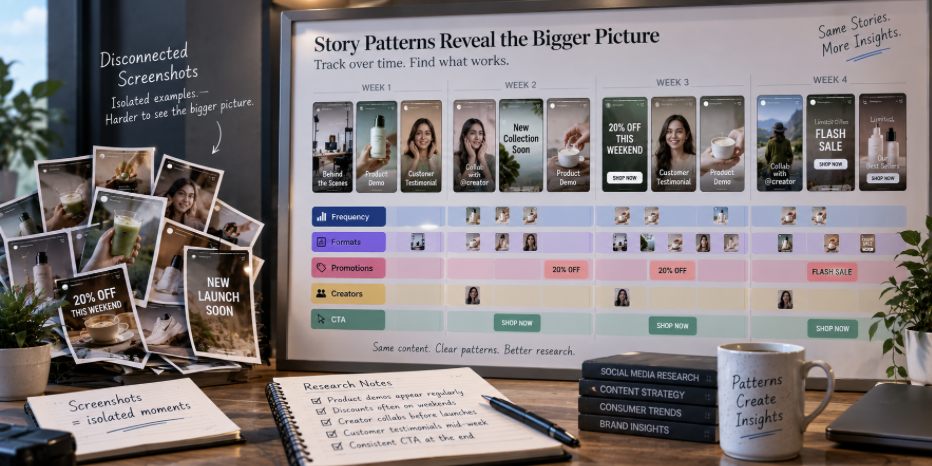
Tracking these elements over time gives you more useful insight than simply collecting individual screenshots.
Story Viewing vs. Story Archiving
Viewing a Story and saving a Story are different activities.
Viewing allows you to study currently available public content. Saving creates a local copy that may be useful for authorized research, documentation, or reference.
Because Stories are temporary, legitimate research sometimes requires recording information before it disappears. For example, a researcher documenting a public campaign may need to preserve an example of a promotion that lasted only a few hours.
However, downloading public content does not transfer ownership or automatically grant permission to reuse it. A saved Story should not be treated as material you are automatically free to repost, edit, sell, or use commercially.
When possible, record observations in your own notes rather than building an unnecessary archive of other people’s media.
How to Organize Story Research
A simple system makes public Story research easier to compare over time.
You can organize notes by account, campaign, date, content format, or topic. Instead of saving every Story, record what matters: the main message, format used, call to action, promotion type, and anything unusual about the sequence.
For competitor research, a weekly summary can be more useful than hundreds of disconnected Story files.
You might record that a brand posted product demonstrations three times in one week, used customer testimonials twice, promoted a discount at the weekend, and consistently ended Story sequences with the same type of call to action.
That information is easier to analyze than a folder full of random screenshots and makes it easier to identify patterns across several weeks or campaigns.
Privacy and Security Considerations
An anonymous Story viewer intended for public content should not need your Instagram password, two-factor authentication code, recovery code, or email credentials.
Be cautious if a service asks for sensitive account information simply to display a public Story.
You should also be careful with websites that require unfamiliar browser extensions, APK files, configuration profiles, or executable programs when browser-based viewing should be sufficient.
Claims about unlocking private accounts or accessing Close Friends content should also be treated skeptically.
“Anonymous” in this context generally means your personal Instagram profile is not being used for the normal Story-viewing process. It should not be interpreted as a guarantee of complete internet anonymity or zero technical data collection.
Limits of Anonymous Story Research
Anonymous Story viewers have practical limits.
Private accounts remain restricted, and Close Friends Stories are intended only for the audience selected by the creator. Deleted or expired Stories may also become unavailable once they are no longer publicly accessible.
Third-party tools can also be affected by Instagram updates. Features that work today may change if Instagram modifies how public content is delivered.
An anonymous viewer also does not provide private analytics, hidden profile visitors, private messages, or other non-public account information.
These limitations are useful when evaluating a service. A tool that promises to bypass all of them is making claims that should be approached cautiously.
Ethical Use of Public Story Research
Public availability does not remove ethical or legal responsibilities.
Researching a brand’s Story strategy is different from copying its creative work. You can study patterns, timing, structure, presentation style, and calls to action without reproducing someone else’s exact content.
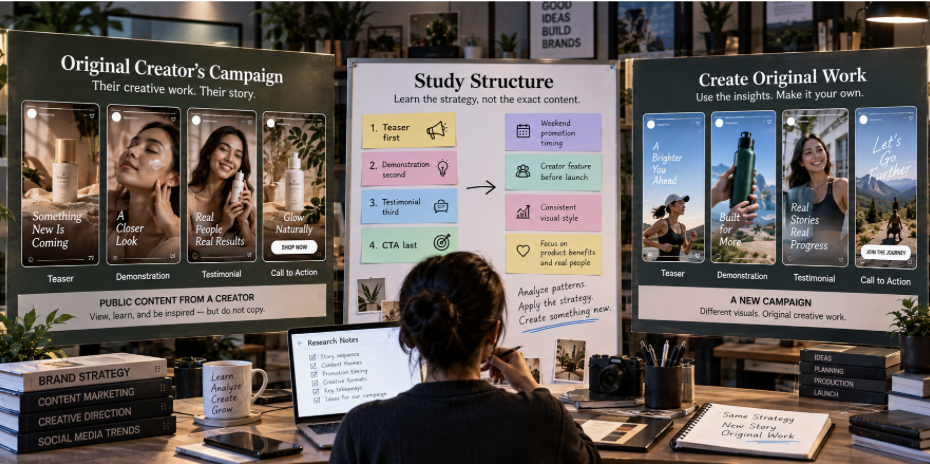
If you want to reuse a creator’s photo, video, graphic, music, or other original work, you may need permission or another valid basis for that use.
Anonymous viewing is most useful as a research convenience, not as a way to defeat another person’s privacy choices.
Final Thoughts
An anonymous story viewer can be particularly useful for marketers, researchers, creators, and journalists who need to monitor supported public Instagram Stories without relying on their personal profile for every research session.
The strongest use case is not simply viewing one Story anonymously, but building a more organized way to study temporary public content: campaign timing, Story formats, promotions, calls to action, creator collaborations, and recurring communication patterns.
Used responsibly, anonymous Story viewing can help turn short-lived Instagram Stories into useful research insights while still respecting privacy restrictions, access controls, and creators’ rights.