AI video generation is moving beyond the simple idea of entering a text prompt and receiving a short clip.
That workflow is still useful, especially when a creator is starting from a blank page. But increasingly, real video projects begin with more than words. A creator may already have a character image, product photography, a rough video, a camera reference, an audio track, or several visual assets that define what the final result should look and sound like.
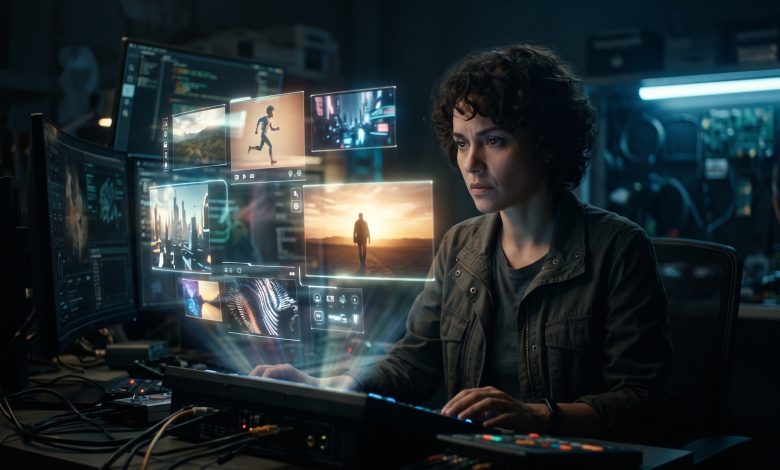
This shift is driving a broader change in multimodal AI video generation. Instead of asking a model to invent every part of a scene from a prompt, creators can increasingly combine text, images, video, audio, and references to give the model more context and more precise creative direction.
Recent video models illustrate this transition. Seedance 2.5, for example, supports multimodal reference inputs and longer single-generation clips, while MiniMax H3 is designed to understand unified contexts spanning text, images, video, and audio. Veo 3.1 also supports reference images to guide scenes, characters, or objects.
Why Text-Only Video Generation Has Limits
The earliest wave of AI video generation made the core interaction surprisingly simple:
Prompt → Video
A creator describes a scene such as “a cinematic product shot of a sports car driving through a rainy city at night,” and the model generates the footage.
This remains one of the most accessible ways to create video. It is particularly useful for brainstorming, concept development, and scenes where the creator does not have predefined visual assets.
The problem appears when the creator already knows what the video needs to contain.
A written prompt can describe a character, but it is not always enough to preserve that character’s exact appearance across multiple shots. It can describe a product, but small visual details may change from one generation to another. It can specify camera movement, but translating a precise visual reference into words can be difficult.
This is why the evolution of AI video generation is increasingly about control, not simply generation quality.
“Can the model generate a convincing video?”
“Can the model generate the video I actually intended?”
That distinction is driving the move toward multimodal inputs.
From Text to Image-to-Video
One of the most important steps in this evolution was the rise of image-to-video.
Instead of describing the entire visual world from scratch, creators can establish a starting image and ask the model to animate it.
Image + Prompt → Video
This seemingly small change solves an important part of the control problem. The creator can decide what the character looks like, what the product looks like, how the scene is composed, or what visual style should be preserved before motion is introduced.
This makes image to video AI particularly useful for workflows where the visual design already exists.
For example, an e-commerce team might already have an approved product image. A filmmaker may have a concept frame from a storyboard. A designer may have created a stylized illustration that needs to become an animated scene.
In each case, generating the image first gives the creator a visual anchor.
The model’s task becomes less about inventing the entire scene and more about interpreting how that scene should move.
This is an important distinction. Image-to-video does not replace text-to-video. Instead, the two workflows address different starting points.
When the idea exists primarily as a concept, text to video can be the fastest route.
When the visual identity already exists, image-to-video can provide much greater control over the starting composition.
Reference-Controlled Video Is the Next Step
The next stage is more ambitious.
Suppose one reference image is not enough.
A project might involve a specific character, a product, an environment, a second character, a motion reference, and an audio direction. The creator does not simply want to animate one image. They want the model to understand how multiple pieces of information relate to one another.
This is where reference-to-video and broader reference-controlled workflows become important.
Instead of:
Image + Prompt → Video
the workflow becomes something closer to:
References + Prompt → Video
The references can serve different purposes. One image can define a character. Another can establish a product. A video can communicate motion or camera language. An audio reference can influence the atmosphere or performance.
The prompt then becomes an instruction layer that tells the model how those materials should work together.
This is a fundamentally different creative interaction from prompt-only generation.
It is closer to directing a production.
From Consistency to Controllability
One of the biggest practical benefits is consistency.
AI-generated characters can drift. Products can change shape. Clothing can vary. Environments can lose important visual characteristics. These problems become increasingly obvious when several generated shots need to look like parts of the same production.
Reference-based generation attacks this problem by giving the model more concrete information about what should remain stable.
But references are not only about preserving identity. They can also communicate creative intent.
A motion reference can show how a subject should move. A visual reference can establish lighting or composition. Multiple images can define different elements that need to appear together.
That makes reference-controlled generation useful for more than character consistency. It can provide a mechanism for controlling composition, motion, style, and relationships between elements.
Multimodal Video Generation Is Becoming More Capable
This is where the broader concept of multimodal AI video generation becomes important.
The distinction between text-to-video, image-to-video, and reference-to-video is useful for understanding workflows, but the underlying models are increasingly capable of handling several modalities within the same system.
Seedance 2.5 is a clear example. ByteDance says the model can accept up to 30 images, 10 video clips, and 10 audio clips as reference material in one generation, alongside capabilities for longer-form storytelling and more precise editing.
MiniMax H3 takes a similar multimodal approach. MiniMax describes H3 as a general-purpose omni-modal generation model that understands unified contexts across text, images, video, and audio and can generate video with native stereo audio at up to 2K resolution.
Kling VIDEO 3.0 also expands beyond basic prompt-driven generation, adding native audio, multi-shot narratives, image-to-video, reference elements, and stronger subject consistency.
Veo 3.1 similarly emphasizes greater creative control and consistency, including reference images for guiding scenes, characters, and objects.
The exact implementation differs from model to model, but the direction is consistent: more modalities, more references, and more control over how those inputs influence the generated result.
The Model Matters, but the Workflow Matters Too
As the capabilities of video generation models converge, choosing a model is only part of the problem.
A creator may have access to several strong models, but the best choice can depend on the type of input available and the level of control required.
For example:
Starting with an idea: text-to-video may be the most efficient option.
Starting with a finished visual: image-to-video may make more sense.
Working with established characters or products: reference-controlled generation can be more appropriate.
Transforming existing footage: video-to-video may provide the most useful starting point.
The practical implication is that modern AI video creation is becoming less about finding one model that does everything and more about selecting the right workflow for a particular production task.
Platforms such as VioEvo, an AI video generation platform make this multi-workflow approach easier by bringing different generation capabilities and models into a unified creative environment.
Seedance 2.5 Shows Where the Industry Is Heading
The evolution of the Seedance family is a useful example of this broader trend.
Early text-to-video systems focused heavily on generating convincing motion from prompts. As the models evolved, the emphasis expanded toward multimodal inputs, longer narratives, audio-visual generation, reference control, and editing.
Seedance 2.5 takes that progression further. ByteDance highlights 30-second single-pass generation, multimodal references, improved continuity, and more precise audio and video editing.
This makes Seedance more than just a model name. It illustrates how the definition of AI video generation itself is changing.
The same broader movement can be seen across other current models, including Veo 3.1, Kling 3, and MiniMax H3. Their approaches differ, but they increasingly treat text, images, video, references, audio, consistency, and control as connected parts of the generation process rather than isolated features.
What This Means for Creators
The biggest change may not be that AI video models are producing more realistic footage.
It is that creators are gaining more ways to communicate intent.
A text prompt communicates an idea.
An image communicates appearance and composition.
A video communicates motion and timing.
An audio reference communicates sound, rhythm, or performance.
Multiple references can communicate how all of those elements should coexist.
That makes AI video generation increasingly resemble an interactive creative process rather than a one-shot generation tool.
Creators can establish a visual direction, generate a first result, identify what is wrong, add or change references, refine the instruction, and generate again. The process begins to look less like “prompt and hope” and more like an iterative production workflow.
This is particularly important for commercial applications. Advertising, e-commerce, product visualization, branded content, and narrative production often require specific visual elements to remain stable. A model that can understand and use those elements as references has a much more practical role in production.
The Future of AI Video May Be Multimodal by Default
Text-to-video is not disappearing. It remains one of the simplest ways to turn an idea into motion.
But it increasingly looks like only one component of a larger system.
The next generation of AI video creation is likely to combine text, images, video, audio, references, editing, and model-specific controls in a single workflow. Instead of asking which modality is better, creators will increasingly decide which combination of modalities best communicates the desired result.
That changes how AI video generators should be evaluated.
Generation quality still matters. But so do consistency, controllability, reference handling, editing, and the ability to move between different workflows without rebuilding a project from scratch.
The most capable AI video platforms may ultimately be those that make this complexity easier to manage: giving creators access to multiple models and modalities while keeping the creative process coherent.
The shift from text-to-video to multimodal, reference-controlled generation is therefore more than a feature upgrade. It represents a change in the way AI understands video creation itself.
The goal is no longer simply to generate a clip from a sentence.
It is to give creators enough control to turn an existing idea, visual language, and set of references into a finished piece of video.