

Not every AI company is a Trojan horse, but only transparency will build trust
By Egor Dubrovsky
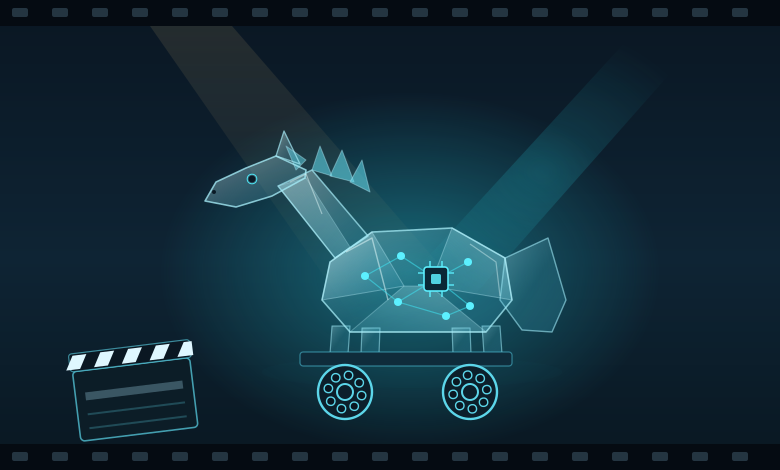
Picture Sam Altman, Dario Amodei, and Elon Musk crouched inside a wooden horse, waiting to jump out and reveal they’ve fooled us all. Only, the horse is made of glass, and everyone can already see exactly what their intentions are.
That’s legendary filmmaker Christopher Nolan’s take on artificial intelligence, and in many ways, he’s right to view the technology with skepticism, particularly coming from a creative industry like filmmaking. While Musk might claim his AI tool, Grok, is capable of creating a full-length, historically accurate version of The Odyssey, that claim is entirely fiction. The technology simply isn’t capable of producing the depth and emotion of genuine human storytelling and performance to keep users on the edge of their seats. And I say that as the CEO of an AI company.
Nolan’s epic fantasy, expected to cross $1 billion at the box office, owes its success to the creative humans who envisioned, acted, and produced it. However, AI did, and should, have a role to play.
The two types of AI tools
Nolan branded all AI the same, but I believe there are two types: the Trojan horse and the workhorse.
Trojan horse AI tries to pass as something it isn’t, and usually fails. It poses as human and leaves audiences to hunt for the subtle clues of inauthenticity, from buzzword-riddled dialogue that doesn’tsound like something a real person would say to background details that change or move unnaturally. This is the kind of AI that has spread across the internet, and people have, rightfully so, learned to distrust it.
However, that doesn’t represent all AI. Many tools are workhorses that take on the unglamorous parts of complex processes. In the film industry, these tools are already breaking down scripts, calculating budgets, analysing risks, and creating shooting schedules to get productions from script to the big screen. They work entirely behind the scenes, in the writers’ room and on the production floor, carrying out highly menial and time-consuming tasks with speed and accuracy that humans simply cannot match. Unlike the Trojan horse, these tools don’t have to hide what they are because they aren’t trying to fool their audience.
The pre-production assistant
AI should never be given a starring role on screen, but it can be (and already is) an invaluable extra.
Before founding Filmustage, I spent over a decade on Hollywood sets, working alongside some of the most talented people in the industry. It always struck me how filmmaking brought together all these brilliant minds, then routinely put them to work on dull, repetitive preproduction processes. Before shooting can begin, the script must be turned into shot lists, schedules, budget lists, call sheets, and more. It’s tedious work, mostly managed through shared Word and Excel documents, and occasionally even on paper. To put that workload into perspective, the production teams I’ve worked with have logged over 3.5 million hours on this kind of manual prep – work that software can now absorb.
It’s important to carry out these processes before a shoot begins. That way, you can catch problems when they’re quick and easy to fix, rather than once you’re on set and a simple scheduling clash or missed compliance issue can halt the production for days. Yet, nobody got into filmmaking because they wanted to comb through line items on a spreadsheet for weeks on end. That’s the kind of task that AI should, and is perfectly capable, of replacing.
Rather than using it to create repetitive scripts or generate unconvincing performances, the industry can deploy it to cut the hours of preproduction work that goes on behind the scenes, freeing up the human workforce to focus on the creative sides of the profession that they actually enjoy.
Transparency builds trust
The challenge, however, is convincing users that you aren’t an enemy in disguise. Early discourse around AI focused almost entirely on displacement: which roles would become obsolete, and how many jobs would disappear, so people assume that’s how the story will end. It’s something I ran into early on. Creatives could see the value it offered, yet resisted change due to the fear that it would eventually replace them. Beware of Greeks bearing gifts, after all.
It doesn’t help that the industry is a black box, with what goes on behind the curtain largely a mystery to its users. A tool might provide a useful output, but it offers no real insight into how it arrived at that conclusion or whether it can be trusted.
With so much skepticism surrounding the technology, the only way to build trust is by being entirely transparent about what your technology does, how it works, and your intentions. We overcame that reluctance the only way you really can – by building transparency into the product itself.
In practice, that means every output comes with insight into the real data sources used, along with any assumptions the model made along the way. Given a clear picture of how an output was created, users can check, question, and overrule. After all, AI should empower humans to make the best call, rather than replace them entirely. The same principle applies to data: a filmmaker’s scripts and assets should only ever serve their own project, and never train the model. Likewise, regular testing and reviews, carried out by independent auditors, strengthen that transparency and trust.
Not every AI company is a Trojan horse. Many are just workhorses – and the only way to prove it is to be honest about what’s inside from the very start.

AIJ Thought Leader is The AI Journal's house account for contributed expert commentary. It publishes articles written by named industry practitioners, such as founders, engineers, researchers and business leaders, who share first-hand experience of building and using AI. Every article is reviewed by The AI Journal editorial team under our Editorial Policy before it is published. Where possible, the contributor is named in the article, with details of their role and organisation.
More from AIJ Thought Leader
See all AI & Technology
AI could move healthcare from reacting to disease to preventing it
 AI & Technology
The Need for Hybrid Version Control: Ensuring Stability as Human–AI Systems Evolve
 AI & Technology
Competitor Ads Analysis in the AI Era: How DTC Brands Read Their Rivals’ Ads
 AI & Technology
Are You Ready for AI or is it FOMO?
Recommended for you
More stories AI Business Strategy
How Recognition Patterns Can Warn You About Flight Risks Early and Encourage Managers to Use New AI HR Tools
 AI Business Strategy
11 AdTech CEOs We’re Looking At
 AI Business Strategy
The EU AI Act is forcing businesses to get serious about AI accountability
 AI Business Strategy
How MYbank Is Rebuilding Itself Around AI Agents to Serve 42 Million Small-Business Owners
 AI Business Strategy
Helping the Next Generation of Investors Understand Market Information
 AI Business Strategy