There’s something quietly ironic happening in software development right now. The tools that promised to replace experienced engineers are, in many cases, creating demand for exactly that kind of expertise – just under a different name.
We called it during our team’s year-end review: the vibe code cleanup specialist. It sounds informal, but in reality, it isn’t. It’s a direct response to one of the more serious structural problems the industry has walked itself into.
First, the numbers
Microsoft and Google CEOs have both claimed that around a quarter of their companies’ code is now AI-generated. Stack Overflow’s 2025 Developer Survey puts the broader adoption in context: 65% of developers are now using AI coding tools at least weekly. A quarter of Y Combinator’s Winter 2025 batch reported codebases that were 95% AI-generated. The speed gains are real – I’m not disputing that. But speed without accountability creates a particular kind of technical debt, and the data on quality is uncomfortable.
The consequences are already visible. According to the OECD’s AI Incidents and Hazard Monitor, monthly media-reported AI-related incidents have grown tenfold since 2020 – from around 50 per month to nearly 500 by January 2026, with the rate doubling in the past twelve months alone. Not all of these incidents involve code, but the trend reflects a broader pattern: AI output is being deployed faster than it is being verified.
This isn’t a model quality problem that will be solved in the next release. It’s a structural problem: tools optimized to answer the question “does it work?” rather than “is it safe, maintainable, and auditable?”
Why can’t regulated industries absorb this
In healthcare, banking, and other compliance-heavy environments, the margin for error isn’t just low – it’s contractual, regulatory, and in some cases clinical. A logic flaw in a diagnostic workflow or a misconfigured access control in a clinical data platform doesn’t just create technical debt. It can delay a trial, trigger an audit, or put patient data at risk.
We work regularly in these environments, and the pattern we see is consistent: teams adopt AI code generation tools to move faster, and they do move faster, until something breaks in a way the AI didn’t anticipate and can’t trace. The fix doesn’t come from re-prompting, but from someone who understands the system, the regulatory context, and the code well enough to find what went wrong and why.
That person is the vibe code cleanup specialist.
What the role actually looks like
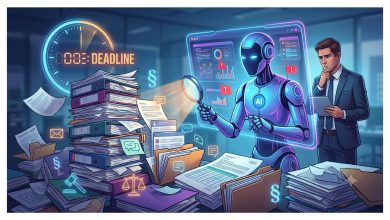
These are experienced engineers who work downstream of AI-assisted development pipelines. Their job is not to rewrite everything the AI produces. It’s to identify what the AI got subtly wrong: logic errors, security misconfigurations, dependency issues, control flow problems that compile and pass basic tests but fail under real-world conditions or regulatory scrutiny.
What makes this hard (and what makes it a genuinely senior role) is that these engineers need to hold two things in tension simultaneously. They need to understand what the AI was trying to do (which requires reading intent from generated code, not just syntax) and what the system actually requires (for that, you need deep domain knowledge, not just engineering skill).
In practice, this means understanding compliance frameworks, knowing which errors are acceptable technical debt and which are business-critical, and being able to triage at speed.
This isn’t about anti-AI sentiment
I want to be precise here, because this topic tends to attract more heat than light. Using AI tools thoughtfully in development makes teams faster and increases the table stakes. The engineers I respect most are integrating these tools well. The issue isn’t the tools but the assumption that generating code is equivalent to validating it.
What the industry is discovering is that faster output and more reliable output are not the same thing. As MIT Technology Review noted in its December 2025 investigation, the productivity gains from AI coding tools are real in some contexts and largely illusory in others, and the difference almost always comes down to how much human judgment is applied to what the AI produces.
What it has produced is a gap between generation and accountability and that gap is where the cleanup specialist works.
Where this goes from here
My expectation is that demand for this role (whatever it ends up being called) will grow substantially this year, particularly in regulated sectors. The vibe coding tools themselves will improve, but the systems they’re being used to build are also becoming more complex, more interconnected, and more compliance-sensitive. Those two curves don’t converge neatly.
What I’d encourage engineering leaders to do is resist the framing that this is a transitional problem – something to manage until the next model release makes it irrelevant. It isn’t. The kind of judgment required to validate AI-generated code in high-stakes environments is the same kind of judgment it has always taken to build good software in those environments. AI changed who generates the first draft. It hasn’t changed who’s responsible for what ships.
The engineers who understand that (and can work effectively in that role) are going to be in very high demand.