Artificial intelligence is becoming an increasingly valuable tool across healthcare, with half of U.S. organizations implementing generative AI, helping providers process information more efficiently, identify patterns, and support clinical decision-making. Dentistry is no exception.
One area where AI-assisted technology is making a meaningful impact is occlusion, or the way a patient’s teeth come together when they bite, chew, or move their jaw. Bite alignment influences comfort, function, restoration, longevity, implant outcomes and complications, muscle activity levels, and overall oral health. Yet despite its importance, bite analysis has traditionally relied on visual assessments, patient feedback or “feel”, and outdated methods like articulating paper, which identifies contact point locations but cannot measure contact force or timing.
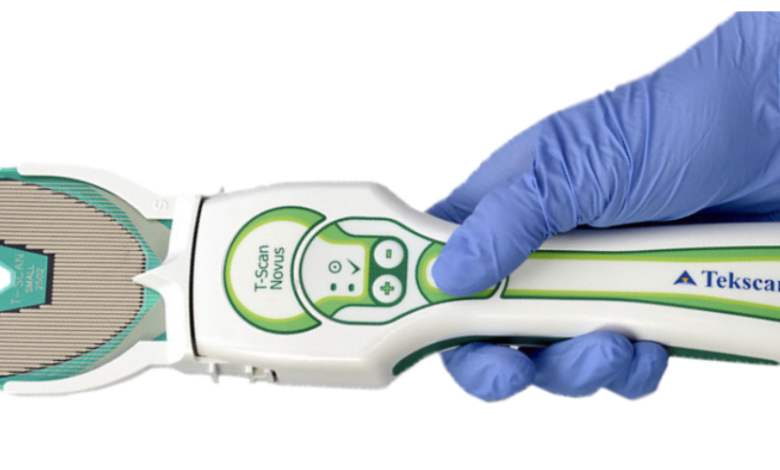
Digital occlusal analysis, including the T-Scan system, demonstrates how AI-assisted technology can provide clinicians with objective data while reinforcing, not replacing, clinical expertise.
Understanding the Hidden Complexity of a Patient’s Bite
A patient’s bite is dynamic. As the jaw moves, the timing and force of tooth contact constantly change.
Two teeth may appear to contact evenly, while one is actually absorbing significantly more force. Likewise, a patient may experience muscle tension, headaches, or jaw discomfort even though traditional examination methods reveal little. Conventional bite-marking tools show where teeth contact but not how much force is applied or when those contacts occur.
Digital occlusal analysis changes that by allowing clinicians to evaluate the bite as a sequence of measurable events rather than a single static moment.
How AI-Assisted Technology Improves Bite Analysis
The greatest value of AI in dentistry is not replacing clinical judgment but providing more objective bite function information.
With T-Scan, clinicians can measure how bite force is distributed across the teeth, identify overloaded areas, and evaluate the timing of tooth contacts throughout the bite cycle. This allows providers to recognize patterns that may not be apparent through visual examination alone.
For example, if one tooth consistently absorbs an unusually high percentage of bite force or contacts earlier than surrounding teeth, the software can identify those imbalances. The clinician then determines whether the finding is clinically significant and what treatment, if any, is appropriate.
A Practical Example: Protecting Dental Implants
Dental implants lack the natural shock-absorbing ligament that surrounds natural teeth, making excessive or poorly timed bite forces particularly concerning. Because implants are rigidly anchored to bone and lack the natural shock-absorbing ligament found around teeth, excessive bite forces are transferred more directly to the implant, increasing the risk of complications.
Within T-Scan, clinicians can evaluate implant force levels and determine whether an implant is overloaded or contacting too early during the bite cycle. The software’s “Implant Warning” feature alerts providers to excessive forces so they can make precise adjustments that help protect against bone loss, component fracture, and other force-related complications.
This illustrates responsible AI in healthcare. The technology helps identify potential risks, but it is the clinician who interprets the findings, considers the patient’s overall condition, and determines the appropriate course of treatment.
Measuring Disclusion Time
Another important application of digital occlusal analysis is measuring the disclusion time, or how long the back teeth remain in contact during chewing as the jaw moves side to side or forward.
Prolonged contact during these movements contributes to muscle strain, discomfort, and functional issues. AI-assisted software calculates the disclusion time and grades it numerically for being “healthy physiologic,” “slightly elongated” requiring observation, or “prolonged” requiring intervention. This determination helps define healthy vs. unhealthy chewing movements with greater precision, but the clinician must still verify the results.
For example, if a patient slightly opens their bite before moving their jaw, the software may initially misidentify the beginning of the chewing movement. A trained clinician can recognize these nuances and correct them when necessary, ensuring the data accurately reflects the patient’s function.
Why Objective Data Matters
One of the greatest advantages of digital occlusal analysis is its ability to provide measurable, objective information.
Patients often know something feels wrong before clinicians can easily identify the cause. They may describe uneven pressure, discomfort after new restorative work is installed, difficulty chewing, or recurring muscle tension. Objective measurements of bite force, timing, and chewing movements help validate those concerns and support more informed treatment planning.
T-Scan data also improves communication by allowing providers to visually demonstrate what is happening during a patient’s bite, making treatment recommendations easier for patients to understand and monitor over time.
AI Supports Clinical Judgment—It Doesn’t Replace It
As AI capabilities continue to evolve, one principle remains constant: technology cannot replace clinical expertise.
AI excels at processing data, recognizing patterns, and presenting objective measurements. What it cannot do is fully understand the patient’s medical history, symptoms, treatment goals, or clinical presentation. It cannot perform a hands-on examination, consider patient preferences, apply professional judgment developed through years of education and experience, nor can AI adjust one’s bite accurately.
Treatment decisions in dentistry require integrating many factors, including tooth structure, restorations, implants, jaw function, muscle symptoms, medical history, and patient expectations. AI contributes valuable information to that process, but with respect to bite function, it should never function as a standalone diagnostic tool.
This is also why responsible implementation matters. The goal of AI should be to provide clinicians with better information, not to remove them from the decision-making process.
As digital technologies continue to evolve, the most meaningful innovations will be those that strengthen the partnership between technology and clinicians. When objective data is combined with clinical expertise, providers are better equipped to deliver more precise diagnoses, personalized treatment plans, and provide therapeutic improved patient outcomes.
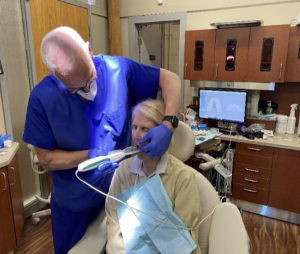
Author Bio: Dr. Robert B. Kerstein is a nationally recognized prosthodontist, educator, and researcher with more than 40 years of experience studying occlusion, temporomandibular disorders, and restorative dentistry. After earning his D.M.D. and Prosthodontic certificate from Tufts University School of Dental Medicine, he served as a clinical professor for more than a decade. He has published extensively in peer-reviewed dental journals and edited nine research volumes on occlusion and bite analysis. His work has focused on advancing objective approaches to occlusal evaluation and improving the understanding of how bite function influences restorative outcomes, patient comfort, and long-term oral health.