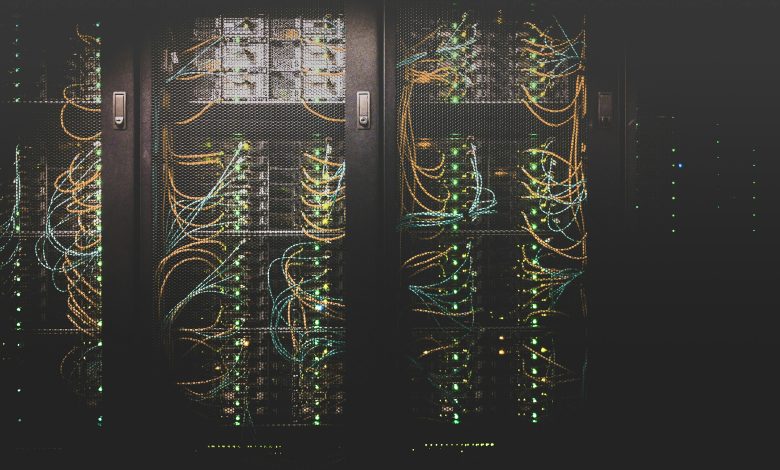
Every streamed film, AI prompt, online purchase, and cloud-stored photo depends on a data center. Often out of sight, these facilities have quietly become critical infrastructure, the physical backbone of the digital economy.
Yet their growing importance comes with a clear challenge. Digitalization is accelerating electricity demand at precisely the moment when governments and businesses are working to decarbonize power systems and improve efficiency.
As demand rises, how do we support both digitalization and electrification without compromising the energy transition?
Electricity demand at speed and scale
The scale of the shift is striking. According to the International Energy Agency, data centers accounted for approximately 1.5% of global electricity demand in 2024, a figure expected to approach 3% by 2030. Demand has been growing at double-digit rates, driven in large part by the rapid expansion of AI and cloud computing.
At the level of individual facilities, the numbers are equally significant. A single hyperscale AI data center can exceed 100 MW of demand. This is roughly equivalent to powering 100,000 homes.
This growth has system-wide implications. Across Europe, policymakers are seeking to improve energy efficiency and moderate overall consumption. At the same time, the rapid build-out of data centers risks placing additional strain on already constrained grid infrastructure.
Public concern is also becoming more prominent. Questions are being raised about potential upward pressure on electricity prices and the local impacts of large-scale facilities, particularly regarding water use for cooling.
Combined, these dynamics point to a structural challenge, one that cannot be addressed through incremental change alone, but instead requires coordinated planning across energy, infrastructure and industrial policy.
How we power data centers matters
The way data centers are powered will play a defining role in shaping future emissions trajectories and the evolution of the energy mix.
In the US, new gas-fired capacity is being developed to meet rising demand, with a portion of that capacity intended to serve data centers directly. This underscores the urgency of ensuring a reliable power supply amid rapid growth.
At the same time, a different trend is gathering pace. Many hyperscale technology companies have set ambitious decarbonization targets and are turning to long-term renewable power purchase agreements (PPAs) to meet them.
Recent large-scale solar PPAs in the United States illustrate this trend. Agreements involving companies such as TotalEnergies and Google demonstrate that major technology players are willing to underwrite significant volumes of new clean generation capacity to support their operations. These choices matter as they will determine the carbon impact of the digital economy and the pace and direction of broader energy system transformation.
Renewables provide a smart path forward
Renewable energy offers a pathway to reconcile the twin imperatives of digital growth and decarbonization.
Speed is a critical factor, and large-scale wind and solar projects can typically be deployed within two to three years, far faster than most conventional generation technologies. For example, deploying a large-scale gas-fired power station generally takes between 3 and 7 years from initial planning to full operational status. The pace at which variable renewables can be built aligns well with the timelines associated with new data center developments, particularly in the fast-moving AI sector.
Emissions are equally important. Renewable generation supports both corporate net-zero commitments and national climate targets. In a context where long-lived assets shape emissions trajectories for years to come, this is a decisive advantage. It also helps to future-proof energy systems against tightening regulations and evolving stakeholder expectations.
There are also important system-level benefits. Co-location models, pairing data centers with renewable assets, can reduce pressure on the grid by aligning supply and demand more closely. Concepts such as “Green Energy Parks” are emerging, offering integrated solutions that combine generation, storage, and large-scale consumption in a single location.Alongside this, upgrading and repurposing existing thermal assets can play a complementary role, helping to maintain system stability and security while the share of renewables continues to grow.
Policy frameworks can reinforce these trends. Ireland’s approach, for example, has linked new data center connections to a high share of additional renewable supply, demonstratinghow targeted measures can support digital expansion and clean energy objectives.
The environmental, economic, and strategic case for prioritizing renewables is clear.
Enabling renewable solutions
Despite progress, further action is needed to ensure that the growth of data centers strengthens rather than strains energy systems.
Grid infrastructure will be central as transmission and distribution networks must expand and modernize in parallel with rising demand. In many regions, connection queues have become a bottleneck, delaying both new generation and large-scale consumers. Streamlining these processes will be essential.
At the same time, digital innovation offers part of the solution. The same AI technologies driving demand can also help optimize energy systems.
Research from the think tank Ember highlights several promising applications, including short-term renewable forecasting, real-time grid optimization, predictive maintenance, and more efficient use of transmission capacity. If deployed effectively, these tools could reduce system costs and emissions, helping to offset the additional demand created by data centers themselves and, in effect, allowing AI to help offset the additional power consumption it creates. In this sense, AI has the potential to become both a challenge and an enabler of the energy transition.
Making the right decisions today for the future
Data centers represent one of the first major demand shocks of the AI era. Their expansion is reshaping electricity systems, creating both pressure points and opportunities.
The decisions made today regarding siting, grid integration, and, above all, energy sourcing, will have long-lasting consequences. They will determine whether the growth of the digital economy accelerates or complicates the transition to a low-carbon future.
Renewable energy offers a clear path forward as a catalyst that can support rapid demand growth while advancing decarbonization goals.
The task for energy providers, policymakers, and technology companies alike is to align these trajectories. Done well, the infrastructure powering the digital age can also help power the transition to a more sustainable one.