How context-aware, AI-generated user interfaces could reshape computing—and transform work, finance, scientific research, healthcare, education, entertainment, defense, all other industries and everyday life
Software Still Forces Humans to Think Like Machines
Modern software is vastly more capable than the programs of twenty years ago, but its basic relationship with the user has barely changed. A developer decides in advance which screens, menus, controls, and workflows will exist. The user must learn that structure and translate a real-world goal into the sequence of actions the application expects.
This arrangement is a historical limitation created by the cost of designing, programming, testing, and maintaining every interaction path. Artificial intelligence creates the possibility of reversing it. Rather than forcing a person to navigate a predefined application, an AI-driven generative user interface, or GenUI, can interpret intent, understand the surrounding situation, and construct the interface and permitted functions required for that moment.
Meaning First, Interface Second
The architecture explored in our provisional patent does not treat GenUI as a language model drawing attractive screens. It begins with a structured representation of meaning. A Contextual Semantic Model, or CSM, identifies relevant entities, attributes, roles, relationships, environmental conditions, and potential actions, referred to as affordances.
An entity may be a person, machine, document, location, account, medical measurement, or virtual object. Its meaning can change with context. The same person may be understood as a patient, technician, supervisor, customer, or unauthorized visitor, and each role carries different information rights and permitted actions.
From that semantic representation, the system constructs a User Interface Execution Model, or UIXM. The UIXM specifies what should appear, how components are bound to data and functions, which conditions must be satisfied, and which policy gates control execution. The visible interface is therefore an output of contextual reasoning rather than the starting point of application design.
From Generated Screens to Generated Capability
Many existing AI tools can generate a web page or write front-end code from a prompt. That accelerates conventional development, but the result is still largely a static artifact.
A more advanced GenUI system operates continuously. It can revise the interface when the user’s objective changes, new data arrives, the environment changes, or the system discovers a new relationship or available capability. Through Just-in-Time GenUI, the active interface can be regenerated or extended without restarting the application or waiting for a conventional software release.
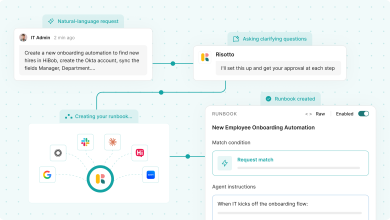
The architecture also contemplates natural-language creation of controlled functions. A person could describe a desired behavior, and the system could translate it into a typed, sandboxed, policy-governed function. That function would be registered as a new affordance and exposed through an appropriate control. Users would not merely ask software for information; they could describe what they want the software to become capable of doing.
Why This Could Be Revolutionary
The graphical user interface made computers accessible by replacing commands with visual objects. GenUI could produce a comparable transition by replacing fixed applications with intent-driven computational environments.
Today, software products are organized around application boundaries. Tomorrow, the organizing principle may be the user’s objective. A generated working environment could temporarily assemble data, controls, automation, communications, and visualization from multiple systems, then transform when the task changes.
This would change more than navigation. Much of the cost of enterprise technology comes from converting business requirements into screens, workflows, integrations, and later modifications. When carefully constrained AI can generate part of that operational layer at runtime, customization that once required a project team may become an ordinary feature of using the system.
Enterprise Operations
Enterprise workers routinely cross several applications to complete one process. A project manager may consult a planning tool, financial system, email, ticketing platform, document repository, and dashboard before making one decision.
A GenUI system could construct a single decision environment around the current issue. It might identify a delayed milestone, display dependencies, retrieve the governing policy, show the financial effect, recommend available responses, and expose only the actions the user is authorized to take.
The likely effect is fewer screens, less training, faster onboarding, and reduced dependence on application-specific expertise. Databases and services would remain, but users would experience them through interfaces organized around work rather than vendor product boundaries.
Manufacturing and Field Service
In a factory, warehouse, utility site, or repair environment, the interface can be tied directly to physical reality. Computer vision and sensor data can identify equipment, components, hazards, tools, and personnel. The semantic model can determine what each object is, how it relates to the task, and which actions are permitted.
A technician looking at a machine might see the next diagnostic step, live sensor readings, service history, and a control for requesting a specialist. When a fault is detected, the interface could reorganize immediately around the failure.
The deeper effect is the conversion of the physical environment itself into an interactive application. Machines, locations, and objects become contextual interface elements whose available functions are generated from their identity, condition, and relationship to the user.
Healthcare and Education
Healthcare could benefit from interfaces that change according to role, urgency, patient condition, and cognitive burden. A physician, nurse, technician, patient, and caregiver should not see identical presentations of the same record. A system could generate a concise emergency view, a longitudinal diagnostic view, or a simplified medication interface while restricting sensitive information according to role and consent.
Education could similarly move beyond substantially identical screens and sequences for every learner. A difficult concept might be represented as a diagram for one student, a Socratic dialogue for another, and practical exercises for a third. The interface could reduce complexity when the learner is overloaded and introduce deeper tools as mastery improves.
In both fields, GenUI could replace a single standardized presentation with a governed environment adapted to the person and moment. It must, however, distinguish validated facts from inference and preserve human authority over consequential decisions.
Accessibility as Native Adaptation
Accessibility is often added after the primary interface has already been designed. A semantic GenUI architecture could make accessibility part of generation itself.
The same task could be expressed through larger visual components, simplified language, speech, haptic cues, gaze interaction, reduced animation, alternate contrast, or a different control sequence. The interface would not merely resize; it could reorganize its logic around the user’s abilities and immediate conditions.
This could move accessibility from a collection of exceptions to a basic property of software: the system generates an appropriate interface for each person rather than treating one fixed design as normal.
Defense, Emergency Response, and Wearables
Military and emergency environments contain too much information and too little time. A GenUI system could fuse sensing, operational data, policy, and mission intent into a continuously updated semantic model, then generate a role-specific interface for a commander, medic, operator, or technician.
Wearable displays are a natural home for this technology. Smart glasses, AR headsets, and future smart contact-lens displays cannot reproduce a desktop interface without overwhelming the user. The system must decide what deserves attention, where it should appear, how long it should remain, and whether voice, gaze, gesture, touch, or automation is appropriate.
On such devices, the interface becomes spatial and situational. Digital controls can be anchored to physical or virtual entities, while persistent status elements remain head-locked or screen-locked. Done correctly, this reduces cognitive load. Done poorly, it can distract the user or create false confidence.
Consumer Computing and the Decline of the App
In consumer technology, GenUI could change how people shop, communicate, travel, manage finances, consume media, and control connected devices. A user might state a goal—plan a trip within a budget or organize family logistics—and receive a temporary working environment assembled from relevant services.
This model challenges the dominance of the app icon. Consumers may care less about which application performs each step and more about whether an intelligent environment can complete the overall task transparently and under their control.
If GenUI becomes the primary layer between people and digital services, economic power may shift toward whoever controls the semantic model, execution policy, identity, and trusted agent environment.
Software Development Moves Upward
GenUI will not make engineering disappear. Developers will still build reliable services, data systems, device integrations, component libraries, security boundaries, and execution runtimes.
However, work devoted to manually creating forms, dashboards, navigation trees, and narrow workflow variants may decline. Designers may define interaction grammars and constraints rather than every final screen. Business analysts may express policies, entities, and allowable actions in forms the system can use directly.
The valuable artifact would increasingly be the trusted semantic and operational model, not the collection of screens through which users happen to access it.
The Risks Are as Large as the Opportunity
A changing interface can confuse users, conceal choices, or manipulate attention. AI may misunderstand intent, use incomplete context, or create a control that appears legitimate but should not be available. Generated behavior also introduces serious security concerns.
A credible GenUI platform must therefore separate probabilistic interpretation from deterministic execution. AI may propose meaning, composition, or a new function, but execution should occur through typed interfaces, sandboxing, policy gates, authorization checks, and auditable runtime controls.
Every significant action should be traceable to its data, semantic entities, active policies, generated function, and user confirmation. Users must be able to inspect why an element appeared, restore a stable view, reject adaptation, and understand whether they are seeing a fact, inference, recommendation, or executable action.
A Realistic Forecast
The first broad deployments are likely to be constrained: approved component catalogs, defined data sources, limited action sets, and human confirmation. Wearable and industrial systems may adopt GenUI first for narrow, high-value workflows where context is rich and screen space is scarce.
A later stage could allow users to register new natural-language functions inside controlled environments, making software locally extensible without every change passing through a conventional release cycle.
The revolutionary stage would arrive when intent-driven interfaces operate across applications and devices. The user would no longer enter an application to find a function. The computational environment would generate the functions and presentation appropriate to the user’s objective, authority, and surroundings.
This outcome depends on solving reliability, security, interoperability, privacy, and human-factors problems. Yet the direction is credible, and its potential consequences are comparable to earlier transitions from command lines to graphical interfaces and from isolated computers to mobile, networked computing.
The Interface Becomes the Application
The defining feature of GenUI is not visual novelty. It is the conversion of context and intent into controlled, executable capability.
When a system can understand entities and relationships, determine available affordances, generate an execution model, and safely create new functions at runtime, the interface is no longer a fixed doorway into an application. It becomes the application’s moment-to-moment form.
The strongest measure of success will be simple: people should spend less time learning how software is organized and more time accomplishing what they intended to do. If that can be achieved without sacrificing authority, consistency, and trust, AI-driven GenUI could become one of the foundational computing technologies of the next decade.