

AI is Becoming Essential for SMEs – But Security Is Struggling to Keep Up
By Daniel Shone

With AI tools costing next to nothing, they’re becoming a business staple. Offering huge potential for efficiency, growth, and more accurate decision-making, there’s little reason for SMEs to not adopt AI tools, and every reason to do so. Yet in all the excitement around AI’s capabilities, there’s one thing being consistently overlooked. Security. AI adoption is accelerating at a pace that security, governance, and compliance measures are failing to match. And as a result, many SMEs are exposing themselves to risks they may not even realise exist.
AI adoption is happening without a plan
The major problem with AI is that it creeps in unobtrusively. While enterprises speak of AI transformations, the reality is that in most cases, staff will have been quietly using AI without oversight for a long time before that happens. And in SMEs, that likelihood is amplified. On the surface, it might just look like a single customer service assistant experimenting with generative AI to quickly personalise outreach messages. But for every employee using unsanctioned AI tools, the security risk grows. Data is being shared, access is being granted, but visibility is non-existent. Managers may know that AI is being used, but that’s the limit of the oversight. And without clear visibility, it’s really easy for businesses to lose control over where information is flowing and how it is being handled.
What needs to be made clear is that this isn’t just a problem for smaller businesses. Research from the Logicalis CIO Report found that only 37% of enterprise organisations have full visibility over AI usage across their business. So, if large corporations with dedicated IT departments and governance frameworks are struggling to maintain oversight, how are SMEs meant to meet the challenge?
The security risks many businesses don’t see
AI is often seen as innocuous because it’s treated as a productivity tool, rather than a system that processes and retains data. But information entered into an AI system may be stored, analysed, logged, or transmitted across multiple environments. Depending on the provider and the settings being used, data can also be retained for service improvement, monitoring, or model development. And that throws confidentiality, data protection, and regulatory compliance into disarray. Because how can you comply with regulations such as GDPR, if you don’t know how your employees are using AI?
Good intentions can still create security problems
The vast majority of employees use AI because they want to become more productive. They are looking for ways to automate repetitive tasks, speed up routine processes, and improve the quality of their work. But when businesses fail to provide guidance on AI use, it’s easy for bad practices to creep in.
If there are no policies, no training programmes, and no approved list of tools, staff have little reason to question whether they should upload a document, share customer information, or use a particular AI platform. And that’s when terrible mistakes are easily made.
Productivity gains mean little if security is compromised
If you’re a small business operating a small team on a small budget, the productivity gains that AI can offer can be transformative. But you can’t overlook the potential impact on security. A single data breach, compliance failure, or security incident can result in financial penalties, operational disruption, reputational harm, and a loss of customer confidence. The costs of which can be catastrophic. Which is why it’s so important to maintainappropriate safeguards.
Adopting AI carefully
For most SMEs, avoiding AI altogether isn’t an option. Employees are already using these tools. And they’re helping. So, the aim has to be responsible adoption. And that means ensuring visibility.
Before anything else, you need a clear understanding of which AI tools are being used, who is using them, and why. So, start with an internal audit. Once you’ve done that, you need to set out guidelines. Your formal AI usage policy doesn’t need to be overly complex, but it should clearly outline approved tools, acceptable use cases, and restrictions. You also need to train your teams so they understand both the benefits and the risks associated with AI, so they can use it safely.
The last stage is governance, and that must be an ongoing process. With regular reviews of AI usage, security controls, supplier agreements, and compliance requirements, you can keep your business protected.
AI is already playing an increasingly important role in business. For SMEs, it offers so many opportunities. But it brings an equal number of risks that can only be managed with careful governance. And the businesses that overlook this, or believe that it’s not relevant to them, will likely soon discover that the greatest threat posed by AI is not the technology itself, but the lack of control surrounding its use
Daniel Shone founded Apex Computing in 2003, later partnering with Chris Gorman to build the award‑winning Managed Service Provider it is today. Under Daniel’s leadership, Apex has continued to grow, supporting customers with IT, cybersecurity and AI solutions. He specialises in strategic IT and security for SMEs across Greater Manchester and the North West, helping organisations drive real value, resilience and growth.

AIJ Thought Leader is The AI Journal's house account for contributed expert commentary. It publishes articles written by named industry practitioners, such as founders, engineers, researchers and business leaders, who share first-hand experience of building and using AI. Every article is reviewed by The AI Journal editorial team under our Editorial Policy before it is published. Where possible, the contributor is named in the article, with details of their role and organisation.
More from AIJ Thought Leader
See all AI & Technology
Your Underwriting Agent is Ready to Act, Your Risk Architecture Isn’t
 AI & Technology
The next AI frontier in insurance is not automation – it is orchestration
 Data
The commercial cost of AI skills gaps: UK business leaders report lost opportunities
 AI & Technology
AI could move healthcare from reacting to disease to preventing it
Recommended for you
More stories AI Business Strategy
How Recognition Patterns Can Warn You About Flight Risks Early and Encourage Managers to Use New AI HR Tools
 AI Business Strategy
11 AdTech CEOs We’re Looking At
 AI Business Strategy
The EU AI Act is forcing businesses to get serious about AI accountability
 AI Business Strategy
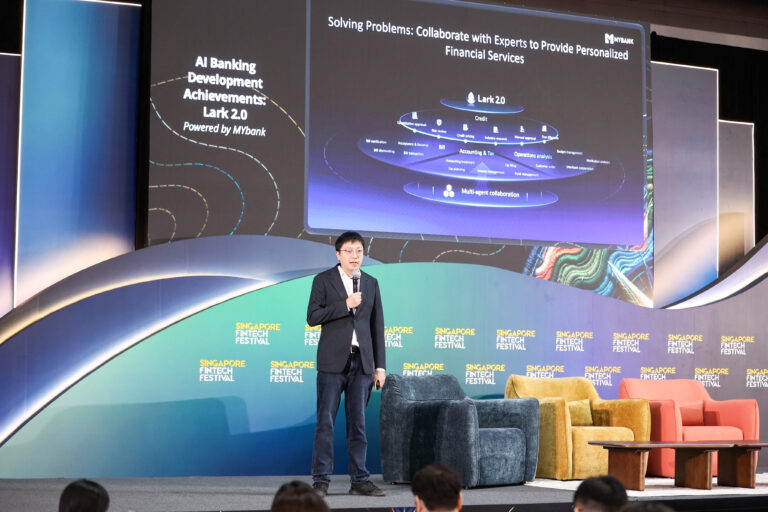
How MYbank Is Rebuilding Itself Around AI Agents to Serve 42 Million Small-Business Owners
 AI Business Strategy
Helping the Next Generation of Investors Understand Market Information
 AI Business Strategy