Breaking Through the “Blind Selection” Dilemma in Clinical Practice — TFC Taipei Fertility Center Introduces AI Scoring System to Help Infertile Couples End the Ordeal of Repeated Implantation Failure
TAIPEI, June 5, 2026 /PRNewswire/ — According to the World Health Organization (WHO), one in six people globally is affected by infertility. In response to this fertility crisis, Taiwan — widely recognized as an “AI technology island” playing a pivotal role in global AI development — has combined artificial intelligence with reproductive medicine to deliver a breakthrough application. The latest research published by TFC Taipei Fertility Center, a leading reproductive medicine team in Taiwan, demonstrates that an AI big-data model for embryo assessment can improve the probability of selecting chromosomally normal embryos by up to 24%. This AI model serves as a critical clinical decision-support tool, representing a major advance in improving IVF success rates.
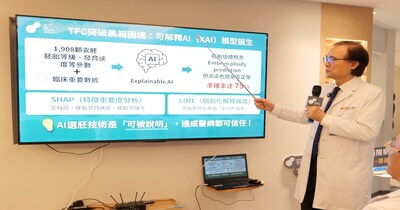
In IVF treatment, chromosomally normal embryos are the single most important factor in determining successful implantation and the birth of a healthy baby. Historically, embryo selection has relied heavily on the individual experience and visual judgment of physicians and embryologists. At the recently concluded ASPIRE 2026 Asia-Pacific Initiative on Reproduction annual conference, TFC‘s research findings on applying cutting-edge AI technology to reproductive medicine attracted significant international attention.
The TFC team introduced the iDAScore v2.0 system to build an AI-assisted assessment model. By analyzing time-lapse imaging of the full embryo culture process alongside large-scale data, the system automatically generates a developmental potential score ranging from 1.0 to 9.9. Research results show that this model can help clinical teams more precisely and objectively identify high-quality, chromosomally normal embryos — improving selection accuracy by up to 24%. This standardized and quantifiable objective tool can effectively reduce the risk of repeated implantation failure, with the ultimate goal of significantly shortening the time to conception for infertility patients and alleviating the physical and emotional toll of the fertility journey.
Dr. Chii-Ruey Tzeng, founder of TFC Taipei Fertility Center and widely regarded as the “Father of IVF in Taiwan,” stated: “Reproductive medicine globally is rapidly entering a new era of precision and intelligence. The future role of AI is not to replace physicians, but to serve as the most powerful clinical support tool — helping teams efficiently integrate embryo development data, genetic information, and individual patient profiles. This will advance reproductive medicine comprehensively toward ‘precise decision-making, patient-friendly treatment, and comprehensive risk management,’ empowering fertility-seeking families to make the clearest and most confident medical choices.”
Beyond AI embryo assessment, the prevention of genetic disease is another key direction in precision reproductive medicine. The TFC team has developed Maternal Spindle Transfer (MST) technology, which aims to reduce the risk of pathogenic mitochondrial DNA transmission to the next generation, offering a new avenue of medical research for families at risk of mitochondrial genetic disorders. However, this type of technology involves highly specialized clinical evaluation, ethical considerations, and regulatory requirements that vary by jurisdiction, and must be applied with careful attention to individual case profiles and applicable regulations.
On the treatment planning front, reducing the physical and emotional burden of IVF has also become an important priority in clinical practice. TFC Deputy Director Dr. Jason Yen-Ping Ho has introduced the Progestin-Primed Ovarian Stimulation (PPOS) protocol, which may offer greater scheduling flexibility under certain clinical conditions, helping some patients reduce treatment-related stress and improving the convenience of treatment planning.
In its six years since establishment, TFC Taipei Fertility Center has served fertility-seeking families from over 50 countries, provided reproductive medicine consultations and treatments for more than 30,000 patients, and welcomed the birth of over 3,600 newborns. As international medical demand continues to grow, TFC states that it will continue to strengthen its advanced embryology laboratory capabilities, precision reproductive medicine, multilingual international services, and integrated care processes — working to elevate the standard of reproductive healthcare across the Asia-Pacific region and providing more cross-border families with safe, precise, and patient-friendly assisted reproductive treatments.
About TFC Taipei Fertility Center TFC Taipei Fertility Center is a reproductive medicine institution in Taiwan dedicated to reproductive medicine, embryology laboratory technology, and international medical services. It is committed to providing infertility evaluation, IVF treatment, embryology laboratory services, genetic medicine consultation, and personalized reproductive care. The TFC team brings together clinicians, embryologists, nurses, and an international services team to support fertility-seeking families from Taiwan and around the world.
 View original content to download multimedia:https://www.prnewswire.com/news-releases/fighting-the-global-fertility-crisis-taiwan-pioneers-ai-powered-embryo-selection-model–improving-chromosomally-normal-embryo-identification-rate-by-up-to-24-302792588.html
SOURCE TFC Taipei Fertility Center