Key Highlights
- AML/CTF software helps spot money laundering risks through automated transaction monitoring.
- It reviews transaction data and customer behaviour for suspicious activity without constant manual checks.
- Compliance teams can investigate alerts faster with built-in case management tools.
- Features like identity verification, sanctions list screening, and risk scoring support financial crime controls.
- Automated prompts help businesses meet AUSTRAC reporting and record-keeping duties.
Introduction
AML/CTF software is changing the way businesses deal with AML compliance in the real estate sector. Instead of manual reviews, it now helps automate transaction monitoring. It tracks account activity and can point out anything that looks out of place. You also get fast reports when there is a risk. For businesses in Australia that need to meet more regulatory requirements, this gives you less to guess about. Workflows become clearer, and you find it easier to stay organised from the time new clients join and as you keep an eye on things later.
The Role of AML/CTF Software in Modern Compliance Programs
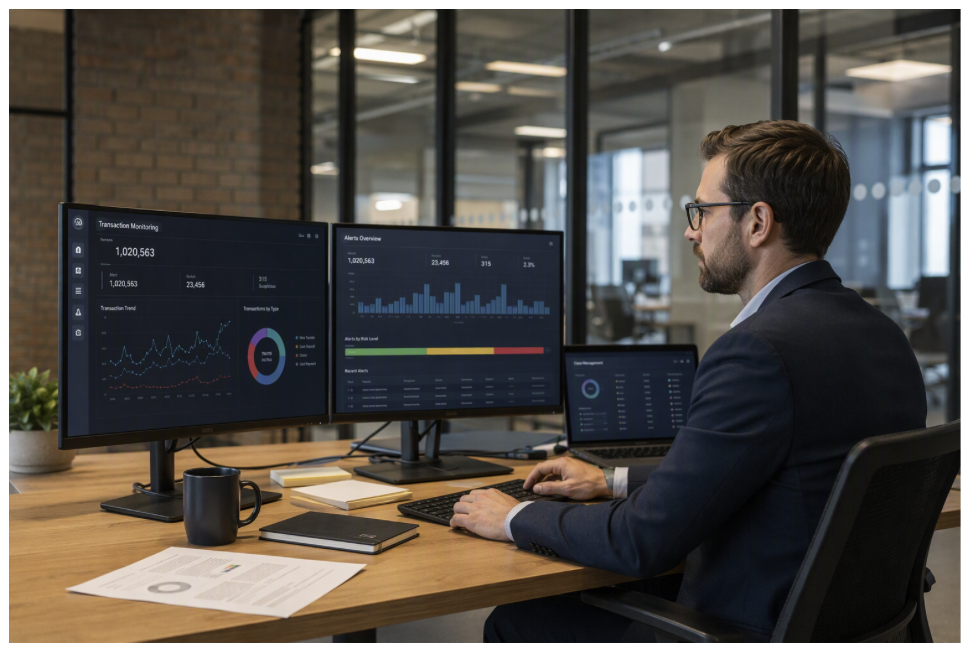
Modern AML/CTF software lets businesses handle customer due diligence, monitoring processes, and regulatory compliance in one place. You do not need scattered spreadsheets or manual follow-ups. The system uses guided workflows and automatic checks.
For compliance teams, transaction data, identity verification, and reporting steps all stay linked. Automated monitoring tracks customer transactions all the time, incorporating perpetual KYC. It tells you when behaviour changes or suspicious transactions show up. This setup is very important in Australia.
Understanding Transaction Monitoring in the Australian Context
In Australia, transaction monitoring follows AUSTRAC regulations. Businesses, including credit unions, offering certain services must use processes for AML compliance, reporting, and record-keeping.
Australian software prioritises risk management—not just basic alerts. It can reassess risk when customer profiles or transaction patterns change and prompts staff to review suspicious transactions.
Reporting is AUSTRAC-ready, streamlining the process from issue detection to regulatory compliance. This saves time and reduces manual work.
Why Automation Is Now Essential for AML/CTF Efforts
For instance, a business may record daily financial transactions without an analyst. Automation continuously monitors entries, reassesses customer risk, and sends alerts for major changes, improving efficiency.
A common concern is trust—teams worry about false positives or complex tools. Software with guided workflows, machine learning support, and clear prompts makes automation easier to use in daily operations.
Core Features of AML/CTF Software for Transaction Monitoring
The main features often work together. They do not work alone. Good platforms let the sanctions lists, transaction data, identity verification, and customer checks connect in one system.
They also help with advanced analytics and case management. This way, you can look at alerts, write them down, and report them in the right way, including identifying cases of identity theft. The real value is in how these parts work with each other to find risk and tell you what step to take next.
Risk Scoring and Automated Rules Engine Explained
Risk scoring ensures each customer or matter receives appropriate attention. The system evaluates customer information and actions to assess risk exposure, including conducting adverse media screening, rather than treating every file the same.
An automated rules engine flags issues for review. When triggered, the platform may alert staff, adjust a customer’s risk level, or prepare for regulatory compliance steps.
- A new client fails part of identity verification, requiring further due diligence.
- Transaction patterns shift, resulting in a higher risk score.
- A prompt appears when regulatory compliance action is needed.
Pattern Recognition and AI-Driven Detection Capabilities
Pattern recognition looks at how customer behaviour changes over time. This matters because suspicious activity, such as the rapid movement of funds, often shows through shifts. It’s not always about a single payment on its own.
With artificial intelligence and machine learning, software compares new transaction patterns with the customer profile already saved. If the behaviour does not match, the system can start a review.
This is when ongoing customer due diligence becomes useful. The platform keeps watching the customer instead of checking them just one time. It updates what it knows about risk and helps a business act when new facts come up.
How AML/CTF Software Detects Suspicious Transactions Automatically

The short answer is this. AML/CTF software uses rules to check transactions. It looks at the activity and compares it with what should happen. The software raises alerts if any red flags or suspicious transactions show up. This is the way that suspicious transactions get found on their own.
After that, staff review the problem related to financial services. They write down what they find. They then decide if suspicious matter reports are needed. The next thing to ask is how real-time checks are not the same as scheduled reviews.
Real-Time Monitoring Versus Batch Analysis
Real-time monitoring checks activity as it happens. Batch analysis reviews groups of records later, often at set intervals. Both support AML transaction monitoring, but they solve different operational problems.
A small firm may prefer batch reviews when volumes are low. A business with frequent customer transactions may need real-time alerts so compliance processes are not delayed.
| Approach | How it helps |
| Real-time | Reviews data points as transactions are recorded and can prompt immediate action |
| Batch analysis | Reviews larger sets of activity together and supports scheduled oversight |
| Combined model | Balances daily workload with stronger coverage across different transaction types |
Identifying Red Flags: Behavioural and Transactional Triggers
Alerts are triggered when transaction data doesn’t match the customer profile. The system reviews account activity, previous checks, and updated risk settings to flag anything unusual, including instances of potential money laundering.
Customer behaviour matters as much as transaction data. Sudden changes in behaviour can be as significant as a single suspicious payment, even after due diligence is completed.
- Account activity changes after onboarding.
- New information surfaces about beneficial owners or the business.
- Account activity conflicts with previous risk assessments.
- A review prompt suggests a possible suspicious matter report.
Managing and Investigating Alerts with AML/CTF Software

When an alert comes up, the job is not done. Teams still have to look at the facts, assign someone the job, and keep records for regulatory reporting.
This is where case management helps. It lets compliance teams use best practices, look into a suspicious activity report regarding cash transactions the right way, and keep the same steps from alert to result.
Assigning Alerts to Compliance Teams
Automated alerts help compliance teams save time by directing attention to the right issues at the right moment, ensuring compliance with regulatory obligations, and eliminating the need to review every file. Teams can focus on cases that require action.
AML software displays and assigns alerts in a single dashboard, streamlining case management and improving efficiency—especially for businesses with small or inexperienced compliance teams, ensuring they meet AML/CTF compliance requirements.
For example, if a customer’s behaviour changes, an alert appears. Staff can review it, add notes, and advance the case without missing details or relying on extra emails or spreadsheets.
Key topics: compliance teams, AML software, case management, operational efficiency.
Documentation, Audit Trails, and Reporting Requirements
Effective monitoring requires solid proof against terrorist financing. Audit trails record actions, reviewers, and decisions, aiding regulatory reporting and future reviews.
A reliable system securely stores records for over seven years and links due diligence files to alerts and reports. This streamlines compliance during internal audits or external inquiries.
For businesses adopting new software, key steps include enrolling if required, setting up the system, training staff, screening clients, and maintaining ongoing monitoring.
Conclusion
AML/CTF software is essential for effective transaction monitoring and regulatory compliance, especially in the context of preventing terrorism financing. It uses automation to detect suspicious activity, streamline alert management, reduce the risk of fines, and save time. With AI-driven checks and real-time monitoring, these tools help businesses meet compliance requirements more easily. Consider how automated monitoring can benefit your organisation and enhance security. To learn more, explore our solutions and see how we can support your compliance team.
Frequently Asked Questions
How does AML/CTF software ensure compliance with Australian regulations?
AML software helps meet Australian regulatory requirements by matching how monitoring, record-keeping, and reporting work with AUSTRAC processes. It helps compliance teams monitor customer activity, do regulatory reporting, and keep records ready for checks in financial institutions, ensuring they meet regulatory expectations, as well as other chosen businesses.
What are the top benefits of automated transaction monitoring alerts?
Automated transaction alerts help with risk management. They let you know about unusual activity faster, aiding in effective customer screening. This means you do not have to check each thing by hand. Staff get more time to work on bigger risks. This also helps with operational efficiency. When the rules are better, and you keep tuning them, false positives become less common. So you get fewer alerts that do not really matter.
How can a business get started with integrating AML/CTF software?
Start with the compliance processes you already have. Next, set up the programme and train your staff. Link your customer information and start AML transaction monitoring for fraud prevention right away. The best practices are clear: use guided steps for integration. Keep all records in one place. Make sure reporting and review prompts are part of daily work. This will help you with your transaction monitoring.