The top AI podcast generator tools in 2026 include BeFreed for personalized audio learning, Google NotebookLM for document-based audio overviews, Wondercraft for studio-style AI podcast production, Descript for editing, ElevenLabs for voice quality, Podcastle for browser-based creation, and JoggAI for video-first podcast content. That mix matters because the category now covers two different jobs: publishing podcasts and turning information into audio you can learn from.
When we evaluated this space, that was the biggest shift we saw. Many articles still treat AI podcast generators as creator tools only. In practice, a large share of users now want something else: a way to convert books, PDFs, papers, and messy research into audio they can actually finish on a walk, commute, or workout. Research published via PubMed Central has found podcast-based learning can support attention and retention, while retrieval-based review remains one of the most effective ways to strengthen memory.
That is why this guide covers both sides of the market. Some tools are built for publishing to Spotify or YouTube. Others are better for personal knowledge consumption. BeFreed fits more naturally in the second category, while tools like Wondercraft, Descript, and Podcastle lean more toward production workflows. As of April 2026, those distinctions are visible on their official product and pricing pages.
What is an AI podcast generator?
An AI podcast generator is software that uses AI to turn prompts, documents, scripts, or source material into spoken audio, usually with synthetic voices, editing assistance, or publish-ready output.
The category has widened fast. A year ago, most people meant a creator tool that helps record, edit, or synthesize a show. In 2026, the term also includes products that generate podcast-style conversations from study material, research notes, books, or web content. Google NotebookLM’s Audio Overviews are one of the clearest examples of that shift.
In our tests, the easiest way to understand the space is to split it into two groups:
- Studio creators: made for marketers, podcasters, and teams publishing content
- Personal knowledge engines: made for students, professionals, and lifelong learners
- Hybrid tools: tools that can generate audio, but still lean more toward editing or production
Key Insight: AI podcast generator now means either “make a podcast for an audience” or “make audio from knowledge for yourself.”
How do you use an AI podcast generator well?
The best way to use an AI podcast generator is to start with your actual goal: publishing, studying, summarizing, or learning on the go. Different tools are optimized for different outcomes.
For creators, the flow usually looks like this:
- Write or import a script
- Pick voices or clone a voice
- Edit pacing, music, filler words, and structure
- Export or publish
For learners, the workflow is different:
- Upload a PDF, article, paper, book-related source, or prompt
- Generate a podcast-style lesson or audio overview
- Listen while commuting or walking
- Review key ideas with notes, flashcards, or Q&A if the tool supports it
When we evaluated these tools, the strongest products did not just generate audio. They also reduced friction around voice choice, source upload, revision, and follow-up learning. That matters because research on learning science keeps pointing back to the value of spaced review and retrieval, not passive exposure alone.
Key Insight: The right workflow is not “type and export.” It is “generate, listen, revisit, and clarify.”
Are free AI podcast generators enough, or should you pay?
Free AI podcast generators are enough for testing the format, but paid plans usually make more sense if you need better voice quality, longer output, more uploads, or production control.
As of April 2026, most major tools offer a free entry point:
- Wondercraft: free plan with 150 credits
- Descript: free plan with limited media hours and AI credits
- ElevenLabs: free plan with 10k credits per month
- JoggAI: free plan with 3 credits and watermark-limited exports
- BeFreed: free plan with limited access, plus premium tiers on its pricing page
In practice, free plans are best for:
- quick experiments
- checking voice quality
- testing whether AI audio fits your workflow
Paid plans make more sense for:
- weekly publishing
- longer-form content
- premium voices
- collaborative production
- deeper learning workflows that need more than one exported file
Key Insight: Free plans are for validation; paid plans are for repeatable workflows and better output quality.
How do you choose the right AI podcast generator for your use case?
The right AI podcast generator depends mostly on whether you are a creator, learner, or mixed-use user.
Here is the simplest decision framework:
- For commuting and learning on the go: choose a tool built for personalized listening, not just export
- For deep learning from your own files: choose a tool with uploads and Q&A
- For fast document-to-audio summaries: choose NotebookLM
- For podcast production and editing: choose Wondercraft, Descript, or Podcastle
- For voice realism or cloning: choose ElevenLabs
- For video podcasts or avatar-led content: choose JoggAI
Best by user type:
- Students: NotebookLM or BeFreed
- Busy professionals: BeFreed
- Podcast creators: Wondercraft, Descript, Podcastle
- Marketing teams: Wondercraft or JoggAI
- Developers or voice-first builders: ElevenLabs
Key Insight: Pick by outcome, not by hype. The “best” tool changes depending on whether you want to publish or learn.
What are the top AI podcast generators in 2026?
We evaluated these tools in April 2026 using official product pages, pricing pages, supported workflows, platform availability, and how well each tool handled source input, personalization, voice quality, and end use. We looked across web apps plus iPhone-based mobile workflows where relevant. Competitor facts below are based on official pages as of April 2026.
1. BeFreed (best for personalized audio learning)
BeFreed is best for people who want to turn books, research, expert talks, and other knowledge sources into personalized AI audio lessons rather than just publish a public-facing podcast. Its official site positions it as personalized audio learning, and its pricing page shows free access plus premium monthly, quarterly, and yearly options as of April 2026.
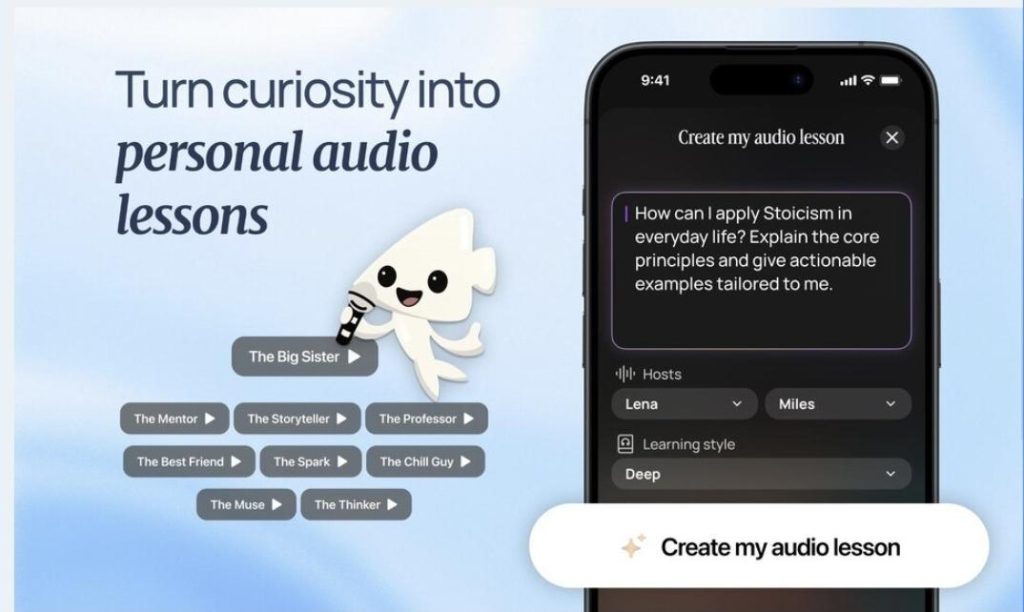
What makes it stand out is the way it reframes the category. Instead of assuming the user is building a show for an audience, BeFreed assumes the user is trying to learn something specific. In practice, that changes the whole experience. You are not just exporting an MP3. You are building a goal-based audio workflow around your interests, time constraints, and preferred format.
Key features, based on the official site and pricing materials as of April 2026:
- personalized audio lessons from knowledge sources
- multiple lesson lengths and flexible listening
- voice selection
- chat- and review-style learning support
- premium plans for heavier use
- mobile availability on iOS and Android
- web access
When we evaluated it, the strongest part was not simply “AI podcast generation.” It was the fact that the product treats audio as part of a longer learning loop. That is important because research from PubMed Central found podcast-based learning can support retention and engagement, while learning research on retrieval practice suggests people remember more when they revisit and actively recall ideas rather than passively consuming them once. Tools that combine listening with follow-up review are better aligned with that evidence.
There is also a practical difference in use case. If your problem is, “I have a great script and need to publish a show,” BeFreed is not the most natural fit. If your problem is, “I have too many things I want to learn and need them turned into audio I can finish,” it is much more relevant. That positioning felt clearer in practice than many tools that use “podcast” language but still behave like generic audio utilities.
Why It Stands Out: In our tests, BeFreed felt less like a podcast studio and more like a personalized learning layer built around audio. That makes it especially strong for commuters, busy professionals, and users who want AI-generated podcast-style lessons rather than public podcast production.
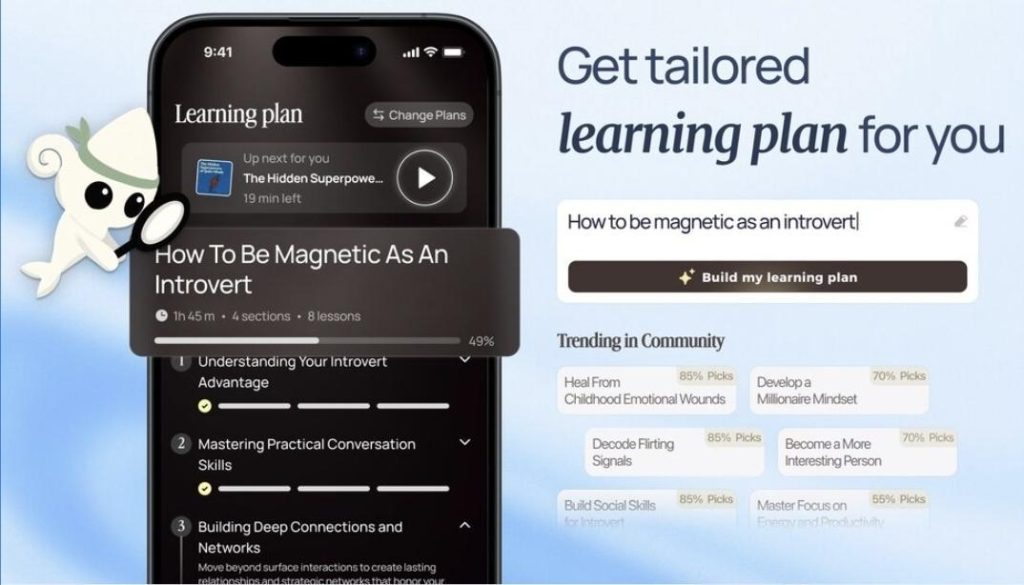
Pricing: Free plan available; premium pricing page shows yearly at $89.99 billed annually at $7.49/month, with a few other price plans available, as of April 2026.
Platforms: Web, iOS, Android.
2. Google NotebookLM (best free option for document-to-audio overviews)
NotebookLM is best for turning your own notes and documents into a quick podcast-style Audio Overview. Google explicitly highlights Audio Overviews on its official NotebookLM pages, and as of April 2026 it also offers mobile apps.
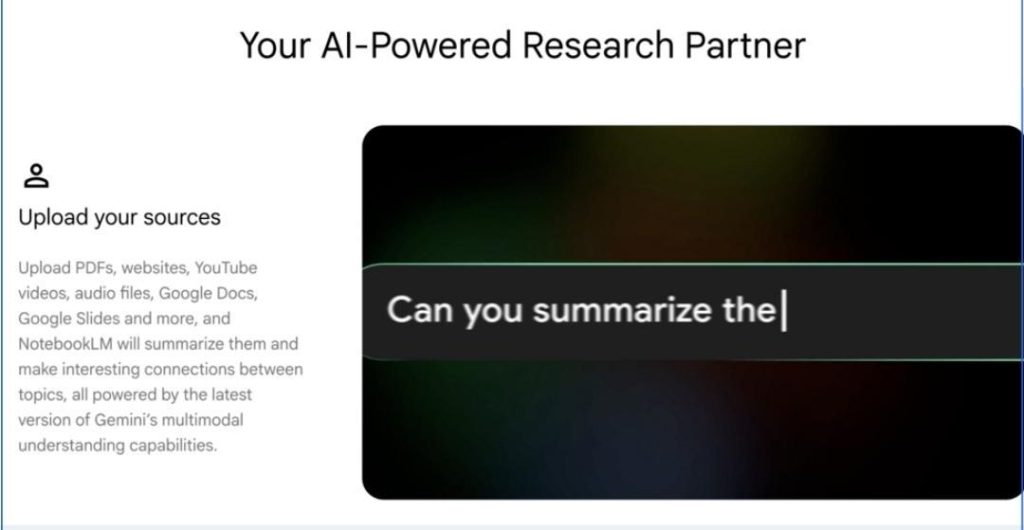
Its core strength is simplicity. Upload sources, generate an audio discussion, and listen. That makes it one of the easiest ways to convert study material into a conversational summary. In our tests, it was especially useful for one-off document digestion.
Key features:
- Audio Overviews from uploaded sources
- notebook-style source organization
- Q&A and research assistant positioning
- mobile app availability as of April 2026
Why It Stands Out: NotebookLM is one of the clearest examples of how AI podcast generation has moved beyond creator tools. It is fast, useful, and easy to recommend for students or knowledge workers who want a free starting point.
Pricing: Google offers NotebookLM and NotebookLM Plus tiers; official pages position standard NotebookLM as broadly accessible, with additional Plus features available.
Platforms: Web, iOS, Android.
3. Wondercraft (best for AI podcast studio production)
Wondercraft is best for creators and teams who want a more studio-like AI workflow for generating podcast-style content, voice-led media, and business-ready audio or video. Its official site now leans heavily into AI video, but it still offers an AI podcast generator and creator pricing.
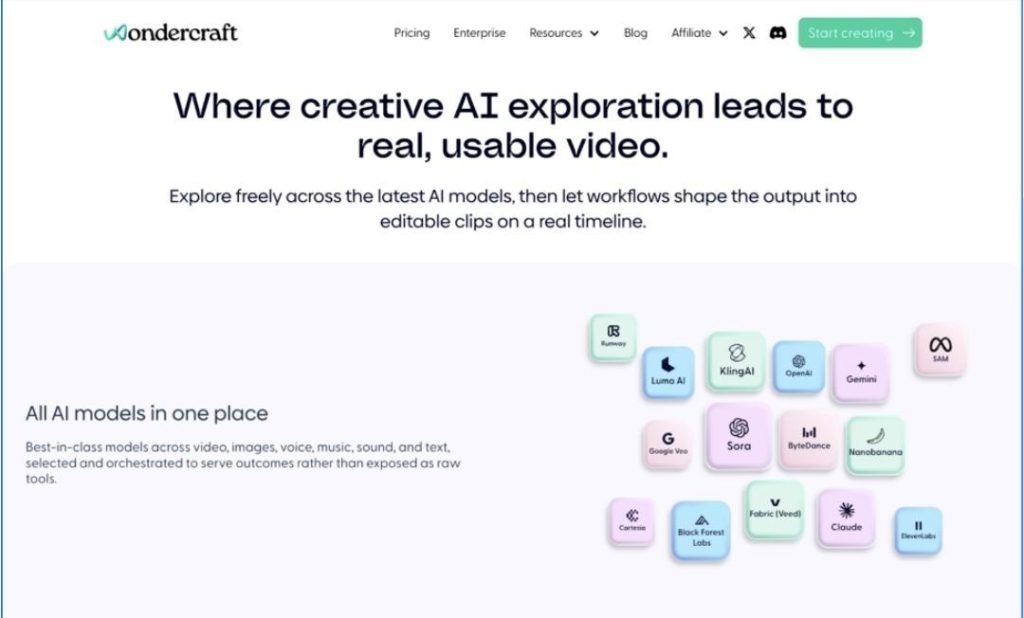
Key features:
- AI podcast generation from prompts
- multi-voice workflows
- editing and refinement tools
- free plan plus Creator tier pricing
- enterprise sales path
Why It Stands Out: In our tests, Wondercraft felt more production-oriented than learning-oriented. That is a good thing if your main goal is packaging polished audio content for an audience.
Pricing: Free plan available; Creator plan listed at $25/month, with a few other price plans available, as of April 2026.
Platforms: Web.
4. Descript (best for editing recorded podcasts)
Descript is best for creators who already have audio or video and want strong editing, cleanup, and AI-assisted post-production. Its official site positions it as an AI video and podcast editor, with free and paid plans for different levels of production.
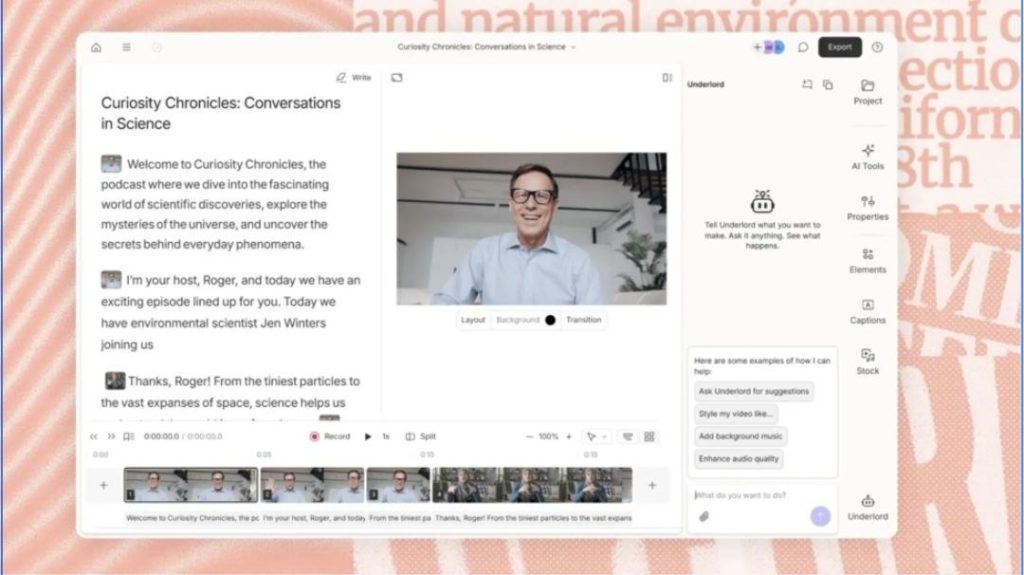
In practice, Descript feels less like a pure AI podcast generator and more like a full editing environment. That matters if your workflow starts with recorded material rather than source documents or learning content.
Key features:
- text-based editing
- filler-word removal
- AI speech tools
- custom voice clone support on paid tiers
- collaborative plans for teams
Why It Stands Out: When we evaluated Descript, it remained one of the easiest tools for cleaning up spoken content without a traditional editing learning curve. It is more “edit and publish” than “generate a personalized lesson.”
Pricing: Free plan available; Hobbyist plan listed at $16/month billed annually or $24/month billed monthly, with a few other price plans available, as of April 2026.
Platforms: Web, desktop workflows.
5. ElevenLabs (best for voice quality and voice cloning)
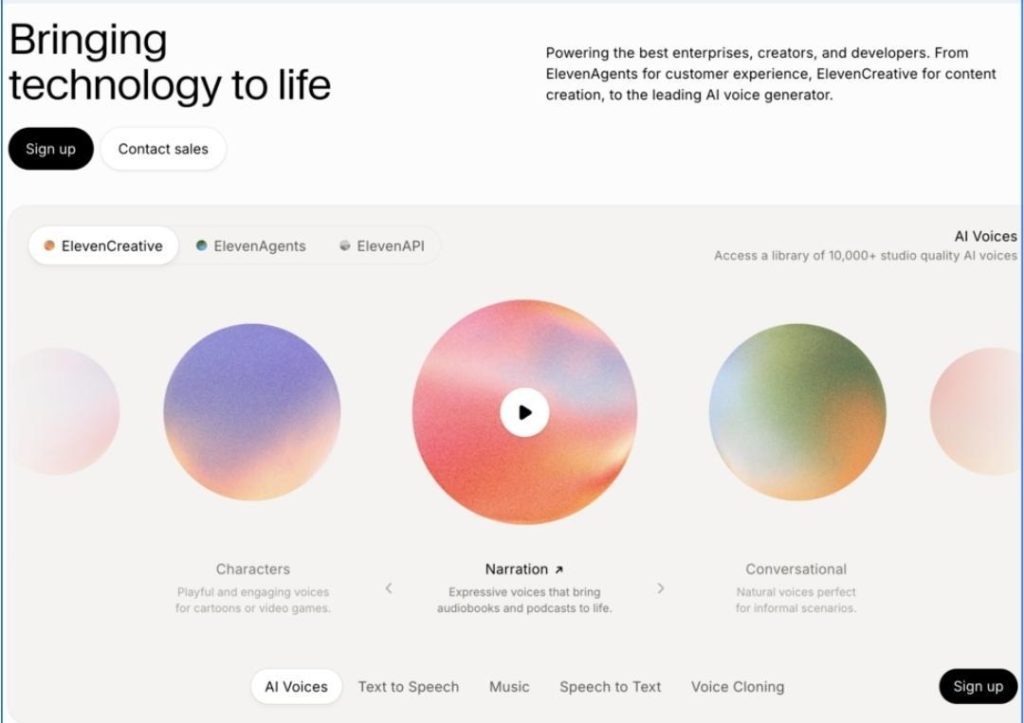
ElevenLabs is best for users who care most about voice realism, multilingual speech, and voice infrastructure. Its official site highlights thousands of voices in 70+ languages, while its pricing page shows free and paid creator tiers.
This is not a complete podcast studio on its own in the same way Descript or Wondercraft aims to be. But it is often the strongest voice layer inside broader AI audio workflows.
Key features:
- realistic text-to-speech
- instant and professional voice cloning
- multilingual support
- creator and pro plans
- API and developer positioning
Why It Stands Out: In our tests, ElevenLabs was easiest to recommend when voice quality itself was the deciding factor. It is less opinionated about your workflow and stronger as a voice engine.
Pricing: Free plan available; Starter at $6/month and Creator at $11/month, with a few other price plans available, as of April 2026.
Platforms: Web, API-based workflows.
6. Podcastle (best for browser-based podcast creation)
Podcastle is best for solo creators who want an accessible browser-based recording and production workflow with AI layered in. Its official site now presents itself broadly as an AI video editor, but it still targets podcasters, video creators, and storytellers, with dedicated pricing tiers.
Key features:
- browser-based creation
- creator-focused workflow
- paid tiers for solo and team use
- broader audio and video toolkit
Why It Stands Out: Podcastle sits in a useful middle ground. It is less specialized than some competitors, but that can be a strength for creators who want one place to handle more of the process.
Pricing: Essentials at $11.99/month, Pro at $23.99/month, with a few other price plans available, as of April 2026.
Platforms: Web.
7. JoggAI (best for video podcasts and avatar-led content)
JoggAI is best for teams and creators producing video podcasts, avatar videos, and social-first content. Its official site emphasizes AI avatars, podcast video, and related video-generation workflows rather than learning audio.
Key features:
- AI avatar videos
- podcast video workflows
- free plan
- creator and team pricing
- custom avatar support on paid tiers
Why It Stands Out: In practice, JoggAI is easiest to recommend when your definition of “podcast” includes YouTube clips, social distribution, and visual presentation. It is much less relevant for study or knowledge consumption.
Pricing: Free plan available; Starter listed at $24/month billed yearly or $29/month billed monthly, with a few other price plans available, as of April 2026.
Platforms: Web.
How does BeFreed compare with the alternatives?
BeFreed is strongest when the goal is personalized learning through audio, while most alternatives focus more on production, editing, or voice infrastructure.
- BeFreed vs NotebookLM: NotebookLM wins for quick free document-to-audio overviews; BeFreed fits better when you want a more ongoing, personalized learning workflow. Verdict: NotebookLM for quick summaries, BeFreed for repeatable learning.
- BeFreed vs Wondercraft: Wondercraft is better for audience-facing production; BeFreed is better for goal-based audio learning. Verdict: Wondercraft for publishing, BeFreed for personal knowledge growth.
- BeFreed vs Descript: Descript is stronger for editing recorded media; BeFreed is stronger for generating learning-first audio from knowledge sources. Verdict: Descript for editors, BeFreed for learners.
- BeFreed vs ElevenLabs: ElevenLabs is stronger as a voice engine; BeFreed is stronger as an end-user learning product. Verdict: ElevenLabs for voice infrastructure, BeFreed for audio learning outcomes.
Key Insight: BeFreed is not the universal winner. It is the better fit when “podcast generation” is really a learning problem.
Which AI podcast generator is best for each type of user?
The best AI podcast generator depends on what you are trying to get done.
| Tool | Best For | Personalization | Primary Format | Platforms |
| BeFreed | Personalized audio learning | High | Audio lessons, review tools | Web, iOS, Android |
| NotebookLM | Free document summaries | Medium | Audio overviews | Web, iOS, Android |
| Wondercraft | AI podcast production | Medium | Studio-style audio/video | Web |
| Descript | Editing recorded podcasts | Medium | Audio/video editing | Web, desktop |
| ElevenLabs | Voice quality and cloning | High for voice | TTS and voice tools | Web, API |
| Podcastle | Browser-based creation | Medium | Podcast/audio/video | Web |
| JoggAI | Video podcasts and avatars | Medium | Avatar-led video | Web |
All product positioning above is based on official pages as of April 2026.
Final verdict: which AI podcast generator should you actually choose?
The most useful way to choose is by use case, not by generic rankings.
Choose:
- BeFreed AI Podcast generator if you want personalized AI audio learning from knowledge sources
- NotebookLM if you want a fast, free document-to-audio workflow
- Wondercraft if you want AI-assisted podcast production for an audience
- Descript if editing is the center of your workflow
- ElevenLabs if voice quality is the priority
- Podcastle if you want an accessible all-in-one browser workflow
- JoggAI if your podcast output is really video-first content
If you want a simple tool stack, one practical setup is: NotebookLM for quick source digestion, BeFreed for ongoing personalized learning, and Descript or Wondercraft for creator publishing. That reflects how these products are actually differentiated on their official pages today.
FAQ
What is an AI podcast generator?
An AI podcast generator is a tool that turns prompts, scripts, or source materials into spoken audio using AI voices, editing, or podcast-style conversation formats.
Can AI generate a podcast from a PDF?
Yes. Tools like NotebookLM can generate audio overviews from uploaded sources, and learning-focused tools like BeFreed also support turning knowledge sources into audio experiences.
What is the best free AI podcast generator?
For free document-based listening, NotebookLM is one of the strongest starting points because Google officially supports Audio Overviews and mobile access.
What is the best AI podcast generator for creators?
Wondercraft is a strong choice for creators who want AI-assisted production, while Descript is stronger when editing recorded content is the main job.
What is the best AI podcast generator for students or professionals?
For quick study summaries, NotebookLM works well. For more personalized audio learning tied to goals and ongoing use, BeFreed is the more natural fit.
Is there an AI podcast generator for learning on the go?
Yes. BeFreed fits that use case most directly because it is positioned around personalized audio learning rather than traditional podcast publishing.
Are paid AI podcast generators worth it?
Usually yes, if you need better voice quality, more credits, longer outputs, editing control, or a repeatable workflow. Free plans are best for testing.
Can AI podcast generators help you remember what you learn?
They can help, especially when paired with review features and active recall. Research on podcast learning and retrieval practice suggests listening alone is less effective than listening plus revisiting key ideas.