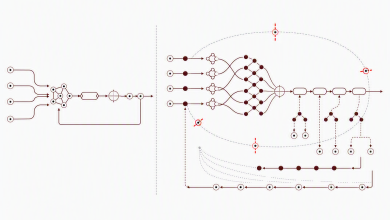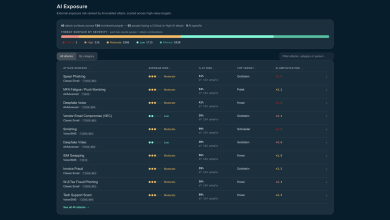

Data annotation outsourcing services in the Philippines have transitioned from simple labor-cost reduction to a high-value “intelligence arbitrage” model. By providing the human-in-the-loop (HITL) feedback required to prevent model collapse, specialized Philippine teams act as a sovereign control plane, delivering a 27.5% lift in model reasoning accuracy over unmanaged data.
Executive Briefing: The 2026 AI-Ops Paradigm
- The intelligence gap: 80% of ML development is now data-centric; the Philippines is the primary solution to this scaling bottleneck.
- Beyond bounding boxes: Modern workflows focus on multi-modal synchronization of text, audio, and video in a unified environment.
- Regulatory compliance: Adherence to the EU AI Act (Article 14) is now a standard feature of PH-managed services, ensuring “natural person” oversight.
- Model integrity: Human-anchored datasets from the Philippines serve as the “ground truth” to counteract recursive errors from synthetic data.
- Strategic ROI: Transitioning from “price-per-label” to “model performance lift” as the core KPI for stakeholders.
The global AI landscape is no longer defined by parameter count, but by the reliability of a model’s ground truth. As synthetic data begins to “poison the well” of public LLMs—a phenomenon known as model collapse—enterprises are pivoting toward highly curated, human-verified datasets. This shift has placed AI data annotation outsourcing services in the Philippines at the epicenter of the global AI supply chain.
The Rise of Intelligence Arbitrage
For decades, the Philippines was known for “labor arbitrage.” Today, the sector has matured into “intelligence arbitrage”. This represents the strategic use of elite, Western-aligned talent to manage the complex “agentic AI” workflows that power modern enterprises.
“After 40 years in global BPO leadership—including executive roles at the world’s largest contact center provider—I can attest that the Philippines has moved from a support hub to the sovereign control plane for ‘model truth’ in AI,” says John Maczynski, CEO of PITON-Global. “We aren’t just labeling data anymore; we are providing the cognitive guidance that prevents AI from hallucinating. It’s about engineering the human judgment that sits at the center of the model’s reasoning engine.”
Table 1: The AI-Ops Maturity Matrix (2022 vs. 2026)
| Capability | 2022 Legacy model | 2026 PH managed model |
| Primary workflow | Single-modal (Text or Image) | Multi-modal sync (Video/Audio/Text) |
| Verification | Single-pass labeling | Fleiss’ Kappa consensus protocols |
| Regulatory guard | Basic NDAs | EU AI Act Article 14 compliance |
| Success metric | Volume (Assets per hour) | Model accuracy lift (%) |
Preventing Model Collapse with “Human Anchors”
A primary driver for the surge in AI data annotation outsourcing services in the Philippines is the threat of “recursive degradation.” When models are trained on content generated by other AIs, they lose their grasp on reality. The Philippines provides a critical human anchor. By utilizing managed teams rather than fragmented gig-worker platforms, companies like PITON-Global ensure a high inter-annotator agreement (IAA). This is essential for high-stakes applications in healthcare, fintech, and autonomous systems where a 1% error rate is catastrophic.
Table 2: Model Performance Lift by Data Source
| Data strategy | Reasoning accuracy | Hallucination rate | Cost efficiency (Long-term) |
| 100% synthetic data | 64.2% | 12.8% | Low (High retraining costs) |
| Unmanaged crowd labeling | 78.5% | 6.4% | Medium (Noisy data) |
| Managed PH expert teams | 94.8% | 0.8% | High (Direct-to-production) |
The Multimodal Synchronization Frontier
Today, the most valuable data is no longer isolated text or images; it is multimodal. Training a “Universal Agent” requires synchronizing a user’s voice tone with their text transcript and their real-time on-screen navigation. Philippine infrastructure has evolved to support this “temporal consistency,” providing the multi-layered feedback necessary for agentic AI to function in real-world scenarios.
Why the Philippines Wins in 2026
- Cognitive cultural alignment: For sentiment analysis and RLHF, the Philippines offers a level of Western cultural resonance that prevents “alignment drift” in LLMs.
- The SME layer: Annotation is now a “domain expert” field. PITON-Global utilizes teams of specialists in AI, robotics, healthcare, and engineering to label the data that trains specialized industry models.
- Zero-trust security: In a post-GDPR world, the Philippines’ “Clean Room” environments ensure that sensitive proprietary data never leaves a secure, audited ecosystem.
Table 3: Comparative scaling costs (Annual – 2026 USD)
| Capacity | In-house (US/UK) | PH Intelligence arbitrage | Capital reinvestment opportunity |
| 50 AI Pilots | $5.2M | $1.4M | $3.8M |
| 250 AI Pilots | $26M | $6.8M | $19.2M |
Securing the AI Engine Room
As the BPO sector in the country reaches a projected $42 billion valuation by the end of 2026, its identity has been permanently redefined. It is no longer a “back-office”; it is the sovereign control plane of the AI revolution. Under the guidance of industry veterans like Maczynski, AI data annotation outsourcing services in the Philippines provide the only scalable, safe, and high-fidelity path to the future of artificial intelligence.
Frequently asked questions (FAQ)
How does the Philippines ensure compliance with the 2026 EU AI Act? Top-tier providers utilize zero-trust architectures and documented audit trails to meet the “human oversight” requirements of Article 14. This provides the “natural person” verification necessary for high-risk AI deployments in Europe and beyond.
What is “intelligence arbitrage” in the context of Philippine BPO? It is the move from hiring for low-cost, repetitive tasks to hiring for high-value cognitive orchestration. Filipino “AI pilots” now manage complex model-alignment tasks like RLHF (reinforcement learning from human feedback) and proactive red teaming.
Why is managed data better than automated labeling? Automated labeling is recursive and often amplifies bias. Managed human teams in the Philippines provide the “edge case” identification and nuanced reasoning that automated systems miss, resulting in a significantly more robust and safer model.