Nobody talks about the management problem in the space of AI and development, especially as AI agents are currently being deployed like software tools by many companies. This is the first mistake.
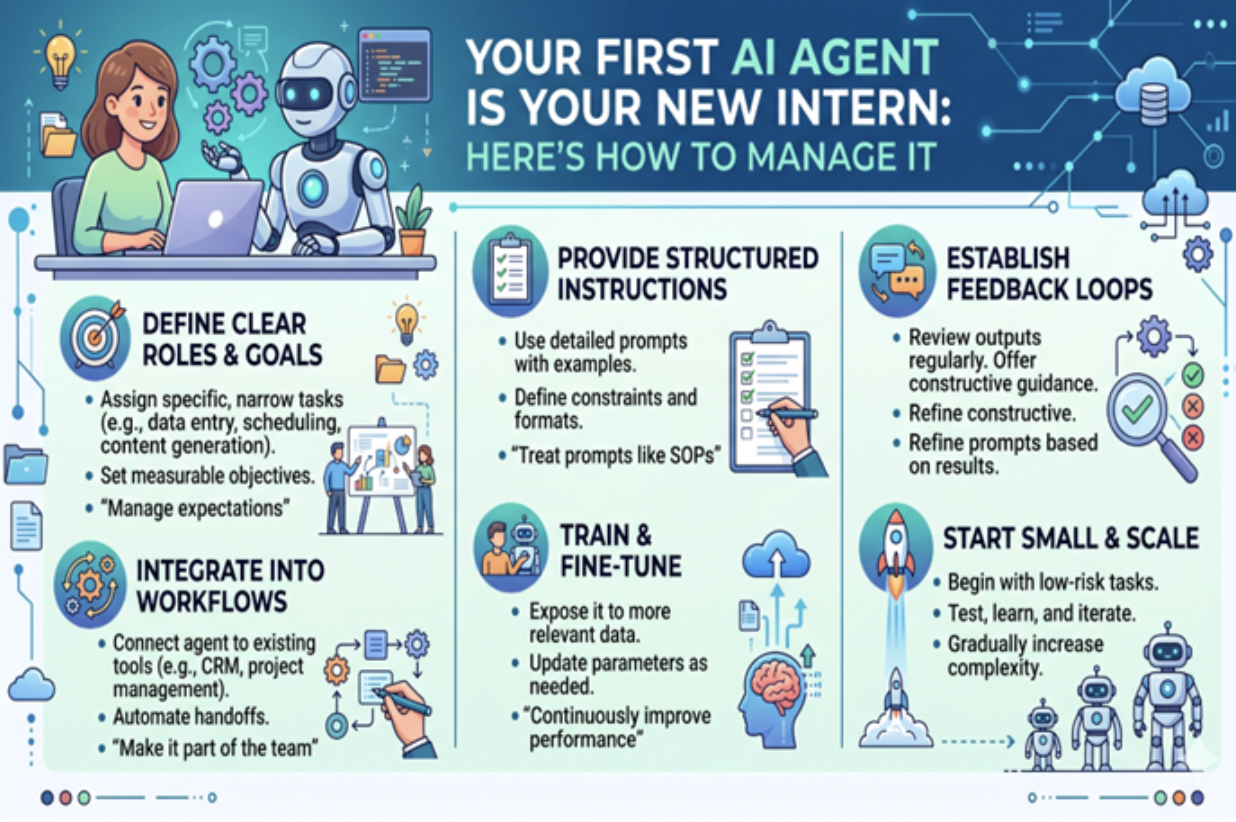
Instead of treating AI agents like traditional software, think of them as you’ll think of interns; they are inexperienced but highly capable. They can complete tasks assigned to them quickly, work across different tools and systems, and handle large data correctly. Just like interns, they can also make mistakes, misunderstand instructions (especially when multiple are given at once), or behave unpredictably when they are left to work unsupervised.
One important point to note is that enterprise AI failures today are not model failures. These failures are tied to an underlying management problem.
How AI agents differ from traditional software:
Many organizations think that with AI agents, they are deploying full-scale automation where they no longer need to worry about oversight. They simply trust that agents follow guidelines to ensure the result is met. In reality, they are onboarding digital workers that need operational boundaries and actual human oversight.
Traditional software follows fixed rules in ways that AI agents do not. They can adapt to context, reason through tasks, and interact with APIs and tools the “right way”.
What makes AI agents “intern-like”
- They require supervision
- With vague instructions, performance is inconsistent
- Their results improve with feedback and structure
- They also appear more competent than they actually are
That last point matters the most.
Stanford’s 2025 AI Index report shows that as models become more capable, users’ trust increases faster than how reliable these models are. This creates operational risk when organizations overestimate what agents can handle efficiently.
Think of AI agents like human interns. In your organization, interns need to be trained to perform adequately. With the right support and oversight, their skills transform, turning them into competent hires for the company.
My perspective: Most companies think of agents like they are deploying automation. What they are actually onboarding are digital workers that need structure, boundaries, and review systems that guide their activities.
How teams are actually using AI agents today
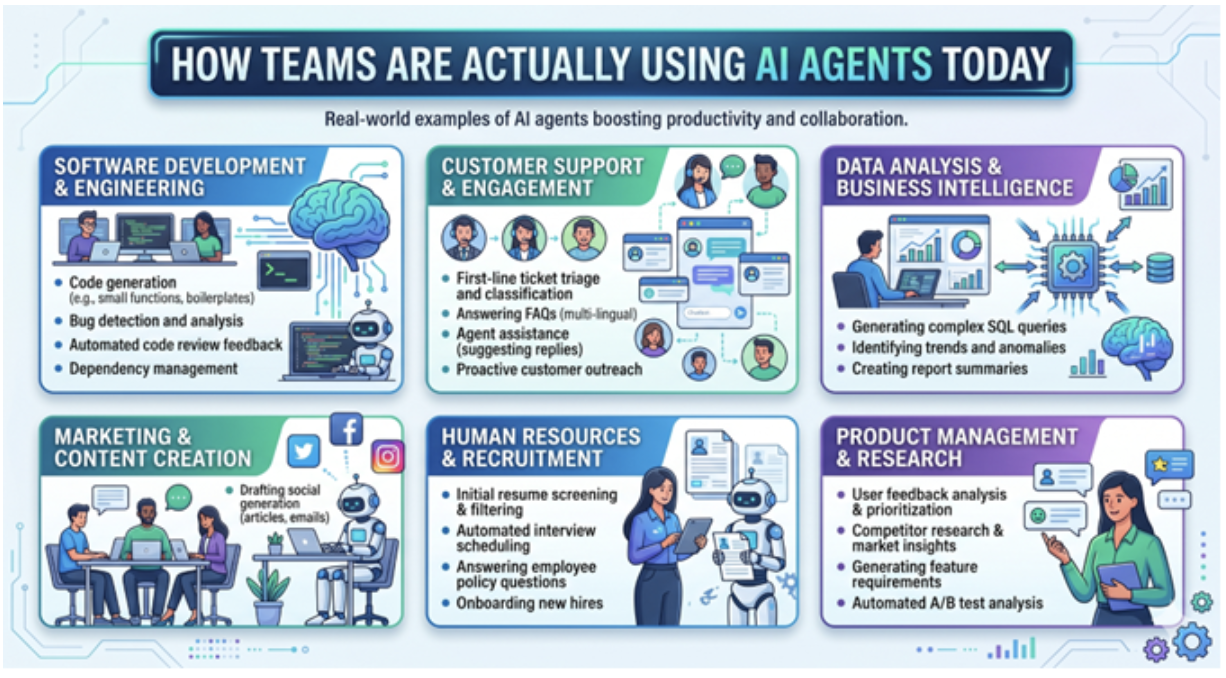
The strongest companies are assigning AI agents to operational roles. Engineering teams use tools like Claude Code and OpenAI Codex to review pull requests, generate boilerplate code, document APIs, and debug repetitive issues. The AI agent generates the first draft, and the human engineers review and approve before it is deployed.
Research and strategy teams use AI agents to summarize reports, monitor competitors, and organize information into actionable briefs. For customer operations, teams deploy AI agents for ticketing, onboarding support, and handling FAQs. But powerful systems limit autonomy by automating routine tasks and escalating high-risk cases to humans.
Claude Code case study
Anthropic’s Claude Code became widely accepted among engineering agents and developers building AI workflows internally in 2025. Instead of using the model only to complete workflows automatically, teams started assigning responsibilities to the model.
These responsibilities include debugging, generating pull requests, documenting systems, component refactoring, and running repetitive engineering tasks.
As this went on, developers noticed Claude Code worked best as a supervised junior contributor, not a replacement engineer. Teams with clear tasks, reviews, and limited access maximized their productivity. But teams that gave it too much freedom led to broken, insecure, or overly complex code in production.
This showed how organizations managed interns. The best-performing teams did not deploy AI without guidance. They built structured workflows that covered review, correction, and escalation.
My perspective: The companies that get the best results with AI coding agents are the ones treating them like interns that learn fast in structured environments, not like magic automation tools.
How to create your own AI agent acting like an intern
The biggest mistake organizations make is trying to build fully autonomous agents immediately. Instead, treat an AI agent like a junior hire: give it one responsibility, structured boundaries, and human supervision.
Strong AI workflows rely on rules and review systems. Let your best teams define what the agent can access, what actions it can take, and when tasks should escalate to humans. Most importantly, every output should be reviewed before deployment, with feedback to improve the future performance over time
Conclusion
As much as AI agents are positioned as a “set and forget” system, users need to understand that they should be treated as interns. Instead of treating them as autonomous systems, companies should understand that they still need structure, supervision, boundaries, and accountability.
What is happening now is bigger than productivity tools. Companies are building the first generation of hybrid workforces quietly. The best of which are teams where humans and AI agents work together across research, engineering, operations, and decision-making workflows.
Looking to the future, managing AI agents will become a core leadership skill, and access to better AI models will be insufficient. This is because those models will become cheap, standard, and easy-to-get tools. The companies that succeed will be the ones that have the strongest operational discipline around their advanced models.
Author Bio:
Harsh Verma is an AI and cybersecurity innovator & Principal AI Engineer focused on advancing autonomous agent systems and intelligent AI strategies. He helps navigate the shift toward AI-native security models and prepares organizations for emerging “AI vs. AI” threat landscapes. As a speaker, mentor, and advisor, he brings both technical depth and strategic guidance to leaders adopting next-generation AI capabilities. He drives responsible, scalable AI adoption. His work influences how enterprises innovate, secure, and operationalize the next generation of intelligent systems.
Harsh specializes in offering scalable AI solutions, mentoring aspiring entrepreneurs, delivering impactful conference talks, and advising startups on their AI strategies. Whether it’s navigating AI implementation, preparing for technical interviews, or fostering innovation with AI, Harsh is committed to delivering meaningful results in the tech industry